The last few weeks of school carry a particular kind of relief for special needs families. The IEP meetings, the progress reports, the advocacy battles, the early mornings and the late-night homework struggles — all of it is about to pause. Summer feels like a reward, and in many ways it is. But for families of students with learning disabilities, autism, ADHD, dyslexia, and other developmental differences, summer is also something else entirely: it is the season when hard-won academic progress can quietly unravel. The research is clear, the pattern is predictable, and the good news is that it is completely preventable. Working with a special needs tutor during the summer months is one of the most powerful investments a family can make — not just to maintain what a child has learned, but to build real momentum going into the next school year.
This is not about stealing summer joy from children who have already worked incredibly hard. It is about understanding what actually happens to the developing brain of a special needs student when structure disappears for two to three months — and making a plan that protects the progress they have earned.
What This Article Covers:
- Why summer regression hits special needs students harder than most families expect
- Which diagnoses carry the highest risk of summer learning loss
- What the research actually says about learning loss during summer break
- What to do right now before the school year ends
- Questions to ask the IEP team before summer break
- What September looks like when summer goes right
What Is Summer Regression and Why Does It Hit Special Needs Students So Hard
Most people have heard of the summer slide — the general learning loss that affects students of all backgrounds during the long break between school years. What far fewer people understand is that summer regression in special needs students is an entirely different phenomenon, operating on a different scale and with consequences that can take months, sometimes an entire semester, to undo.
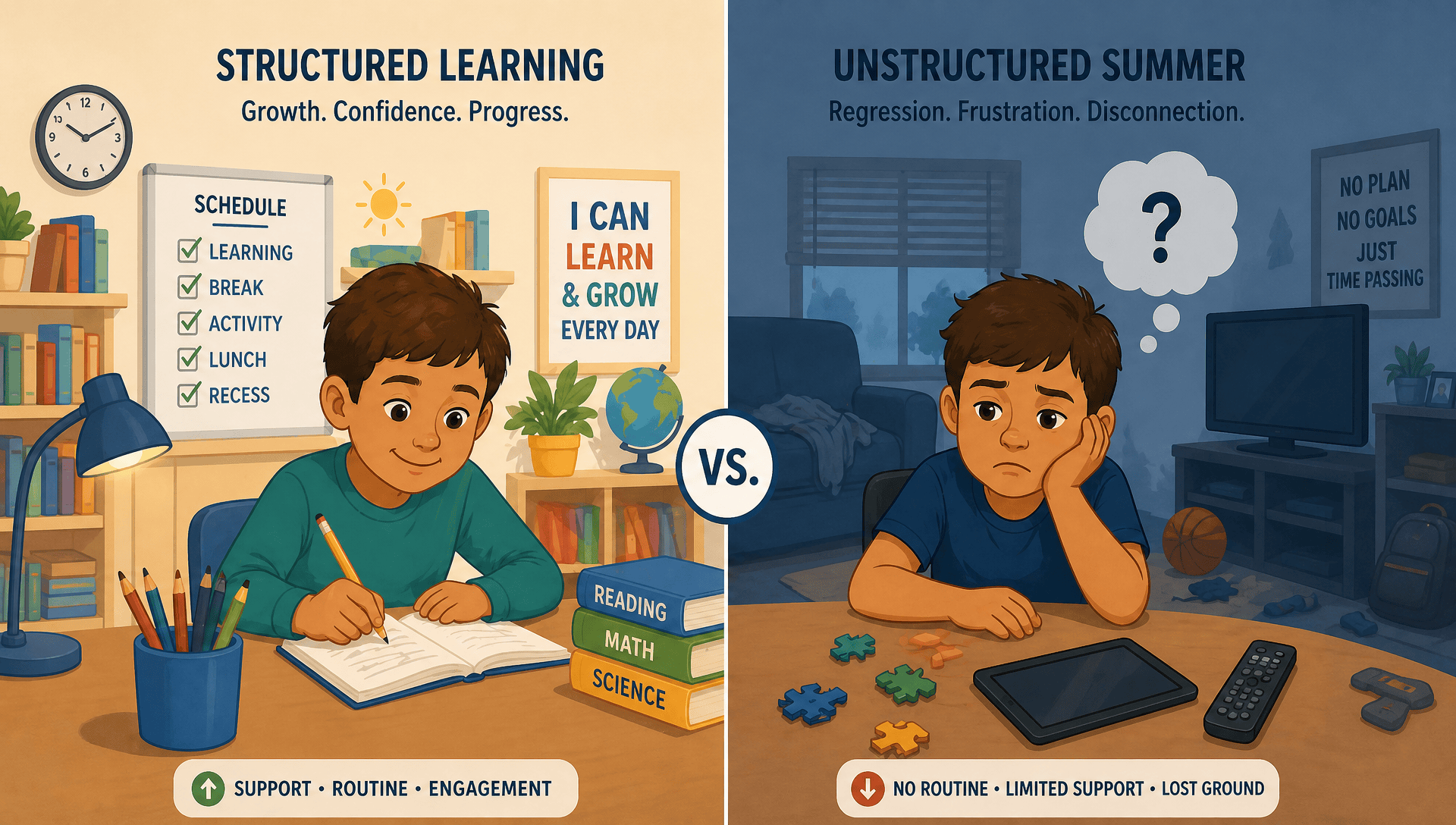
Summer slide, as it applies to neurotypical students, tends to show up as mild backsliding in reading fluency or math fact recall. It is real, but it is also relatively recoverable. For students with IEPs and diagnosed learning differences, the loss is compounded by the very nature of how their brains process, store, and retrieve information. Many of these students require significantly more repetition to consolidate a skill than their peers do. When that repetition stops abruptly for an extended period, the neural pathways being built through consistent practice begin to weaken. Skills that took months to develop can fade in a matter of weeks.
The structural reality of special education makes this worse. Because special needs students are already working to close a gap between their current performance and grade-level expectations, any regression does not just put them back at square one. It widens the gap. Every summer of significant regression makes the hill steeper, the catch-up timeline longer, and the emotional toll on the child greater.
The Numbers Behind the Summer Slide for Students With Disabilities
The research on summer learning loss tells a story that every special needs family deserves to hear clearly. While general estimates suggest that students can lose one to three months of academic progress over a typical summer, studies focused specifically on students with learning disabilities and developmental differences point to losses at the higher end of that range — and sometimes beyond it.
A consistent finding across special education research is that students with disabilities not only lose more ground over summer than their neurotypical peers, but they also take longer to recover it once the school year resumes. This means that a meaningful portion of the early fall semester is consumed by re-teaching rather than advancing — time that these students genuinely cannot afford to lose.
For parents, the numbers show up in ways that are impossible to ignore:
- A child who left school in June reading at a certain level returns in September struggling with material they had already mastered
- A student who made real behavioral and social progress over the course of a year comes back more dysregulated, more resistant, and more anxious
- Teachers spend the first weeks of fall re-teaching rather than advancing — and the gap widens again
What the research also makes clear is that this is not inevitable. Students who receive consistent, structured support during the summer — even a few hours per week — demonstrate dramatically better retention and in many cases show continued growth. The intervention does not need to be intensive to be effective. It needs to be consistent, individualized, and connected to the specific skills each child is working to build.
Which Students Are Most at Risk for Summer Academic Regression
While virtually all special needs students experience some degree of regression without structured support, certain populations are particularly vulnerable. Knowing which category a child falls into helps families make smarter, more targeted decisions before summer begins.
Students with Autism Spectrum Disorder
Students on the autism spectrum often rely heavily on routine and predictability to feel regulated enough to engage with learning. The abrupt shift from a structured school environment to the open-ended nature of summer can trigger significant anxiety, behavioral changes, and loss of both academic and daily living skills. Social communication gains — which are often among the hardest-won achievements for autistic students — can erode quickly without consistent practice and modeling. Families navigating this can benefit enormously from connecting with an autism tutor who understands the specific learning profile of autistic students and can keep those gains intact across the summer months.

Students with ADHD
The executive function skills that school helps scaffold — organization, task initiation, sustained attention, working memory — are not naturally self-sustaining for children with ADHD. Without the external structure that school provides, these skills deteriorate and academic content follows. Parents often describe the first weeks of a new school year with their ADHD child as starting completely from scratch, not because the child forgot everything, but because the habits that support learning have gone dormant.
Students with Dyslexia and Language-Based Learning Disabilities
Reading and writing require consistent, repeated practice to maintain. The phonological processing skills, decoding strategies, and fluency gains that take so long to build are particularly susceptible to erosion during extended breaks from structured literacy instruction. Even a few weeks away from targeted reading practice can measurably set back fluency and comprehension for students with dyslexia.
Students with Intellectual Disabilities and Developmental Delays
These students often experience the most significant regression of all, particularly in daily living skills, communication, and foundational academics. They require the most repetition to build and maintain skills and have the least capacity to self-direct learning during unstructured time. For this population, summer regression can be profound and genuinely difficult to recover from within a single school year.
Summer Without Structure Costs More Than Most Families Realize
Academic regression is the headline, but it is not the whole story. For special needs families, an unstructured summer creates ripple effects that touch every corner of daily life — and most of them never show up in any IEP document.
Behavioral regression is one of the most common and exhausting realities of summer for these families. Children who have learned to manage frustration, follow multi-step directions, and navigate social situations with increasing skill can lose significant ground in all of these areas when the consistent behavioral supports of school are removed. Parents find themselves re-implementing strategies they thought were long resolved.
Beyond behavior, unstructured summers also affect:
- Sleep and sensory regulation — without the rhythm of a school schedule anchoring the day, sleep schedules shift, sensory routines dissolve, and the dysregulation that follows makes meaningful learning much harder
- Social skill development — pragmatic language, turn-taking, conflict resolution, and friendship-building all require consistent practice and feedback that do not happen automatically during an unstructured break
- Emotional confidence — children who lose academic ground over the summer often return to school feeling behind before the year has even started, and that feeling is hard to shake
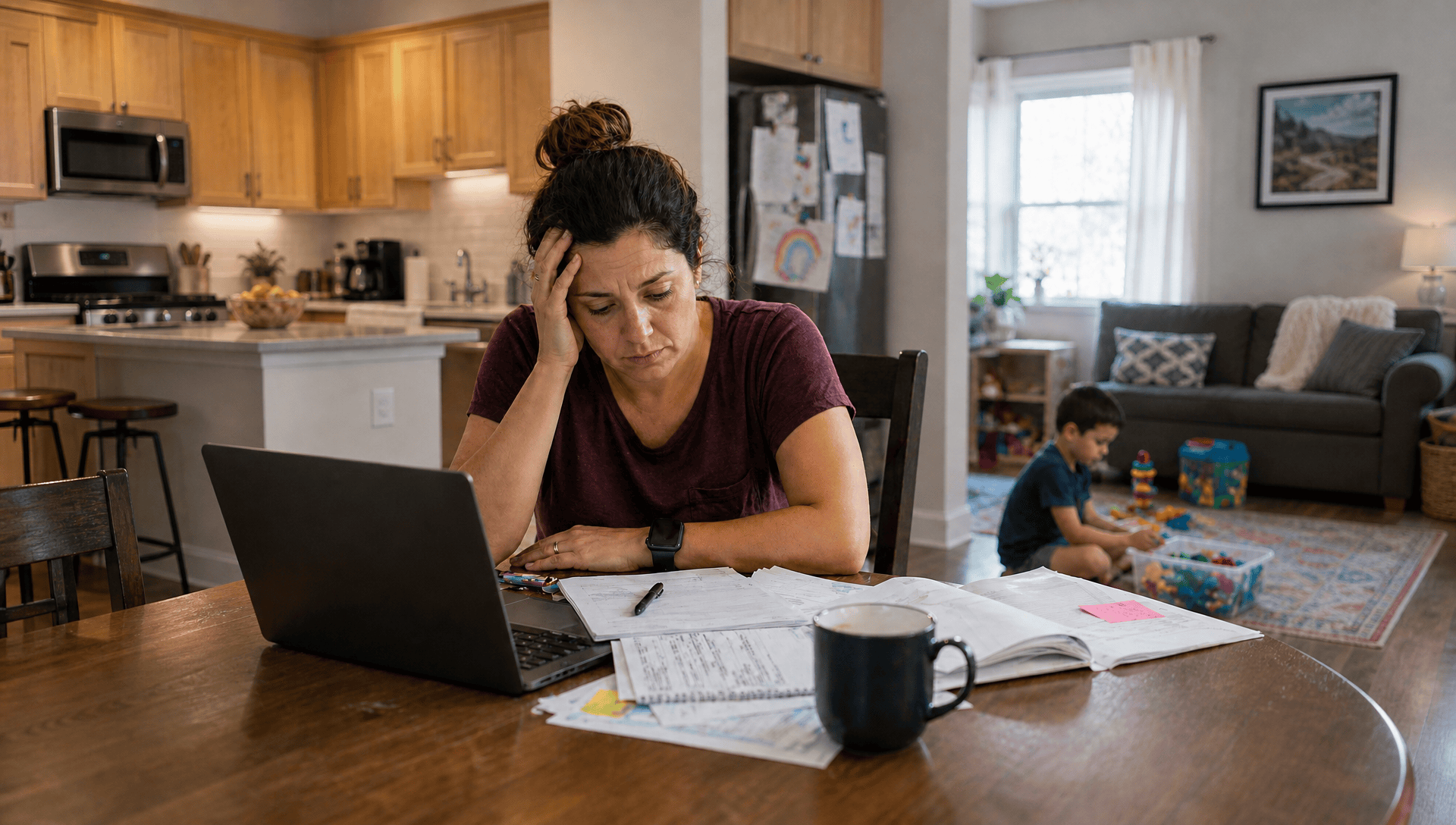
And then there is the emotional cost to parents themselves. Watching a child lose ground after a year of hard work is genuinely painful. Managing a dysregulated child at home for two to three months, without the support structures that school provides, pushes many special needs families to a breaking point. The frustration, guilt, and exhaustion that follow an unstructured summer are real — and they are avoidable.
What Families Can Do Right Now Before Summer Starts
The window of opportunity is open right now, in these final weeks of the school year. The families who act during this window are the ones who see a different September. Here is where to start:
- Start the Extended School Year conversation immediately. ESY services are federally mandated for students whose IEPs indicate that a break in services would result in significant regression. Not every student qualifies, but many who should qualify are never offered these services because families do not know to ask. Request a conversation with the IEP team now, before the year ends, and ask specifically whether ESY eligibility has been evaluated. Get the answer in writing.
- Review the current IEP with summer in mind. Which goals is the child closest to achieving? Which skills are most fragile and most likely to regress? Understanding the specific academic and developmental vulnerabilities of the individual child is the foundation of any smart summer plan.
- Build structure before summer begins. Families who wait until the first week of summer to establish a new routine are already behind. Start sketching a summer schedule now — not a rigid hour-by-hour plan, but a consistent daily rhythm that includes learning time, physical activity, social opportunity, and rest. Children with special needs do not thrive in open-ended time. They thrive in predictable structure.
- Secure summer tutoring support early. Summer tutoring slots for specialized providers fill quickly, particularly for students with disabilities who need tutors experienced in specific learning profiles. Reaching out now, before the school year ends, ensures that support is in place from the very first week of summer.

Special Education Resource offers flexible, affordable, and individualized summer support for special needs students across the US and Canada — for individual families, small groups, homeschooling households, and entire districts. The approach goes beyond maintenance to identify and address the core learning challenges holding each child back, so summer becomes a season of real progress rather than managed decline.
Questions to Ask the Child’s School Before Summer Break
Walking into the final weeks of school with the right questions is one of the most empowering things a special needs parent can do. These conversations are worth having before the year ends:
- Has my child been evaluated for Extended School Year eligibility, and what is the basis for that determination? If the answer is no or vague, request it in writing and ask for a formal IEP meeting to discuss it.
- Which IEP goals has my child made the most progress on this year, and which are most at risk of regression over summer? This gives families critical information for prioritizing summer support.
- What specific skills or strategies has my child been working on that should continue at home or with a tutor over the summer? Teachers and specialists often have practical knowledge that never makes it home to families — asking directly is the only way to access it.
- What reading level, math level, or developmental benchmark is my child at right now, and how will that be measured when school begins in the fall? A clear baseline makes it possible to measure whether summer support has actually worked.
- Are there community resources, summer programs, or district-sponsored services available that would support my child over the summer? Some districts offer resources that families are never proactively informed about. Asking the question directly sometimes surfaces options that would otherwise go unmentioned.
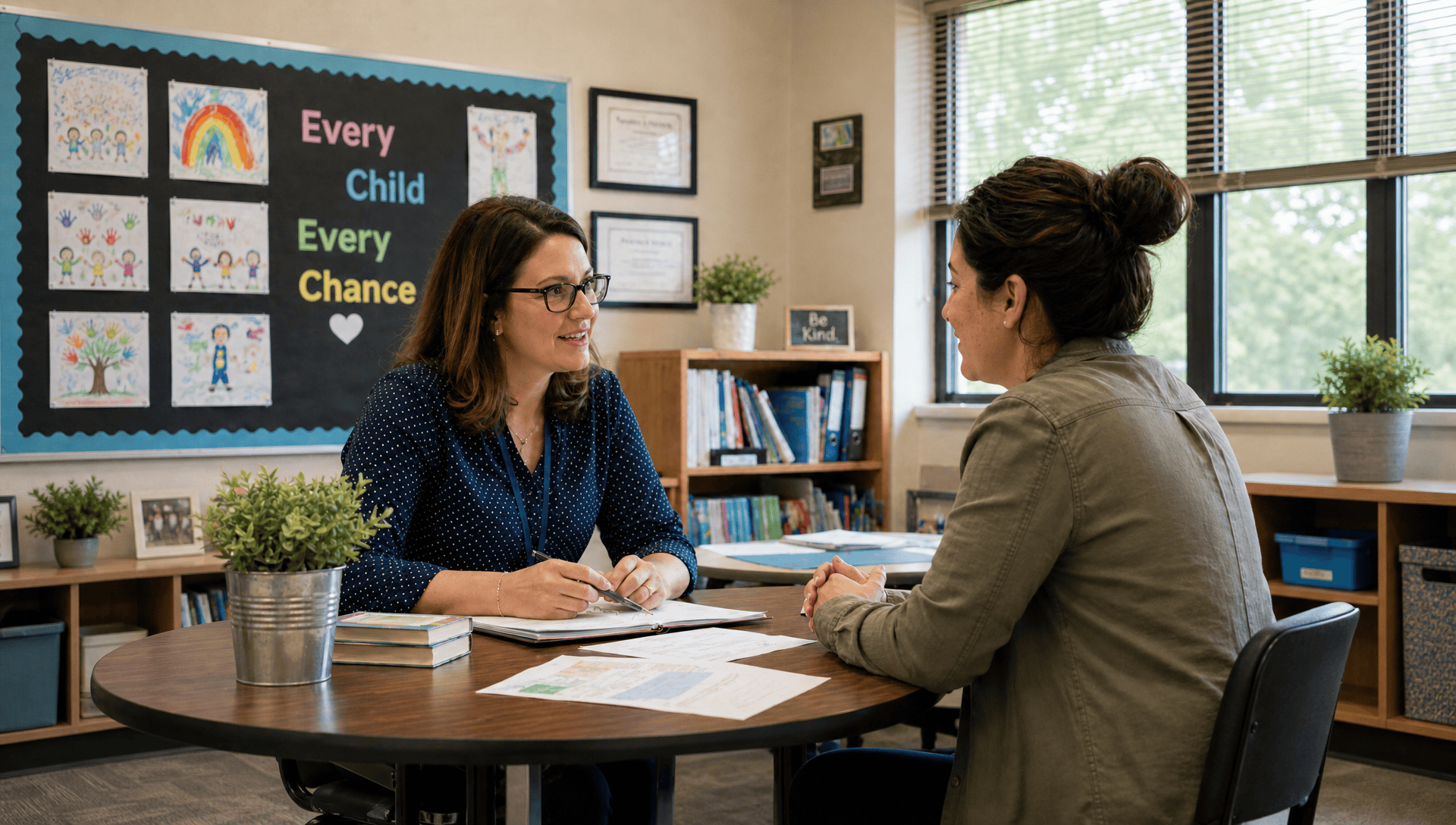
What September Looks Like When Summer Goes Right
There is a version of summer that special needs families rarely get to experience — one where the child comes back to school in September not just at the same level they left, but genuinely ahead. Where the first weeks of fall are spent advancing rather than recovering. Where the child walks back into the classroom with confidence instead of anxiety, ready to build on a foundation that stayed solid all summer long.
That version of summer is not wishful thinking. It is what happens when the right support is in place.
The difference between summer regression and summer acceleration is not about how many hours a child sits at a desk. It is about whether the support they receive is truly individualized, rooted in a real understanding of their specific learning profile, and focused on the actual challenges holding them back rather than surface-level symptoms. Generic summer worksheets do not move the needle for special needs students. Precise, relationship-based, expertly delivered support does.
Special Education Resource has built its entire model around this philosophy. The approach begins with identifying the actual roadblocks — the specific processing, comprehension, or skill gaps that are creating the learning challenges — and then dissolving them with targeted, consistent support. The result is not just maintained progress. It is genuine acceleration, delivered in a way that builds confidence alongside skill.
For families who have spent the school year fighting to get their child the support they deserve, summer is not the time to let the momentum stop. It is the time to build on it.
Every Summer Is a Choice
Summer is coming whether families are ready for it or not. For special needs students, the question is not whether summer will affect their learning — it will. The question is whether that effect will be regression or growth.
The families who act now, before the school year ends, are the ones who get to answer that question on their own terms. They arrive at September with a child who is stronger, more confident, and more ready than the one who left in June. They spend the fall advancing rather than recovering.

Special needs students have already proven they can do hard things. A summer of the right support is not a burden — it is an opportunity. And they deserve every chance to take it.
To learn more about flexible, individualized summer tutoring support designed specifically for special needs students, visit specialedresource.com.