
Homeschooling Anxiety And School Refusal – How To Help Your Child Feel Safe and Confident Enough to Learn Again
Some children don’t hate learning. They hate the panic that comes with school.
The ride to school that causes stomach aches.
The doorway where anxiety locks their feet to the ground.
The mornings filled with tears, arguments, and fear.
School refusal is not defiance. It is distress. It is a child trying to escape a place where they feel unsafe.
Homeschooling can relieve that pressure — not by avoiding learning, but by removing the triggers that overwhelm the nervous system. When home becomes a place of emotional safety, children finally have the mental space to learn again.
This guide helps families understand what school refusal really is, why anxiety shuts down learning, and how homeschool support can rebuild confidence step by small step.
Understanding School Refusal: What Is Really Going On?
School refusal happens when anxiety becomes so high that attending school feels impossible. It is never a choice made lightly.
Common triggers include:
• Fear of academic failure
• Social anxiety or friendship challenges
• Separation anxiety
• Overwhelm from noise, crowds, transitions
• Bullying or peer rejection
• Pressure related to grades, tests, or teacher expectations
• Sensory overload
• Past trauma tied to school environments
When a child refuses school because of fear, the brain shifts into protection mode. Learning shuts down. Fight, flight, or freeze takes over.
Parents see:
• Meltdowns before school
• Refusal to get ready
• Physical symptoms (headaches, nausea)
• Clinginess and fear of being alone
• Anger or panic at the mention of school
These children want learning — they just need safety first.
Homeschooling For Anxiety: Why It Can Restore Calm And Control
In a traditional school, children who shut down may feel:
• Judged for behaviors they cannot control
• Misunderstood by peers and teachers
• Constantly compared to others
• Forced into situations that worsen panic
Homeschooling changes the environment completely.
Homeschooling for anxiety gives:
• Freedom from daily stressors
• Predictable structure that feels comforting
• One-on-one support without social scrutiny
• Breaks when the nervous system signals overload
• Space for healing and rebuilding trust in learning
When survival mode ends, curiosity returns. When fear goes down, confidence goes up.
Anxiety And Learning: How The Brain Responds To Stress
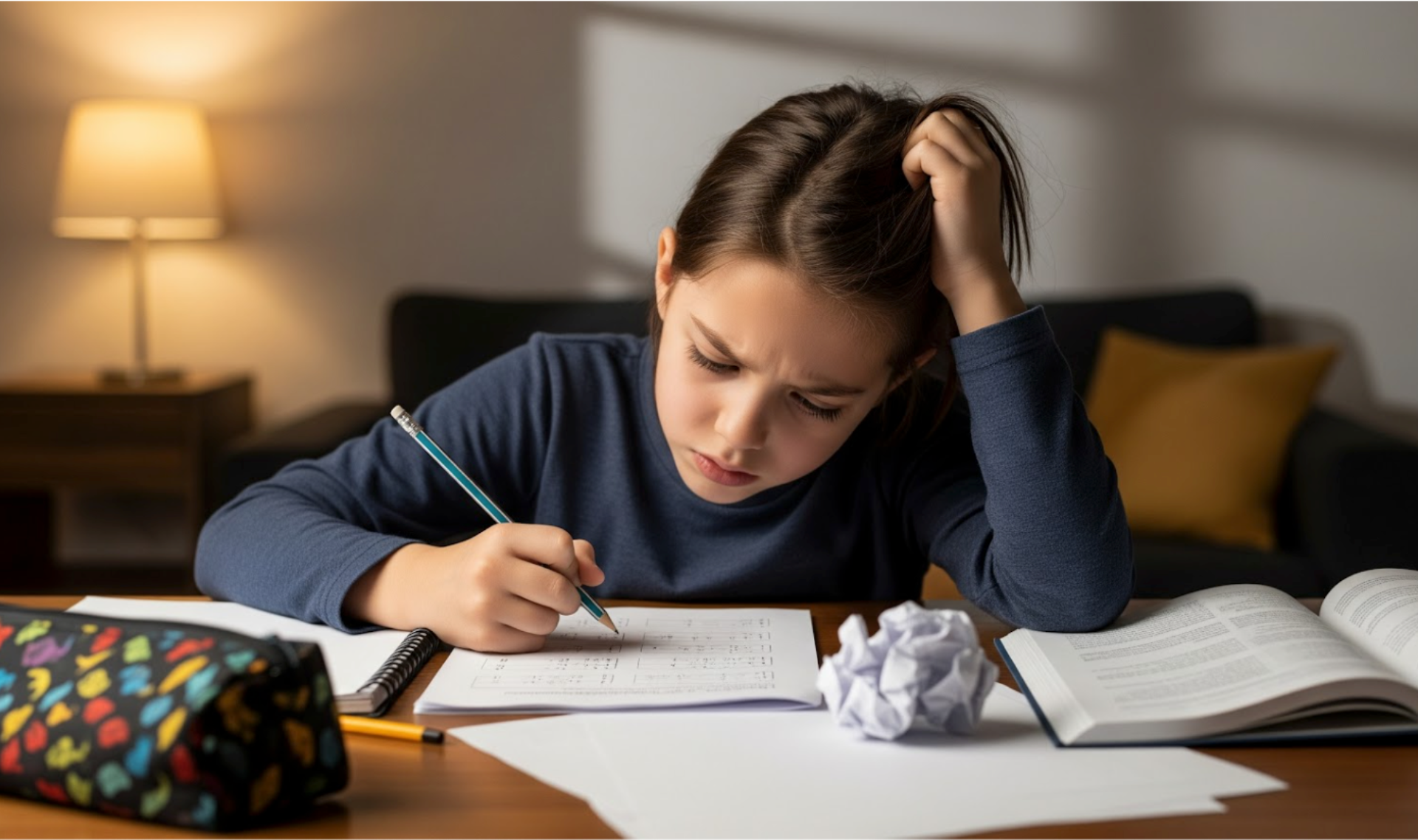
When a child appears “unmotivated,” anxiety is often the real barrier. During moments of stress, the brain shifts into survival mode and prioritizes safety over academics. Stress chemicals like cortisol interfere with learning pathways, making it difficult for a child to focus, remember information, or engage in new tasks.
A brain that is overwhelmed may show itself in subtle but telling ways. Children might struggle to start tasks independently, forget directions almost immediately, or avoid anything unfamiliar. What looks like defiance can actually be fear, and phrases like “I can’t” often surface before a child even attempts the work. These behaviors are signals that the brain is overloaded, not that the child is unwilling to learn.
For learning to happen, calm must come first. Homeschooling can be especially supportive in this area because it naturally reduces pressure and allows expectations to be introduced gradually. Consistent emotional support helps build trust, which restores a sense of safety. When a child feels secure, the brain can once again access higher-level thinking skills—and when safety leads, success follows.
What Causes School Refusal? A Look At Hidden Triggers
Every child has a story beneath their behavior. When families identify triggers, they can finally respond with compassion instead of conflict.
The Anxiety Trigger Table below offers a starting point:
School Refusal Anxiety Trigger Table
| Trigger Category | Common Examples | Calming Homeschool Solutions |
| Academic Fear | Reading aloud, timed tests, fast-paced assignments | Slow pacing, individualized instruction, private practice |
| Peer Dynamics | Bullying, exclusion, difficulty interpreting social cues | Controlled social opportunities, skill-building before group work |
| Sensory Overload | Loud cafeterias, crowded hallways, harsh lighting | Flexible environments, sensory-friendly learning |
| Separation Anxiety | Fear of leaving parent, safety concerns | Gradual separation, secure routines, predictable check-ins |
| Performance Pressure | Grading expectations, testing anxiety | Progress-tracking without comparison, celebrate small wins |
| Perfectionism | Fear of mistakes, avoiding tasks they can’t ace | Growth mindset wording, mistakes normalized as learning steps |
Understanding the trigger brings patience. Patience creates progress.
The Coping Confidence Flowchart: How To Support A Distressed Learner
A simple flowchart helps parents respond to anxiety before it hijacks the day:
Is the child showing fear?
→ Yes → Validate emotions first
→ Offer grounding tools (deep breaths, sensory support)
→ Reduce task challenge temporarily
→ Provide success quickly (one easy step)
→ Slowly increase tasks as calm returns
Is the child shut down and not communicating?
→ Use non-verbal choices (point, thumbs up/down)
→ Give more physical space and more time
→ Ensure expectations stay handled calmly and kindly
Is the child escalating?
→ Pause academics completely
→ Focus fully on regulation
→ Return once the nervous system stabilizes
Education is still happening — the lesson is emotional regulation, resilience, and self-awareness.

Designing A Homeschool Environment That Reduces Anxiety
Safety builds learning. A supportive homeschool environment provides:
Predictable Daily Routines
The brain relaxes when it knows what comes next.
Gentle Transitions
Timers, visual schedules, and countdowns help avoid surprise shifts.
Choice And Control
Children feel stronger when they help design their day.
Movement And Sensory Breaks
• Rocking chairs
• Fidgets
• Trampolines
• Compression clothing
• Yoga stretches
These are not distractions — they are tools that improve focus.
Connection Before Correction
When a child trusts the teaching adult, fear loses its power.
A calm environment tells the brain: “You are safe. You can learn.”
When To Bring In A Special Needs Tutor
Sometimes anxiety is closely tied to academic struggles that aren’t immediately visible. A child who feels behind may refuse tasks as a way to avoid embarrassment or failure, while parents can feel overwhelmed trying to balance teaching with emotional regulation. In these moments, a special needs tutor can become a crucial part of the support system.
A professional learning expert can help identify the true root of academic anxiety and use targeted methods that rebuild confidence rather than increase pressure. They provide relief for parents during especially difficult seasons and track progress in a way that highlights wins instead of setbacks. Parents remain in the driver’s seat, while the tutor serves as a steady co-pilot—helping chart a clear path out of panic and toward progress.
Homeschool Support For Severe Anxiety And School Refusal
Families don’t have to manage this alone. Some children need coordinated support including therapists and specialized educators working together.
Take a look at our Special Needs Home Schooling Checklist
This supportive team helps:
• Reduce daily overwhelm
• Create individualized academic plans
• Keep progress steady during recovery
• Maintain emotional safety as skills grow
The goal is not just avoiding stress — it’s learning to rise above it.
Building A Gentle Homeschool Routine For Anxious Learners
A supportive structure respects emotional needs while still advancing learning.
Here is a recommended flow:
Morning
• Slow-start quiet activities (puzzles, coloring, journaling)
• Short literacy block with confidence-first approach
• Movement or sensory break
• Math with manipulatives or visuals
Mid-Day
• Outdoor exploration (nature reduces stress hormones)
• Real-life learning (cooking, building, gardening)
• Flexible group activity if ready (co-op, sport, club)
Afternoon
• Creativity time (art, music, storytelling)
• Simple independent task to build autonomy
• Preview next day’s plan to reduce fear of unknowns
Learning thrives when calm comes first.
Small Steps Lead To Big Gains: How To Measure Success
Success for anxious learners must look different than success for confident ones.
Meaningful progress may include:
• Willingness to begin a task
• Reduced morning distress
• Longer periods of sustained calm
• More positive words about school
• Completing one lesson without tears
• Asking for help instead of shutting down
Every emotional win is a step toward academic readiness.
Celebrate with words like:
• “You stayed brave through something hard.”
• “You noticed your feelings and found a way through.”
• “You started — that is huge progress.”
Confidence grows in tiny increments.
Avoiding Power Struggles: Language That Supports Regulation
Anxiety escalates when children feel misunderstood or controlled. Compassionate language defuses power struggles while keeping boundaries firm.
Helpful ways to respond:
• “It seems like this feels big right now.”
• “How can this be easier for you?”
• “Let’s pick one small step and try together.”
Avoid:
• “Just do it.”
• “Stop being dramatic.”
• “There’s nothing to worry about.”
Children believe their fear is real — and their brain responds accordingly.
Connection regulates emotion better than correction ever will.
Partnering With Professionals: When Anxiety Takes The Wheel
Some students need licensed mental health support along with homeschooling. This does not mean the child is broken — anxiety is a treatable condition.
Professional support may include:
• Play therapy
• Cognitive behavioral techniques
• Exposure therapy with gradual school integration
• Medication (when recommended by healthcare provider)
Homeschool is not the end of schooling. It can be the bridge to recovery.
A 30-Day Healing Blueprint For Anxiety-Friendly Homeschooling
Week 1: Create Emotional Safety
• Focus on connection
• Introduce routines slowly
• Remove high-pressure academics temporarily
Week 2: Gentle Academic Reintroduction
• Short, positive learning bursts
• Interests first to increase cooperation
• Build small academic wins
Week 3: Confidence Expansion
• Add challenges gradually
• Pair learning with calming coping tools
• Practice independence in tiny doses
Week 4: Stability And Growth
• Reduce avoidance behaviors
• Maintain progress tracking
• Continue celebrating calm engagement
By day 30, families often see:
• Fewer shutdowns
• More willingness to participate
• A calmer morning routine
• A child who smiles again during school time
Healing is the first step toward high achievement.
Bringing Hope Back To Learning
Anxiety and school refusal do not define a child—they describe a moment in time, and situations can change. Homeschooling gives families the freedom to reduce fear, rebuild trust, and restore a genuine love of learning. Within a calmer environment, children can begin to feel capable again as confidence slowly replaces anxiety.
Parents who choose this path are not giving up on education. They are intentionally protecting their child’s mental health while continuing to move learning forward. Each day of calm academic engagement is a victory, every effort counts as progress, and every child deserves a school experience that feels safe enough to learn and grow.