
A new school year brings a familiar mix of hope and worry for families raising a child with an IEP or a 504 plan. There is hope that this will be the year the pieces finally click into place, and there is worry that old struggles will simply repeat themselves with a new teacher’s name attached. The good news is that the relationship between a parent and a teacher is not fixed at the first bell. It can be built, adjusted, and strengthened all year long, starting with a few intentional moves in the first weeks of school. Families who want a head start on that process, including guidance on documentation, meeting prep, and iep advocacy, often find that having a plan in place before problems surface changes the entire tone of the year.
Special education advocacy works best when it starts from a place of partnership rather than defense. Teachers are not adversaries by default, even when past experiences have made it feel that way. Most educators genuinely want their students with learning differences to succeed, but they are often managing large caseloads, limited planning time, and a stack of IEPs and 504 plans they are still learning. A parent who approaches the relationship as a shared project, rather than a battle to be won, tends to get further, faster, and with far less stress along the way.
Start the Year with a Clear, Short Introduction

The first message a parent sends to a new teacher sets the tone for everything that follows. It does not need to be long, and it should not read like a legal document. A short, warm email sent during the first week of school accomplishes far more than a lengthy history lesson about every struggle from years past.
An effective introduction usually includes a few key pieces of information: the child’s name and grade, a one-sentence summary of the disability category or diagnosis if the family is comfortable sharing it, two or three specific strategies that have worked well in the past, and an offer to answer questions. Parents do not need to disclose every detail of a diagnosis to be effective advocates. What matters most to a busy teacher is practical information they can use on day one.
Sample language that tends to land well with teachers might sound something like this: “My son has an IEP for a specific learning disability in reading, and he does best when directions are given both verbally and in writing. He also benefits from a quiet spot to work when he is overwhelmed. I am looking forward to working together this year, and I am happy to answer any questions.” Notice that the tone is informative rather than defensive. It assumes goodwill on the teacher’s part, which tends to invite goodwill in return.
Share the IEP or 504 Plan Before It Is Needed
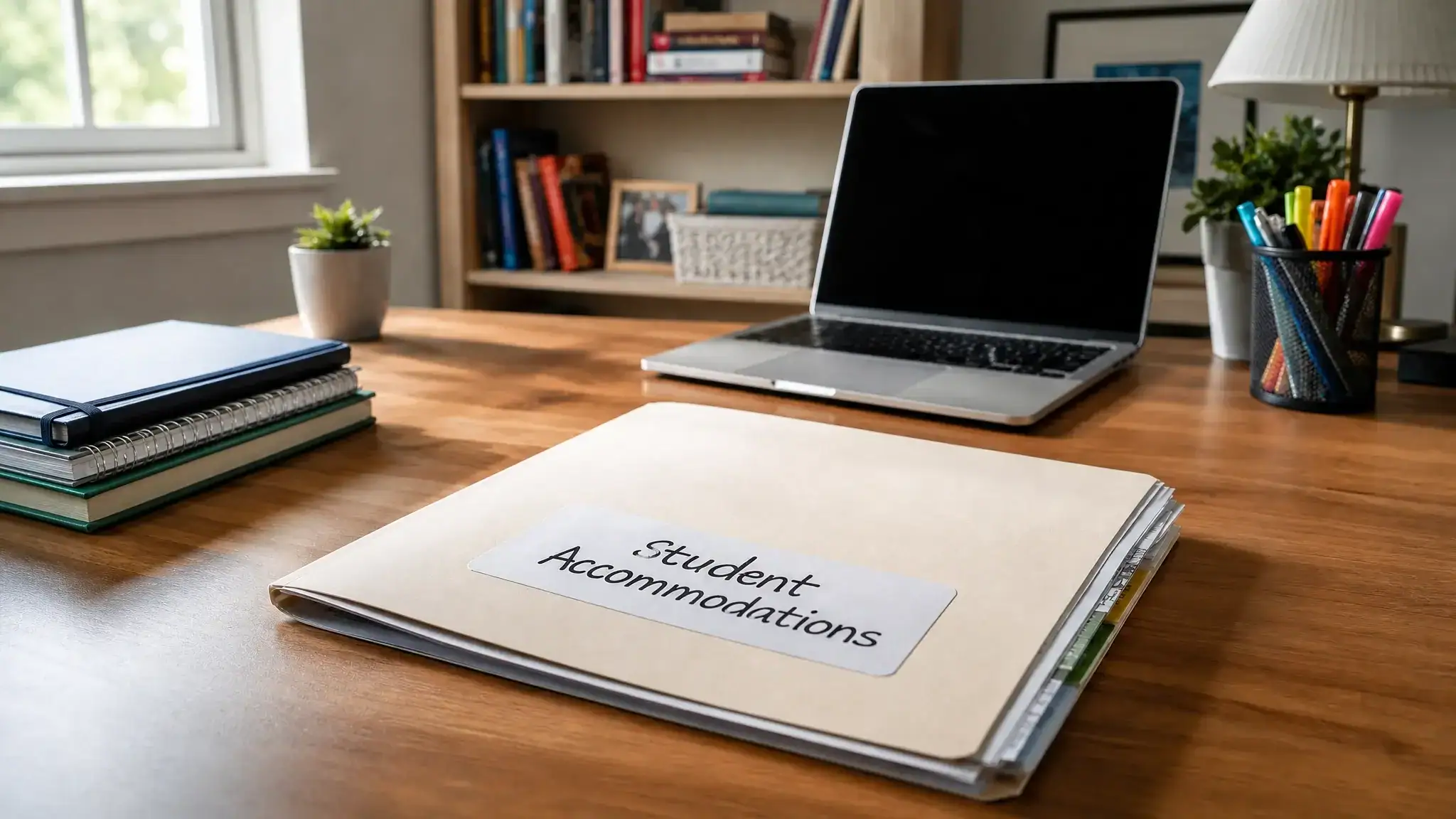
Waiting for a problem to arise before sharing the accommodations plan is one of the most common missteps families make. Teachers cannot implement supports they do not know about, and by the time a struggle becomes obvious in the classroom, the child has often already experienced weeks of unnecessary difficulty. Sending the plan, or at minimum a summary of the key accommodations, in the first week of school prevents that gap entirely.
Some parents worry that sharing too much information will lead to lower expectations for their child. In practice, the opposite tends to be true. Teachers who understand a student’s specific needs are better equipped to challenge that student appropriately, because they know which supports allow the student to access grade-level material rather than being quietly excused from it. A one-page summary, separate from the full legal document, often works best. It might list the top five accommodations, a brief note on the student’s strengths, and a sentence or two about what tends to trigger frustration or shutdown.
Establish a Communication Rhythm Early
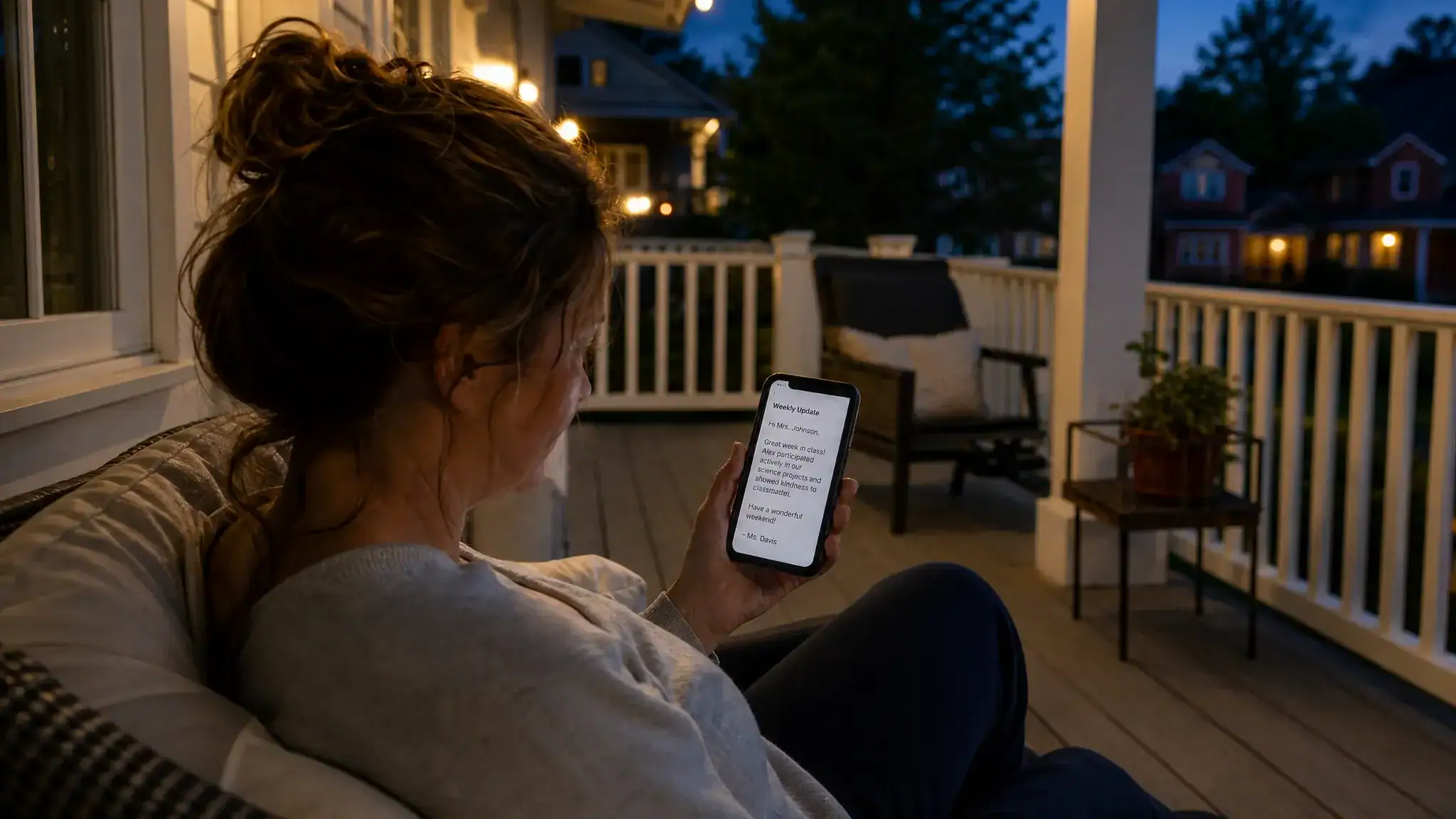
One of the biggest sources of frustration for parents of children with IEPs and 504 plans is not knowing how things are going until a report card arrives, or worse, until a crisis hits. Setting up a regular communication rhythm at the start of the year solves this problem before it starts.
A few approaches tend to work well, depending on the teacher’s preferred style and workload:
- A brief weekly or biweekly email update, even just two or three sentences, covering how accommodations are going and any concerns
- A shared communication log or notebook that travels between home and school, particularly useful for younger children
- A standing monthly check-in, either by phone or video call, for families who want more consistent contact
- A simple green, yellow, red rating system sent home each Friday to flag how the week went at a glance
The specific format matters less than the consistency. A parent who asks for a rigid daily report from an overloaded teacher may find the request quietly abandoned within a month. A parent who asks for something sustainable, and who respects the teacher’s time, tends to get a system that actually lasts through June.
Prepare Thoroughly for the IEP Teacher Meeting
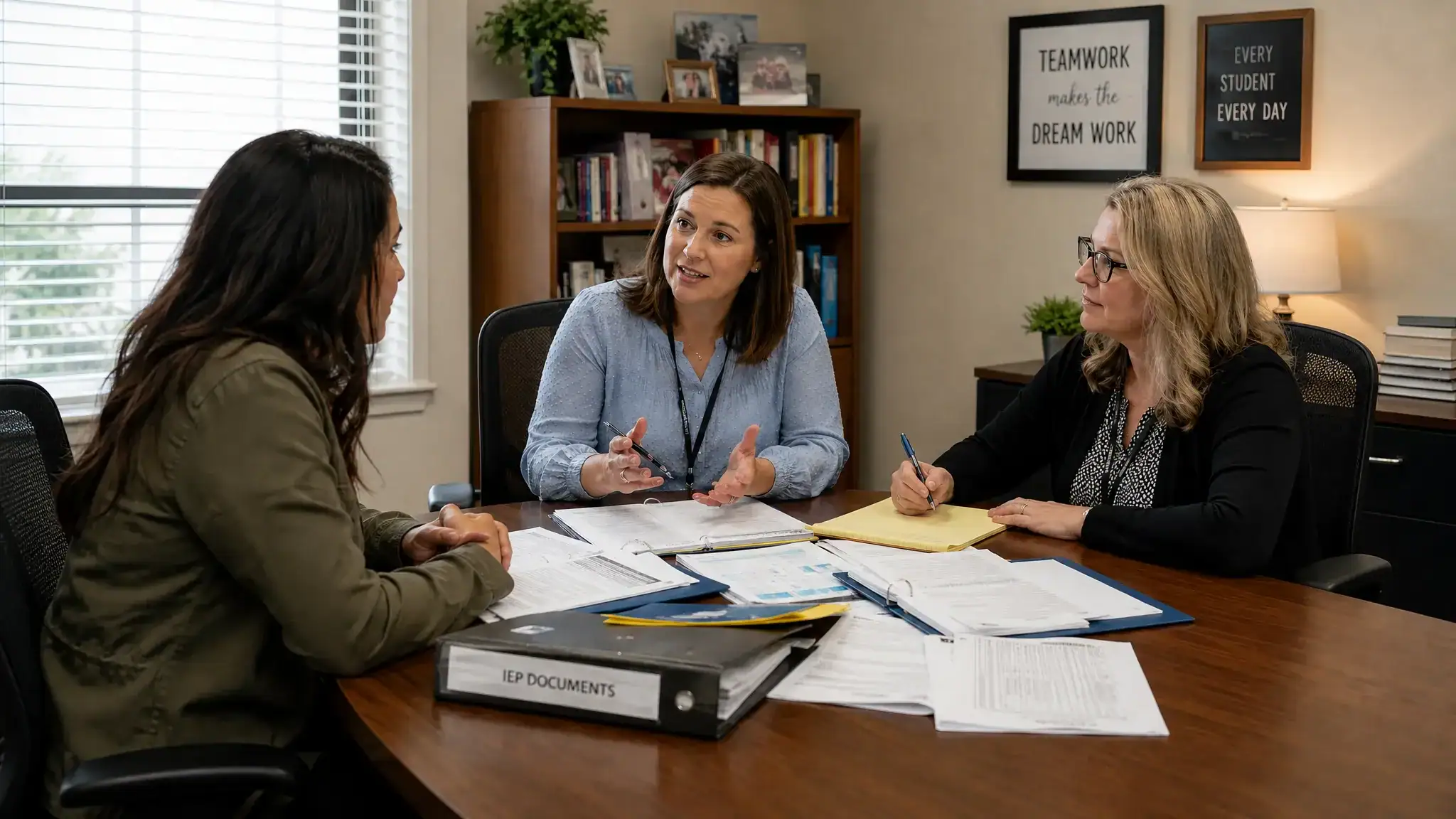
Formal IEP meetings and 504 reviews can feel intimidating, especially when a room full of school staff is sitting across the table from one or two parents. Preparation is the single most effective tool a family has for changing that dynamic. A parent who walks in with notes, questions, and a clear sense of priorities shifts the meeting from something that happens to them into something they actively shape.
Before an IEP teacher meeting, it helps to review the current plan and jot down specific questions about anything unclear. Bringing recent examples of schoolwork, whether that means graded assignments or samples that show frustration or strong effort, gives the team something concrete to discuss rather than vague impressions. It is also worth deciding in advance on the two or three goals that matter most this year, since meetings often run out of time before every topic gets equal attention. Families who feel unsure about navigating this process on their own are not alone in that feeling, and support built specifically around IEP advocacy can make a meaningful difference in how confident a parent feels walking into the room.
During the meeting itself, it is reasonable and appropriate to ask for plain language explanations of any jargon or acronyms, request a copy of any evaluation data that has not already been shared, and ask what happens next and by when. Taking notes, or asking whether the meeting can be recorded where state law allows, ensures nothing important gets lost between the conference room and the follow-up email.
Handle 504 Plan Communication with the Same Care
While IEPs tend to get most of the attention in special education conversations, 504 plans deserve just as much intentional communication. A 504 plan does not come with the same formal review cycle as an IEP in most states, which means it can quietly slip through the cracks if nobody is actively maintaining the relationship around it.
Because 504 plans are often managed by a school counselor or a 504 coordinator rather than directly by the classroom teacher, it helps to loop in both the classroom teacher and the coordinator at the start of the year. A short email to both parties, outlining the accommodations and asking how implementation will be monitored, closes a gap that many families do not realize exists until a problem has already taken root. Checking in partway through each semester, rather than waiting for an annual review that may or may not happen on schedule, keeps the plan active rather than filed away and forgotten.
Advocate Without Becoming Adversarial
There is a real difference between advocating firmly and approaching every interaction as a fight. The families who see the best outcomes over time tend to be the ones who hold both traits at once: unwavering clarity about what their child needs, paired with genuine respect for the teacher as a person doing a hard job.
A few habits help maintain that balance. Assuming good intent, at least until there is clear evidence otherwise, keeps early conversations from escalating unnecessarily. Putting concerns in writing after a verbal conversation creates a paper trail without turning every exchange into a confrontation. Focusing feedback on specific, observable events rather than general character judgments, such as describing what happened in a particular incident rather than labeling a teacher as uncaring, tends to keep the conversation productive. Bringing solutions along with concerns, rather than only pointing out what is not working, signals a genuine desire to collaborate.
It also helps to remember that most teachers are working within constraints they did not choose and cannot fully control, including class sizes, scheduling limits, and district policies that shape what is realistically possible in a given classroom. A parent who recognizes those constraints, while still holding firm on what the law and the child’s needs require, tends to build far more durable trust than one who treats every limitation as personal negligence.
Keep a Simple Record as the Year Progresses

Good communication is easier to sustain when there is a simple system behind it. Parents do not need a complicated filing setup to stay organized, but a basic record of what has been shared and discussed makes every future conversation, whether friendly or difficult, go more smoothly.
A folder, physical or digital, that holds a copy of the current IEP or 504 plan, notes from meetings, and copies of emails sent to the school is usually enough. Jotting down the date and a one-line summary after every phone call or in-person conversation with a teacher creates a timeline that is easy to reference months later, when memory alone would not be reliable. This is not about building a case against anyone. It is about being able to answer a simple question with confidence: what has already been tried, and how did it go.
This kind of record also protects the teacher as much as the parent. When a plan changes partway through the year, or when a new accommodation gets added after a meeting, having a written record prevents the kind of confusion that happens when different staff members remember a conversation differently. A shared, factual history keeps everyone working from the same page, which is often exactly what a student with a learning difference needs most from the adults around them.
Recognize When Extra Support Is Needed

Even with strong communication habits in place, some students continue to struggle academically despite a well-designed IEP or 504 plan. This does not necessarily mean the plan has failed or that the teacher is not trying. Sometimes a student’s learning gaps are simply too significant to close within the time and structure a general education classroom can provide, no matter how many accommodations are layered on top.
In situations like this, a dedicated special needs tutor can bridge the space between what the classroom offers and what the individual child actually needs to catch up and move forward with confidence. The right support does not replace the school’s obligations, but it can address the root cause of a learning struggle far more precisely than a general classroom setting typically allows, whether that support takes the form of one-on-one sessions, small group work, or coordination with a homeschooling plan.
Recognizing this need early, rather than waiting for a full year of frustration to confirm it, often makes the difference between a temporary setback and a pattern that follows a child from grade to grade.
Keep the Partnership Going All Year
The habits that matter most at the start of the year are the same ones that matter in February, when the initial excitement has faded and everyone involved is tired. Consistency, not intensity, is what sustains a strong parent-teacher relationship over the long haul.
A few practices help maintain momentum through the full school year:
- Sending a brief note of appreciation when something is going well, not only reaching out when there is a problem
- Revisiting the communication plan partway through the year to see if the original format still fits everyone’s needs
- Flagging concerns as soon as they appear, rather than letting frustration build until a small issue becomes a large one
- Treating every teacher transition, such as a long-term substitute or a new specialist, as a fresh opportunity to introduce the child and the plan again
None of this requires a parent to become an expert in special education law or classroom management. It requires consistency, clarity, and a willingness to treat the teacher as a partner in the work rather than an obstacle to get around. When both sides show up with that mindset, the school year tends to go better for everyone involved, and most importantly, for the child at the center of it.
Families who want structured support building that partnership, whether through help preparing for meetings, understanding a plan’s language, or finding the right academic support outside the classroom, do not have to figure it out alone. A collaborative approach, backed by the right resources, gives students with learning differences the best possible foundation for a year of real progress.