
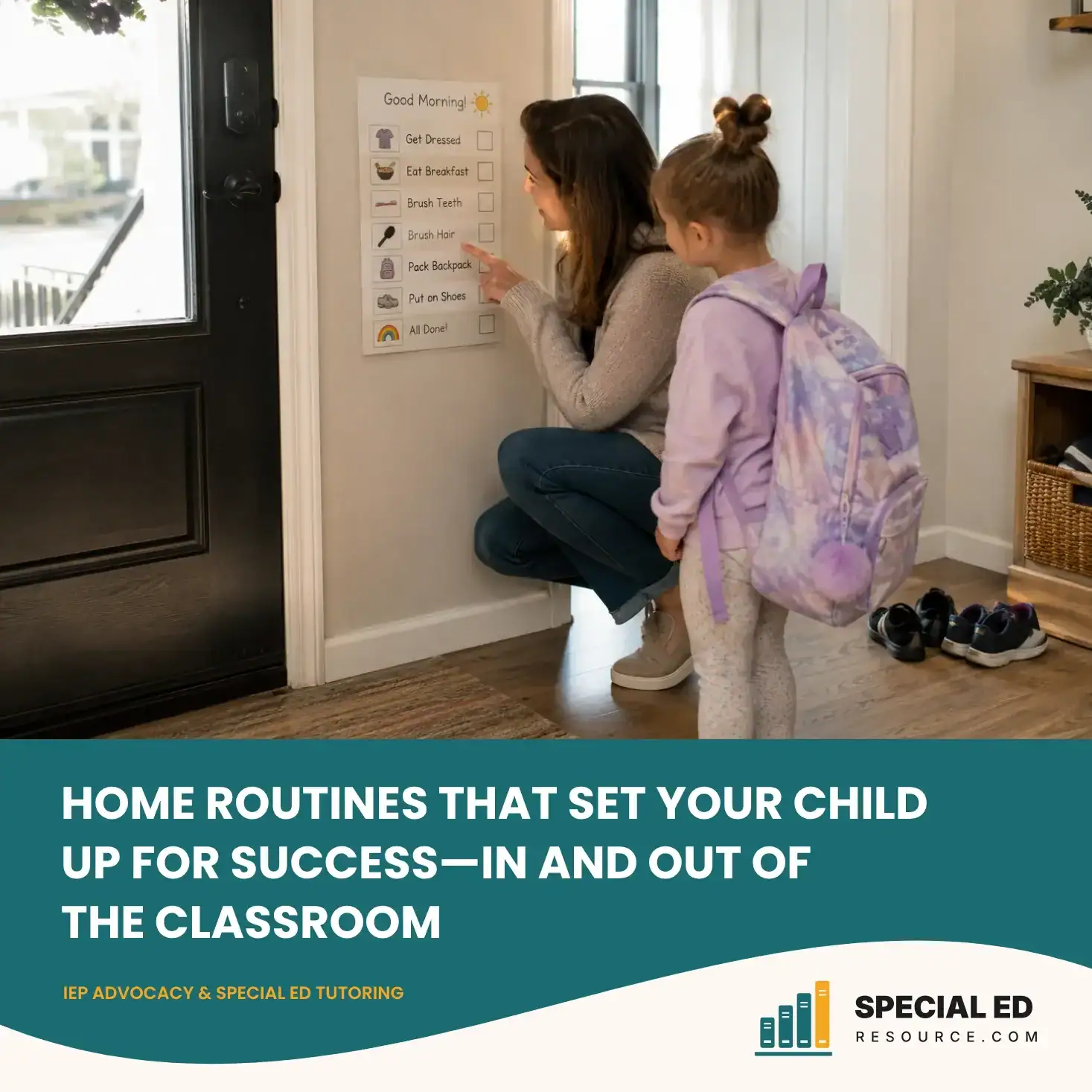
Every parent of a special needs student knows the feeling: the alarm goes off, the morning turns into a scramble, and by the time the school bus pulls away, everyone in the house is already worn out. For families raising children with learning differences, the hours before and after school carry more weight than they do for most households. A steady daily routine for special needs students is not about rigid schedules or perfection. It is about creating a rhythm that lowers stress, builds independence, and gives kids the mental bandwidth to actually learn once they walk through the classroom door. Families who feel stuck in this cycle often benefit from working with a special needs tutor, someone who can help translate a chaotic afternoon into a workable plan built around a child’s real strengths and challenges.
A home routine for school success does not need to look like anyone else’s. Some children need extra time to transition between tasks. Others need visual schedules taped to the refrigerator. Still others do best with a countdown timer and a quiet space free of noise and clutter. For children on the autism spectrum in particular, predictability at home can make an enormous difference in how the school day unfolds. Many parents find it helpful to pair home strategies with the guidance of an autism tutor, who understands how sensory needs, communication styles, and executive functioning challenges intersect with daily life. The goal is never to force a child into someone else’s mold. It is to build a home environment that plays to a child’s natural wiring instead of working against it.
This article walks through the building blocks of a strong home routine, from the first alarm in the morning to the last light turned off at night. It covers how to structure homework time without turning the kitchen table into a battleground, how to protect down time so kids do not burn out, and how to keep momentum going during a back-to-school routine for kids with disabilities. None of these ideas require a complete life overhaul. Small, consistent changes tend to produce the biggest results over time.
Why Routine Matters So Much for Special Needs Learners
Children thrive on predictability, and this is especially true for kids who experience the world differently. A morning routine for school readiness gives a child’s brain fewer decisions to make in a short window of time. Instead of wondering what happens next, a child with a clear routine already knows: breakfast, teeth, backpack, shoes, out the door. That predictability frees up mental energy for the things that actually require thought and flexibility, like handling an unexpected fire drill or navigating a disagreement with a classmate.
For students with ADHD, autism, dyslexia, or processing differences, transitions are often the hardest part of any day. Moving from sleep to breakfast, from breakfast to dressing, from home to car or bus, each shift asks a child to disengage from one activity and engage with another. A consistent routine smooths these transitions because the brain has already rehearsed them. Over weeks and months, what once felt like a daily struggle becomes automatic.
There is also a confidence piece that often gets overlooked. When children know what to expect and can complete their routine with less prompting, they start to see themselves as capable. That sense of competence carries into the classroom. A student who dressed themselves, packed their own folder, and got out the door with minimal reminders walks into school already feeling like they had a good morning. That feeling matters more than most people realize. 
Pain points families commonly mention when routines are missing or inconsistent include:
- Morning meltdowns that leave everyone frazzled before the school day even starts
- Homework battles that stretch late into the evening and eat into family time
- A child who arrives at school already dysregulated, making it harder to focus
- Parents feeling like they are constantly nagging instead of connecting with their child
- Teachers reporting behavior issues that seem to stem from exhaustion or unpredictability at home
Addressing these patterns does not require a complicated system. It requires consistency, realistic expectations, and a willingness to adjust the plan when something is not working.
Building a Morning Routine for School Readiness
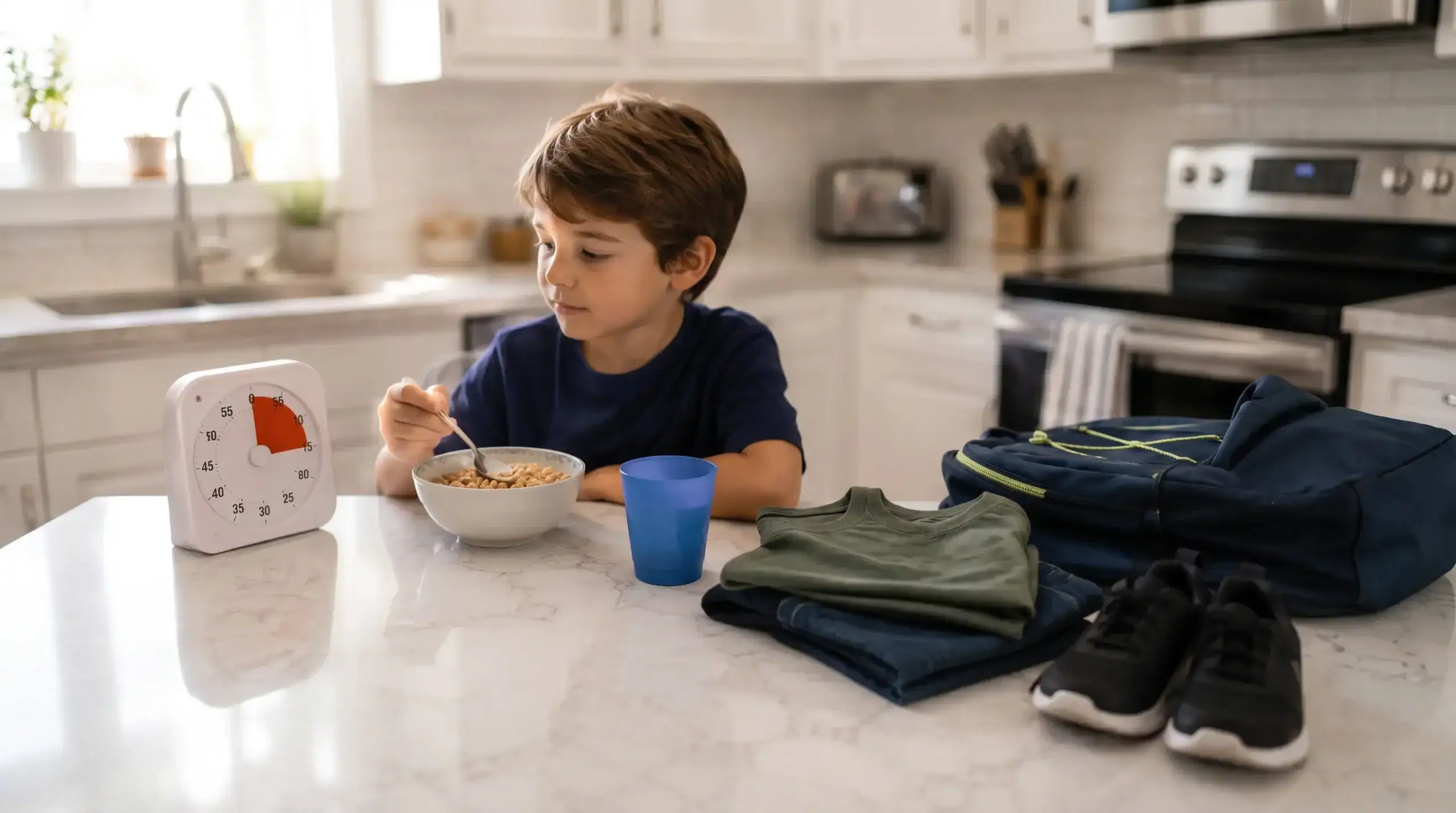
Mornings set the emotional tone for the entire school day, which is exactly why a morning routine for school readiness deserves careful thought. The most successful routines share a few common traits: they are visual, they are predictable, and they build in a buffer for the unexpected.
Start by mapping out the actual sequence of events a child needs to complete before leaving the house. Waking up, using the bathroom, getting dressed, eating breakfast, brushing teeth, gathering school materials, and putting on shoes and a coat are the typical steps, though every family’s list will look slightly different. Writing these steps down, either as a checklist or as a picture schedule for younger or nonverbal children, turns an abstract expectation into something concrete a child can reference without needing constant reminders from a parent.
Timing matters as much as sequence. Many families discover that mornings go more smoothly when the routine starts fifteen to twenty minutes earlier than feels strictly necessary. That extra buffer absorbs the inevitable hiccups, a missing shoe, a meltdown over a shirt tag, a forgotten homework folder, without throwing off the entire morning.
A few practical strategies parents can layer into the morning:
- Lay out clothing and pack backpacks the night before so mornings involve fewer decisions
- Use a visual timer so children can see how much time remains before it is time to leave
- Keep breakfast simple and consistent rather than introducing new foods on school days
- Post a picture or written checklist at a child’s eye level near the door
- Offer choices within structure, such as choosing between two shirts, to build a sense of control without opening the door to a longer negotiation
It helps to remember that the goal of a morning routine is not flawless execution every single day. Some mornings will still be hard. The value of a routine is that it gives everyone, parent and child alike, a shared reference point to return to when things go off track.
Structuring Homework Time Without the Nightly Battle
For many families, the after-school hours bring their own set of challenges. Kids often come home from school already mentally depleted, having spent the day masking difficulties, sitting still, or working harder than their peers to keep up. Diving straight into homework at that point can set the stage for frustration on both sides.
A decompression period before homework begins can make a significant difference. Fifteen to thirty minutes of unstructured time, a snack, some movement, or quiet play, allows a child’s nervous system to reset before tackling more academic demands. Trying to force homework immediately off the bus often backfires, turning a twenty-minute assignment into an hour-long standoff.
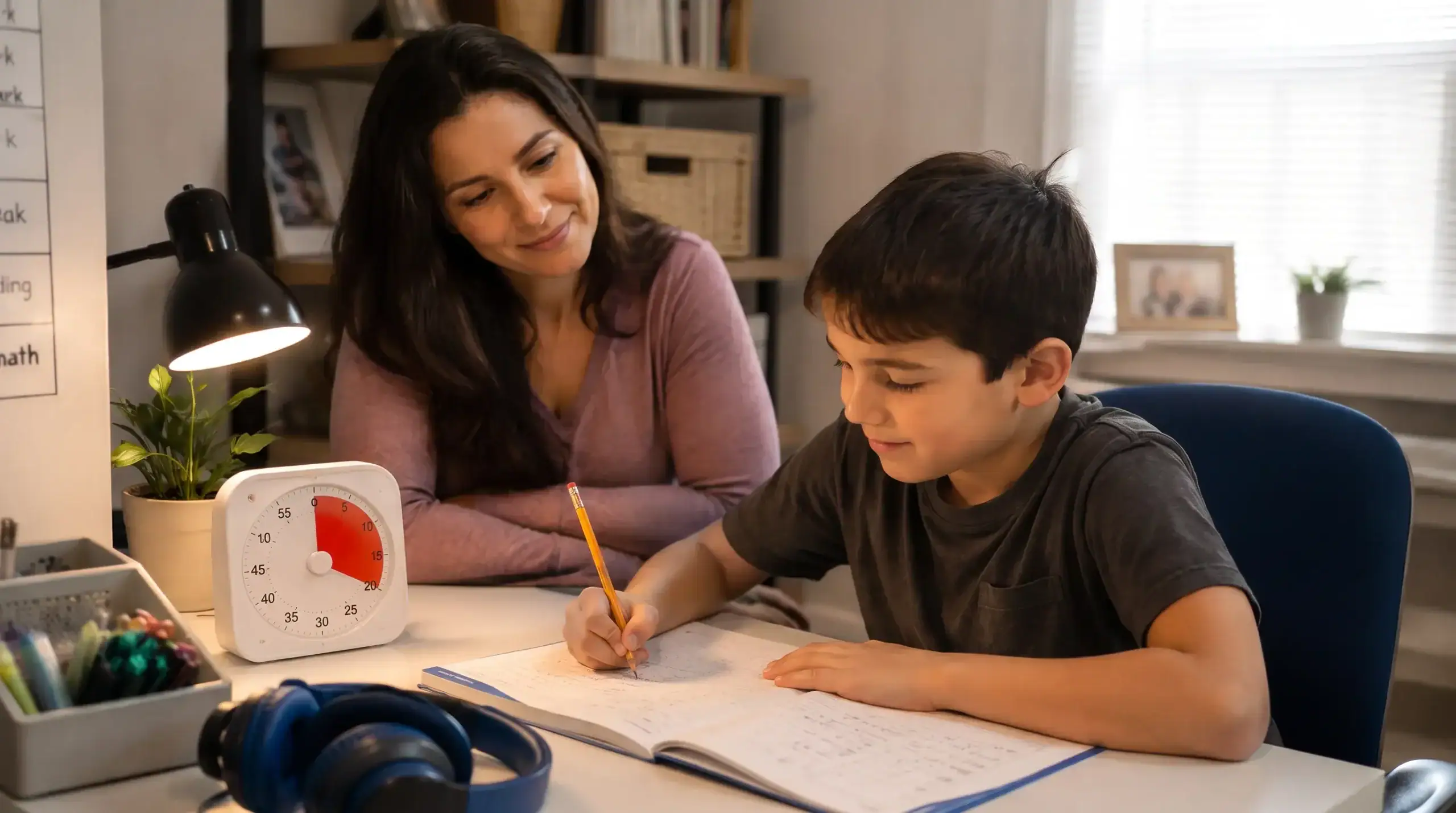
Once it is time to start, location and structure both matter. A consistent homework spot, free from television and excessive noise, helps signal to the brain that it is time to focus. Some children do better with background white noise or instrumental music, while others need complete silence. Breaking assignments into smaller chunks with short breaks in between often works better than expecting a child to sit through thirty or forty-five minutes of continuous work.
Helpful approaches for homework time include:
- Using a visual or physical timer to break work into manageable intervals, such as ten minutes on and five minutes off
- Keeping homework supplies in one designated spot so time is not wasted searching for pencils or paper
- Starting with the assignment a child finds easiest to build momentum before moving to harder tasks
- Praising effort and persistence rather than only correct answers
- Communicating with teachers when homework consistently takes far longer than expected, since this often signals a mismatch between the assignment and the child’s current skill level
When homework time consistently ends in tears or shutdowns, it is worth stepping back and asking whether the routine itself needs adjusting, or whether additional academic support outside of school hours could relieve some of the pressure. Tutoring support built specifically around a child’s IEP goals or learning profile can often reduce homework stress considerably, since a child arrives at the assignment already more confident in the underlying skill.
Protecting Down Time So Kids Do Not Burn Out
It is tempting to fill every spare hour with enrichment, therapy appointments, or extra academic practice, especially for parents who feel like their child is behind. But down time is not wasted time. For special needs learners, unstructured play and rest are often when the nervous system recovers from the demands of a full school day.
Down time looks different for every child. For some, it means physical movement, running in the backyard, jumping on a trampoline, or riding a bike. For others, it means quiet solitary activities like drawing, building with blocks, or reading a favorite book. Screen time can be part of down time, but many families find that too much screen time right after school actually makes the transition into homework harder, since it can be difficult for a child to disengage from a screen once it is time to switch tasks.
Building in this time is not indulgent, it is protective. Children who never get a chance to decompress are more likely to experience meltdowns later in the evening, struggle with sleep, and arrive at school the next day already running on empty. A predictable block of down time in the daily routine for special needs students communicates to a child that rest is expected and valued, not something they need to earn.
Signs that a child may need more protected down time in their schedule include:
- Increased irritability or meltdowns in the late afternoon or evening
- Difficulty falling asleep or frequent night waking
- Resistance to starting homework that seems to stem from exhaustion rather than the material itself
- A noticeable dip in behavior or focus toward the end of the school week

Parents do not need to overhaul their entire calendar to address this. Sometimes it is as simple as scheduling one fewer extracurricular activity per week or moving a therapy appointment to a day with a lighter school workload.
Creating an Evening Routine That Supports Better Sleep
The evening routine deserves just as much attention as the morning one, since sleep quality has a direct effect on attention, mood regulation, and academic performance the following day. Many special needs students, particularly those with autism or ADHD, experience sleep challenges more frequently than their neurotypical peers, which makes a consistent wind-down routine especially valuable.
A predictable evening sequence, dinner, bath or shower, quiet activities, teeth brushing, and a consistent bedtime, helps signal to the body that sleep is approaching. Screens should ideally be turned off at least thirty to sixty minutes before bed, since the light and stimulation from devices can make it harder for the brain to wind down.
Elements of a strong evening routine often include:
- A consistent bedtime and wake time, even on weekends, to support the body’s internal clock
- Dim lighting in the hour before bed to encourage the release of natural sleep hormones
- A calming activity such as reading together or listening to quiet music
- Preparing for the next day, packing backpacks and laying out clothes, so mornings start with one less task
- A brief check-in about the day, giving a child space to talk about anything that felt hard without turning it into a lengthy conversation right before sleep

When sleep struggles persist despite a consistent routine, it is worth discussing the pattern with a pediatrician, since some sleep difficulties in special needs children have a medical or sensory component that benefits from additional support.
Supporting a Back-to-School Routine for Kids With Disabilities
The transition back to school after a break, whether it is a long summer, a holiday, or even a shorter weekend, often requires extra scaffolding for special needs learners. A back-to-school routine for kids with disabilities works best when it is reintroduced gradually rather than all at once on the first day back.
In the week or two leading up to the return to school, families can start shifting bedtimes and wake times closer to the school schedule. Reintroducing structured meal times and a version of the homework or reading routine, even in a lighter form, helps the brain re-adjust before the actual demands of school resume. Talking through what the first day will look like, who the teacher is, what the schedule includes, and what to expect at drop-off, can ease anxiety for children who struggle with uncertainty.
Steps that tend to make this transition smoother include:
- Visiting the school or classroom ahead of time if that option is available
- Reviewing the child’s IEP or 504 plan with any new teachers before the first day
- Practicing the morning routine as a dry run a few days before school starts
- Creating a simple visual calendar counting down to the first day
- Keeping expectations realistic for the first week, since adjustment often takes longer than a single day
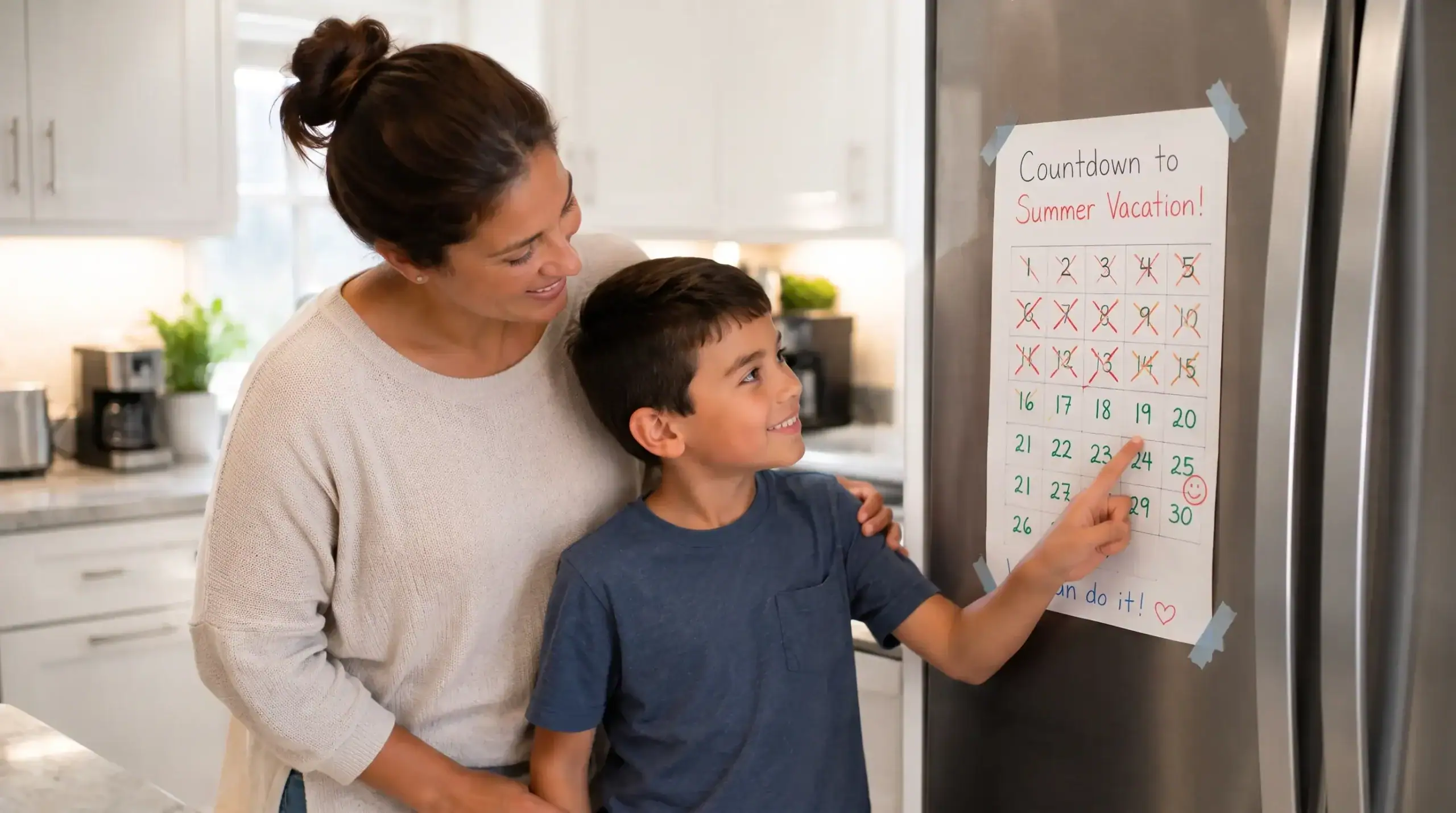
Families who feel overwhelmed by this transition are not alone. The back-to-school period is consistently one of the more stressful times of year for parents of special needs children, largely because so many pieces, academic, social, sensory, and logistical, all shift at once.
Adjusting the Routine as Needs Change
No routine stays perfect forever. Children grow, school demands shift, and what worked in September may need adjusting by January. Rather than viewing this as a failure of the original plan, it helps to treat home routines as living systems that get revisited and refined throughout the year.
Parents can build in natural checkpoints, the start of a new school term, after an IEP meeting, or following a schedule change at school, to review what is working and what is not. Asking a child directly, when age-appropriate, about which parts of the routine feel hard can surface issues that might otherwise go unnoticed. A step that felt manageable in September might become a source of frustration once homework gets harder or a new subject gets introduced.
Flexibility within structure is the goal. The routine provides the scaffolding, but the specific details, how long homework breaks last, what down time activities look like, when bedtime shifts as the school year progresses, can and should evolve. Families who stay curious and willing to adjust tend to see better long-term results than those who try to force a routine to work exactly as originally designed, no matter what.
Building a Support System Around the Routine
A strong home routine works best when it does not exist in isolation. Communication with teachers, school support staff, and any outside providers helps ensure that expectations at home align with what is happening at school. Sharing a copy of the home routine with a teacher, for example, can help them understand a child’s patterns and adjust classroom expectations accordingly.
For families who feel like they are managing everything alone, additional support can make an enormous difference. Whether that support comes in the form of individual tutoring, small group sessions for homeschooling families, or larger scale programs for districts and state school systems, having a team that understands both the academic and emotional sides of a child’s learning profile takes pressure off the home routine to solve everything by itself. A home routine can create the structure, but targeted academic support helps address the underlying skill gaps that often make homework and school so exhausting in the first place.
Building this kind of support does not need to be complicated or expensive. Flexible, scalable options exist for families at every stage, from occasional tutoring sessions to more consistent ongoing support, and can be adjusted as a child’s needs change throughout the school year.
Bringing It All Together
A home routine for school success is not about achieving a picture-perfect schedule or eliminating every hard morning or difficult homework session. It is about creating enough predictability and structure that a child knows what to expect, feels supported rather than rushed, and has the down time needed to recharge. Small, consistent habits, a steady morning sequence, a homework routine broken into manageable pieces, protected time to rest, and a calming bedtime, add up over the course of a school year in ways that are easy to underestimate in the moment.
Every family will build a slightly different version of this routine based on their child’s needs, their own schedule, and what actually works in practice. What matters most is consistency and a willingness to adjust when something is not serving the family well. With the right structure at home, paired with the right academic support when needed, special needs students are better positioned to walk into their classrooms each day ready to learn, and just as importantly, ready to believe in themselves.