

It is 7:42 a.m. One shoe is on, the other is nowhere to be found. The backpack is open on the kitchen floor, breakfast is half-eaten, and the bus arrives in eight minutes. For many families of kids with ADHD, this scene plays out nearly every school day, and homework time after school can feel just as tense. The good news is that routines built around how a child with ADHD actually focuses can take much of the fight out of these moments. This ADHD Awareness Month, here is a practical look at focus-friendly routines for home, including visual schedules, body-doubling, movement breaks, and simple ways to smooth out transitions, along with ADHD homework tips that make evenings calmer.
ADHD Awareness Month: The Right Time to Rethink Routines at Home
October is ADHD Awareness Month across the US and Canada, and it is a natural moment for families and educators to step back and ask what is really working. Much of the conversation around ADHD centers on school: classroom behavior, grades, accommodations, and the IEP or 504 process. Those things matter. But a large share of the daily effort happens at home, in the hours before the first bell and after the last one.
Home routines are not about strict control or turning the house into a boot camp. They are about lowering the number of decisions and reminders a child has to manage on their own. Many kids with ADHD find it harder to hold a string of steps in mind, judge how much time has passed, get started on a task they do not love, or shift gears from one activity to the next. A well-designed routine quietly carries some of that load, so a child can spend their energy on the task itself instead of on figuring out what comes next.
That is why ADHD routines at home tend to work best when they are visual, predictable, and flexible enough to bend on hard days. Parents do not need a perfect system. They need a few reliable habits that make the hardest parts of the day a little easier, one step at a time.
Why Mornings and Homework Time Feel So Hard
Think about everything a typical school morning asks of a child: wake up, get out of bed, use the bathroom, get dressed, eat, brush teeth, find shoes, pack a bag, and walk out the door on time. Each of those steps is a small transition, and each transition comes with its own distractions. A toy on the bedroom floor, a pet that wants attention, or a sibling who is already on a tablet can pull focus in seconds. For a child who struggles to track time, five minutes and twenty minutes can feel exactly the same until the clock suddenly says it is time to go.

Homework time brings a different set of challenges. By late afternoon, many kids with ADHD have spent six or seven hours working hard to sit still, follow directions, and keep up in class. Their tank is often close to empty. Then they are asked to sit down again and do more of the work that was hardest during the day. It is no surprise that this stretch of the evening often turns into tears, stalling, or arguments.
Some of the most common friction points include:
- Constant verbal reminders that blur together and stop registering after the third or fourth repeat
- Unclear finish lines, where a child cannot tell how much work is left or what done looks like
- High starting costs, where simply finding a pencil, the right worksheet, or the login page derails the whole session
- Transitions away from favorite activities, especially screens, that feel abrupt and unfair to the child
- Rushing, which raises stress for everyone and makes forgotten items and meltdowns more likely
None of these struggles are about a child not caring or not trying hard enough. When parents shift the question from "Why won't they just do it?" to "What is getting in the way?", the path forward usually becomes clearer. The strategies below are designed to remove those obstacles rather than push harder against them.
Build an ADHD Morning Routine Around a Visual Schedule
Spoken directions disappear the moment they are said. A picture on the wall stays put. That simple difference is why a visual schedule is often the foundation of a strong ADHD morning routine. Instead of a parent calling out "Did you brush your teeth? Where are your shoes?" a dozen times, the schedule becomes the reminder. The child checks the chart, and the parent's role shifts from nagging to coaching.
A visual schedule does not need to be fancy. A sheet of paper, a whiteboard, or a set of laminated cards can all work. What matters most is how it is set up and used. Here is a simple way to build one:
- Keep it short. Start with a small number of steps and adjust to your child. Combine actions when helpful, such as “get dressed,” or break them down further if your child needs that support.
- Use pictures, not just words. Younger children benefit from simple icons, and many kids of all ages respond well to photos of themselves doing each step.
- Put it where the action happens. A schedule taped to the bathroom mirror or the back door is far more useful than one hidden on the fridge in another room.
- Make it interactive. Checkboxes, sliding clips, or cards that move from a "to do" column to a "done" column give a satisfying sense of progress.
- Add time anchors. An analog clock with colored sections, a visual countdown timer, or a short playlist where each song marks a step can make time easier to see.
- Do the prep the night before. Laying out clothes, packing the backpack, and setting shoes and coat by the door turns a stressful morning task into a calm evening one.
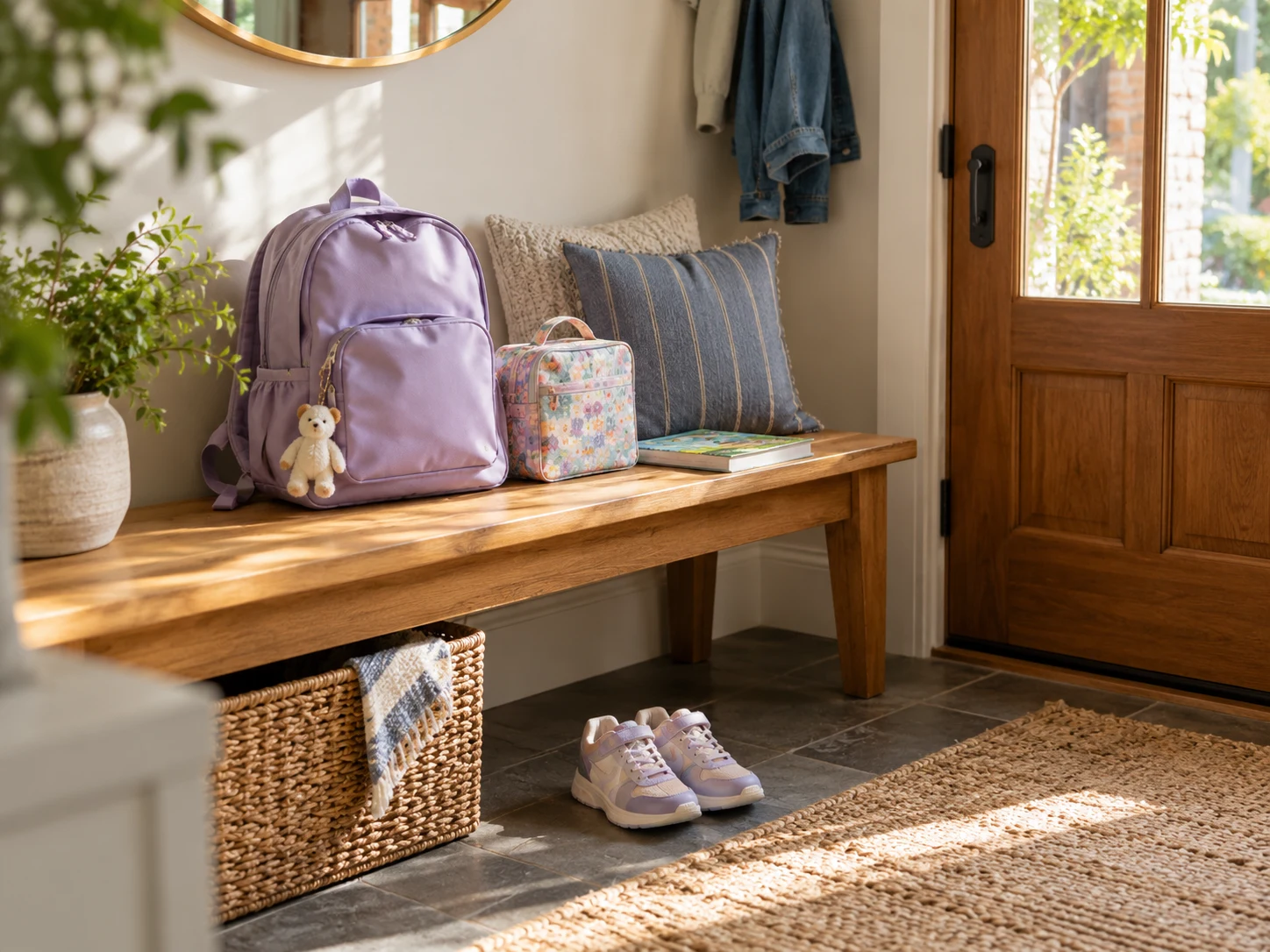
That last point deserves extra attention. Many families find it helpful to create a "launch pad," a single spot near the exit where everything needed for the next day lives: backpack, signed forms, lunch bag, library book, sports gear. When the launch pad is set the night before, the morning has fewer moving parts and fewer chances for a last-minute scramble.
Introduce the schedule at a calm time, not in the middle of a rushed morning. Let your child help choose the pictures or decorate the chart. Learning to use it may take time. Notice specific progress, such as checking the chart independently, and adjust steps that are not working.
Body-Doubling: A Simple Focus Strategy for Kids
Body-doubling means working on a task while another person is nearby doing their own work. The other person is not necessarily teaching or correcting; they are providing quiet company. Some people with ADHD find this helpful, but evidence for its effectiveness specifically in children is limited.
Families can try this as an optional arrangement and observe whether it helps their child start or stay with a task. Some children may enjoy the company; others may find another person distracting. It should not be presented as a proven ADHD treatment.
In practice, body-doubling can look like a parent paying bills or answering emails at the kitchen table while a child works through a math page beside them. It can be an older sibling reading a book on the couch while a younger child practices spelling words. In the morning, it might mean a parent folding laundry in the child's bedroom while the child gets dressed, rather than calling instructions from down the hall.

A few things make body-doubling work well. The adult should model focused work and keep conversation to a minimum, since the goal is shared quiet effort, not a tutoring session. It helps to resist the urge to correct every small mistake in real time, which can turn a calm setup into a stressful one. Short check-ins at natural stopping points tend to work better than constant feedback.
If being in the same room is not practical, a family could try a parent-supervised video call with a trusted person while each works quietly. Whether this helps will vary. Keep the arrangement comfortable and age-appropriate, and stop or adjust it if it adds distraction.
Movement Breaks That Support Focus
Planned movement breaks give children a chance to move between periods of work. Breaks may support attention and make homework feel more manageable, but children respond differently. Notice whether your child returns to work more comfortably afterward.

Keep breaks predictable, with a clear end point. Choose movement that fits your child’s abilities, comfort and available space. There is no single type of movement that works best for every child.
Here are some quick movement break ideas that fit easily into home routines:
- Sixty seconds of jumping jacks, wall push-ups, or running in place
- A fast lap around the house, yard, or apartment hallway
- Animal walks for younger kids, such as bear crawls, frog jumps, or crab walks
- Carrying a laundry basket, moving a stack of books, or helping bring in groceries
- Dancing to one favorite song from start to finish
- A few simple stretches, such as reaching for the ceiling and touching the toes
- Bouncing a ball against a wall or tossing a beanbag back and forth
- A short walk to refill a water bottle
A simple work-and-move rhythm can bring structure to homework time. For example, a younger child might work for 10 to 15 minutes and then move for 2 or 3 minutes, while an older student might work for 20 to 25 minutes before a short break. There is no magic number. Families can experiment to find the stretch of work that feels challenging but doable for their child, then build from there.
A visible timer helps both sides of the equation. It signals when work time ends, which makes it easier to start, and it signals when the break ends, which cuts down on arguments about going back to the table. Some kids also do better with movement built into work time itself, such as standing at the kitchen counter, sitting on a wobble cushion, or keeping a quiet fidget tool in hand.
Reducing Friction During Transitions
Transitions are where even the best routines tend to break down. Moving from a screen to shoes, from a snack to homework, or from bath time to bed can spark resistance, especially when the current activity is more fun than the next one. Reducing friction during these moments is one of the most effective ways to make the whole day run more smoothly.
Several small adjustments can make a noticeable difference:
- Give a heads-up countdown. A warning at 10 minutes, 5 minutes, and 1 minute, ideally paired with a visual timer, helps a child prepare mentally for the change.
- Use "first, then" language. "First shoes, then you can choose the music in the car" is clear, brief, and points toward something positive.
- Add a bridge activity. A short, neutral step between two activities, such as putting the tablet on its charger or getting a glass of water, can soften the jump.
- Make the next task easy to start. Having the homework folder open and a sharpened pencil on the table reduces the demands of setting up.
- Stop at natural breaks. Ending a show at the end of an episode or a game at the end of a level feels far less jarring than stopping mid-scene.
- Limit choices in the moment. Two options, such as "the blue jacket or the green one," are easier to handle than an open-ended question when time is tight.
Connect before giving directions. Move nearby, get your child’s attention in a way that is comfortable for them, and give a brief instruction. Respect preferences around eye contact and touch; neither needs to be required.

Finally, it helps to keep the tone light whenever possible. Transitions framed as a race, a game, or a challenge ("Can the backpack make it to the launch pad before the timer beeps?") tend to go better than those framed as commands. Humor and playfulness are not a lack of structure. They are often the grease that keeps the structure moving.
ADHD Homework Tips for Calmer Evenings
Homework does not have to be the nightly flashpoint it so often becomes. With a few predictable steps, many families find that the after-school stretch gets shorter, quieter, and more productive. These ADHD homework tips focus on structure and environment, since those are the pieces parents can shape most directly.
- Set a consistent homework window. A predictable start time, ideally after a snack and a movement break, helps homework become a habit instead of a daily negotiation.
- Create a low-distraction workspace. It does not need to be a separate room. A cleared spot at the kitchen table, with the TV off and phones out of reach, can work well, especially when paired with body-doubling.
- Check the plan together first. Spend two minutes reviewing the planner or assignment list, deciding the order of tasks, and estimating how long each one might take.
- Break big tasks into small pieces. Folding a worksheet in half, covering part of a page with a sticky note, or writing each step of a project on its own card makes the finish line visible and less overwhelming.
- Experiment with task order. Some kids do best starting with a quick, easy win to build momentum. Others focus better when they tackle the hardest assignment while their energy is highest.
- Work in short sprints. Use a timer for focused work periods with brief movement breaks in between, adjusting the length as the child's stamina grows.
- End with a pack-up step. Finished work goes straight into the folder and the folder goes straight into the backpack on the launch pad. This one habit connects the evening routine to a calmer morning.
Throughout homework time, parents can act as coaches: help set up the workspace, encourage effort and help the child get unstuck. Specific feedback, such as “You kept going on that tricky problem even when it was frustrating,” tells a child what you noticed.
Pay attention to patterns. If a child repeatedly struggles with reading, math or writing, discuss those difficulties with their teacher and, when appropriate, a qualified clinician. Routines alone may not address their needs, and a homework struggle by itself does not establish its cause.
When Routines Need Backup: Finding the Right Support
Strong routines can transform mornings and evenings, but they cannot fix everything. Some kids with ADHD also face real gaps in reading, writing, math, or study skills that make schoolwork harder no matter how well the evening is organized. Parents in this position often feel stuck between a child who is falling further behind and a school system that seems slow to respond. Educators feel the strain too, as they try to meet the needs of students with ADHD alongside everyone else in a busy classroom.
An ADHD tutor can provide academic instruction tailored to a student’s learning needs. Families can discuss specific reading, writing, math or organizational difficulties and ask how progress will be monitored. Tutoring provides academic support; it does not replace a clinical evaluation or guarantee that a student will catch up.

Special Ed Resource offers tutoring for students with ADHD and other learning differences. Families can discuss their child’s learning needs and ask about available tutoring options, scheduling and costs.
Home routines and academic support can complement one another. A predictable workspace and a manageable plan may make it easier to practice skills, while tutoring can provide additional instruction. The approach should be adjusted to the individual child.
Small Wins Add Up
Start with one strategy, use it consistently, and review how it is working before adding more. A visual morning schedule might come first, followed by a launch pad near the door, then planned homework breaks. Keep what helps and adjust what does not.
There will still be hard days. Shoes will still go missing, and some homework sessions will still end in frustration. That is normal, and it does not mean the routine has failed. What matters is the overall direction: fewer battles, more independence, and a child who starts to see that they can handle the hard parts of the day.
This ADHD Awareness Month, the most meaningful step may be the simplest one. Choose one moment of the day that feels like a battle and look for one way to make it easier. With the right routines at home and the right support when it is needed, mornings and evenings can start to feel less like a fight and more like a fresh start.