
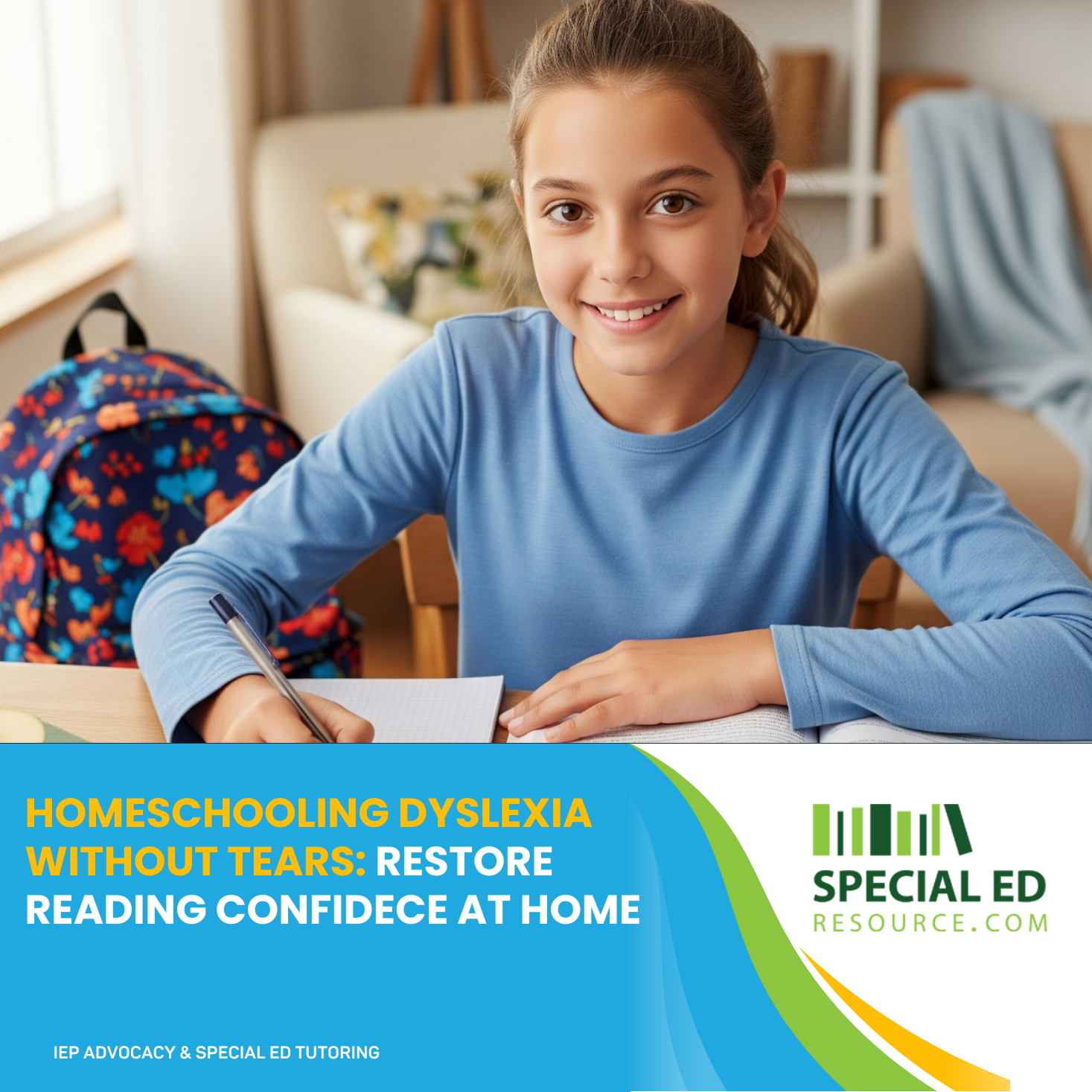
Homeschooling Dyslexia Without Tears – How To Build Reading Confidence And Restore Hope.
Many children with dyslexia walk into learning already feeling defeated. Every book, every assignment, every decoding struggle reminds them that reading feels harder than it should. Parents see the exhaustion, the avoidance, the “I can’t” that comes from feeling behind every day.
But reading struggles do not define a child’s intelligence, future, or joy. Dyslexia simply changes how the brain processes language — and the right teaching approach can completely change the journey.
Homeschooling for dyslexia offers something children desperately need: a calm space to learn without embarrassment. A place where reading progress happens at the child’s pace and confidence grows with every small win.
This guide helps families reduce tears and step into a new season of hope — with the tools proven to help dyslexic learners thrive.
Understanding Dyslexia: Why Smart Kids Still Struggle To Read
Dyslexia is not a problem of motivation. It is not laziness or lack of effort. It is a neurological difference in how the brain recognizes words, decodes letters and sounds, and stores language information.
Common signs include:
- Difficulty sounding out new words
- Slow, laborious reading
- Struggles remembering phonics patterns
- Guessing words by shape or pictures
- Trouble with spelling, sequencing, and writing details
- Strong verbal skills but weak decoding skills
In school, children with dyslexia often face:
- Work that moves too fast
- Shame when reading aloud
- Punishments for incomplete assignments
- Low expectations from teachers who misunderstand
- Social embarrassment when they see peers advancing faster
No child deserves to feel judged or hopeless simply because their brain learns differently.
Homeschooling gives parents the power to remove barriers and provide exactly what their child needs: a reading environment built for success.
Why Homeschooling Can Be Life-Changing For Dyslexic Learners
Traditional classrooms often place demands on dyslexic learners that don’t align with how they process language. Students are expected to decode quickly, read for long periods of time, and work independently before foundational skills are fully developed. Large group instruction can make struggles more visible, which may increase frustration and erode confidence over time.
Homeschooling offers a very different experience. Children benefit from consistent one-on-one instruction and flexible pacing that honors their attention span and processing needs. They can practice new skills in a safe environment where mistakes are part of learning, not something to be embarrassed about. Instructional materials can be customized to highlight strengths rather than weaknesses, while emotional support comes from the adult who knows and cares for the child most.
As academic pressure decreases, confidence often begins to return. With the right support, reading progress can accelerate. When parents choose homeschooling for dyslexia, they are choosing an environment rooted in understanding, flexibility, and hope.
The Dyslexia Homeschool Roadmap: Clear Steps That Bring Progress And Peace
A dyslexia-friendly learning environment is predictable, nurturing, and focused on practical gains. The roadmap below shows how families can start strong.
Assess Which Skills Are Missing
Before instruction can be effective, it’s essential to understand exactly where the breakdown is occurring. A qualified evaluator or structured reading tutor can help identify specific skill gaps, such as:
- Phonological awareness
- Sound–symbol correspondence
- Sight word automaticity
- Working memory
- Reading fluency
- Comprehension strategies
Without knowing which piece of the puzzle is missing, it’s impossible to fix it.
Replace Guessing With Explicit Instruction
Dyslexic learners benefit most when reading rules are taught directly and clearly, rather than being assumed or inferred. Explicit instruction removes uncertainty and gives children a reliable framework for decoding and comprehension.
Build Success Through Repetition and Routine
Consistent, daily practice helps skills stick and builds confidence over time. Effective routines often include:
- Decoding and blending sounds
- Multisensory phonics instruction
- Small, visible fluency gains that are tracked and celebrated
Predictable practice turns effort into progress.
Keep Anxiety Low and Celebrate Effort
Emotional safety is just as important as academic instruction. Progress should be recognized in small but meaningful ways, such as:
- Reading one additional word
- Mastering a new rule
- Completing a page without tears
This steady rhythm of encouragement and structure helps rebuild confidence and supports long-term success. You can also visit our Homeschooling Checklist to see if it’s a good fit for your child.
Evidence-Based Reading Methods That Work At Home
When choosing dyslexia homeschool curriculum options, parents need programs built on structured literacy principles. The goal is not memorizing words — it’s training the brain to decode them independently.
Effective reading instruction includes:
Multisensory Learning – See the word, hear the sound, say the sound, write the pattern.
Explicit Phonics – Teach rules directly rather than assuming a child will infer them.
Systematic Sequencing – Skills build logically:
letters → sounds → blends → words → sentences
Decodable Text Practice – Books aligned to current phonics skills ensure success.
Immediate Feedback – Correct errors with support, not embarrassment.
Daily Fluency Work – Short, frequent practice improves automaticity.
This is the instructional path that helps reading click in a child’s brain.
The Phonics Pathway Chart: A Visual Guide For Dyslexia Success
Children move through levels at their own speed. A clear pathway helps everyone stay calm and focused:
Stage 1: Letter-Sound Mastery
- Every consonant and short vowel sounds automatic
- No guessing, no mixing up similar letters
Stage 2: Blending Short Words
- CVC patterns like cat, dog, sun
- Building stamina through short word lists
Stage 3: Digraphs and Blends
- sh, ch, th, wh
- More complex consonant blends like dr, st, gl
Stage 4: Long Vowels and Vowel Teams
- ai, ea, oa, silent e
- Multisyllable introductions
Stage 5: Advanced Word Structures
- R-controlled vowels (ar, er, ir)
- Prefixes, suffixes, and Greek/Latin roots
Each mastered stage is a confidence booster. Each new stage opens opportunities.
The Reading Intervention Ladder For Homeschool Families
When reading gets stuck, parents need a roadmap to troubleshoot—not panic.
Here’s the ladder:
If fluency is low…
Return to easier decodable texts to rebuild automaticity.
If decoding is weak…
Add more phonics drills: tapping, segmenting, blending.
If phonological processing is weak…
Practice rhyming, syllable division, sound isolation.
If motivation is slipping…
Increase choice and reduce pressure temporarily.
If writing is overwhelming…
Dictation practice with fewer words maintains skill without overload.
The key: Move down the ladder to repair the broken step before climbing again.
Progress grows when instruction meets the child exactly where they are.

Removing Fear And Replacing It With Confidence
Children with dyslexia spend years feeling behind. Their brains are brilliant but tired. Once frustration softens, real learning finally begins.
Ways to reduce stress daily:
Share progress charts instead of grades
- Ask the child what feels hard and listen
- Give success before challenge
- Use timers for short bursts of focus
- Keep reading time cozy and joyful (blankets, pets, snacks allowed)
Confidence is not a luxury. Confidence is a learning tool.
Parents who build emotional safety create the conditions where the brain can grow.
Choosing Dyslexia Homeschool Curriculum: What To Look For
Parents often feel overwhelmed by options. The right tools make life easier.
Helpful features:
- Step-by-step phonics instruction
- Built-in multisensory routines
- Short, structured daily lessons
- Mastery-based progression
- Frequent review cycles
- Clear parent guidance
Avoid curriculum that:
Uses mostly sight-word memorization
- Moves too quickly through essential skills
- Focuses on grade-level standards before readiness
- Loads students with worksheets that discourage effort
Materials must serve the student, not the other way around.
The Role Of A Specialized Tutor: When Parents Need Backup
Sometimes even the strongest homeschool plan still needs expert support. Dyslexia often comes with co-existing challenges such as ADHD, anxiety, or working memory struggles. These require specialized techniques that trained professionals understand well.
Partnering with a special needs tutor can:
- Identify core skill gaps that parents may miss
- Personalize strategies to match the child’s learning profile
- Reduce conflict between parent and child
- Accelerate reading progress through targeted intervention
Families wanting that level of professional support can explore tutoring through this resource.
Parents remain the leader — the tutor becomes the reading strategist.

Homeschool Support For Dyslexia: You Don’t Have To Do This Alone
Homeschool life feels lighter when parents receive mentorship, progress monitoring, and expert planning. The right partnership can keep learning on track even during tough weeks.
This kind of support system reinforces the most important goals in learning. It reduces overwhelm by providing clarity and structure, allows progress to be seen and measured more easily, and brings more joy into daily routines. Most importantly, it helps nurture a child’s belief in their own ability—laying the foundation for confidence, resilience, and long-term success.
Success is shared. Relief is real.
A Day In The Life: Dyslexia-Friendly Homeschool Routine
A simple daily flow keeps reading progress steady without burnout.
Sample routine:
Morning
- Multisensory phonics warm-up
- 10–20 minutes decoding lesson
- Decodable reading time
- Movement and play
Mid-Day
- Math using visuals and manipulatives
- Spelling practice through dictation
- Oral comprehension activities (read alouds, discussions)
Afternoon
- Creative projects (art, building, cooking)
- Life skills and vocabulary woven naturally into play
- Quick fluency practice before wrapping up
Short blocks. Frequent success. Low stress.
This structure respects how dyslexic brains learn best.
How To Track Progress Without Creating Pressure
Instead of relying on big tests or weekly grades, learning can be shown in more meaningful and encouraging ways. Progress might be tracked through word cards that move from “practice” to “mastered,” simple charts that highlight fluency growth, or small rewards like stickers each time a child finishes a book.
Monthly celebrations of newly gained skills help reinforce effort and growth over time. When tracking feels like encouragement rather than evaluation, children are more willing to engage and persist. Mastery is defined by readiness, not by age or grade level.
Breaking The Cycle Of Tears: Language That Helps Kids Feel Seen
Words shape belief. For children with dyslexia, the wrong message can damage confidence quickly.
Helpful messaging:
- “Your brain is growing every day.”
- “You figured out a new strategy.”
- “Reading takes time, not speed.”
- “This is hard now, and you are learning through it.”
Unhelpful messaging:
- “You should know this already.”
- “Try harder.”
- “Look how easy it is for others.”
Encouragement is not empty praise — it is fuel.
First 30 Days: A Healing Blueprint For Dyslexia Homeschool Success
Week 1: Calm And Connection
- Build routine and safe learning space
- Start with strengths and interests
- Introduce visual progress tracking
Week 2: Targeted Phonics
- Assess skills precisely
- Begin structured lessons and decodable texts
- Celebrate every new concept
Week 3: Confidence Through Repetition
- Fluency drills in tiny bites
- Daily dictation for success
- Motivation boosters woven into lessons
Week 4: Notice The Transformation
- Less arguing, more participating
- Better stamina
- Child begins to try without being asked
Families often say:
- Homework battles are disappearing
- Their child is happier
- Hope is returning
- Reading finally feels possible
This is homeschooling for dyslexia at its best.
A Better Future Starts With Believing In A Child’s Strengths
Dyslexia does not stop a child from dreaming big. Many innovators, artists, entrepreneurs, and scientists have dyslexia — because the same brain wiring that makes reading hard often makes creativity extraordinary.
Homeschooling gives families the ability to slow down, rebuild reading skills, protect emotional well-being, and help their child find joy in learning again.
Every page read is progress. Every effort is a win. Every belief parents speak becomes part of their child’s self-story.
Reading confidence is possible. Hope is real. And the journey to both starts right at home.