
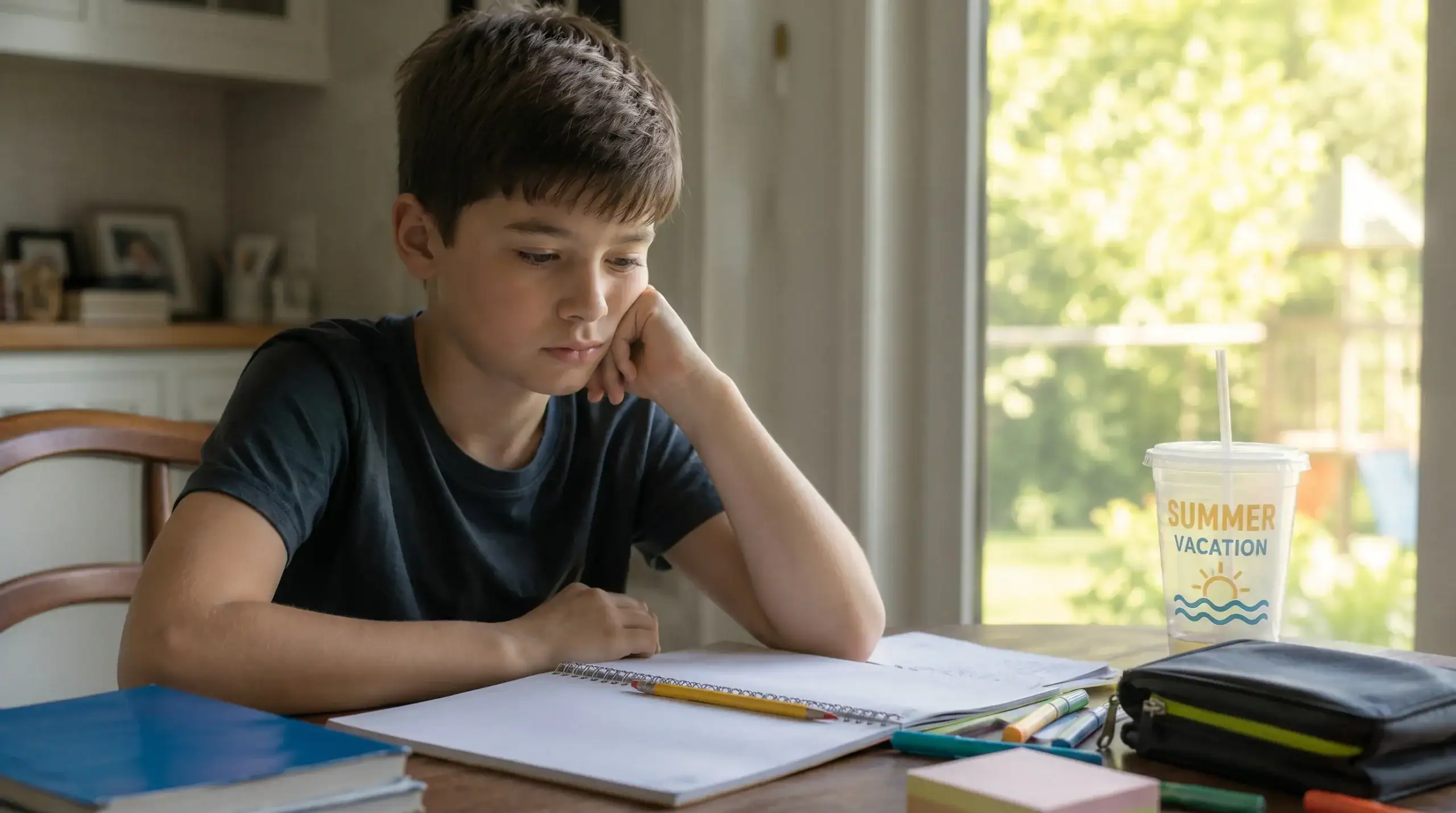
Summer is supposed to feel like an exhale. No alarm clocks, no rushing out the door, no homework folders. But for families of students with special needs, summer often brings a different kind of tension — a quiet worry that the progress earned all year long might quietly slip away before September ever arrives. That worry has a name: summer slide. And for students who already work harder than their peers just to keep up, it can hit harder and linger longer. The good news? A special needs tutor working with a student over the summer does not just prevent that slide — it creates an opportunity that the school year rarely offers: focused, unhurried, individualized progress.
Summer learning for students with disabilities does not have to look like school. It does not have to feel like punishment or extra homework tacked onto a season that is supposed to feel free. Done right, summer tutoring feels like finally having enough space to breathe, try, struggle a little, and actually get somewhere. That is what makes this season different — and worth using well.
What Summer Slide Actually Looks Like for SPED Students
Most students experience some learning loss over summer break. Research has consistently shown that students can lose one to three months of academic progress during the summer months. For students with learning disabilities, ADHD, autism spectrum disorder, dyslexia, or other exceptionalities, the impact can be steeper.
It is not just about forgetting math facts or losing reading fluency. For many special needs students, summer means a disruption to the routines, structures, and support systems that help them function and learn. When those scaffolds disappear, the regression is not just academic — it can be emotional and behavioral too. Students who spent months building confidence in a classroom setting can come back in the fall feeling like they are starting over.
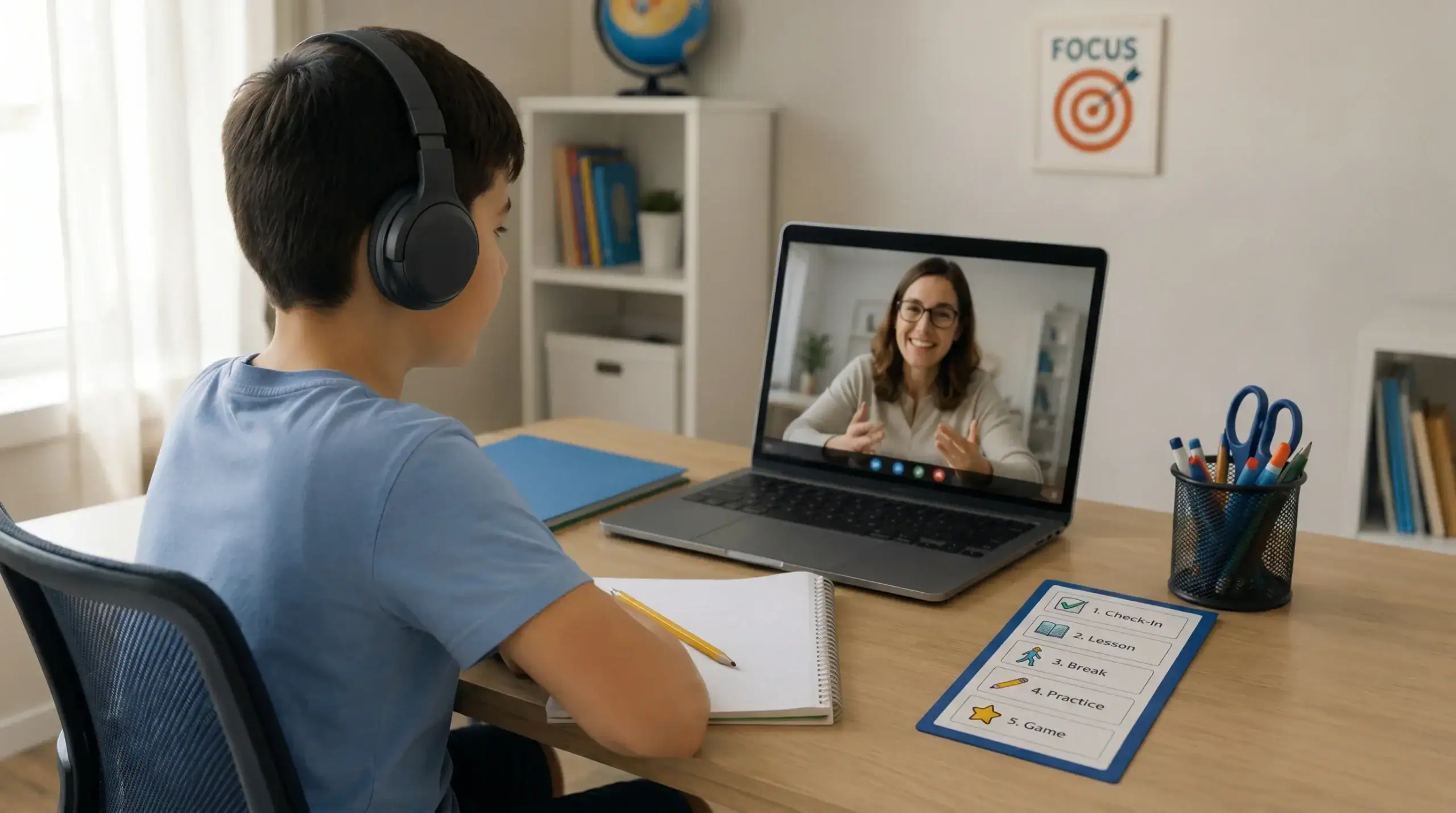
For an autism tutor working with students on the spectrum, the summer disruption to routine is often one of the biggest challenges families face. Structure is not just helpful for these students — it is essential. When the school bell stops ringing and the weekly rhythm evaporates, many students struggle more than their parents anticipated. Reintroducing even a small, consistent learning touchpoint during summer can make an enormous difference — not just academically, but in overall regulation and readiness for the fall.
Why Structure in Summer Is a Gift, Not a Burden
There is a common misconception that structure during summer is something to apologize for. Families sometimes feel guilty signing a child up for tutoring, as if they are robbing that child of a true summer. But for students with special needs, a gentle, consistent structure is not a burden — it is actually a form of support that makes the rest of the summer more enjoyable, not less.
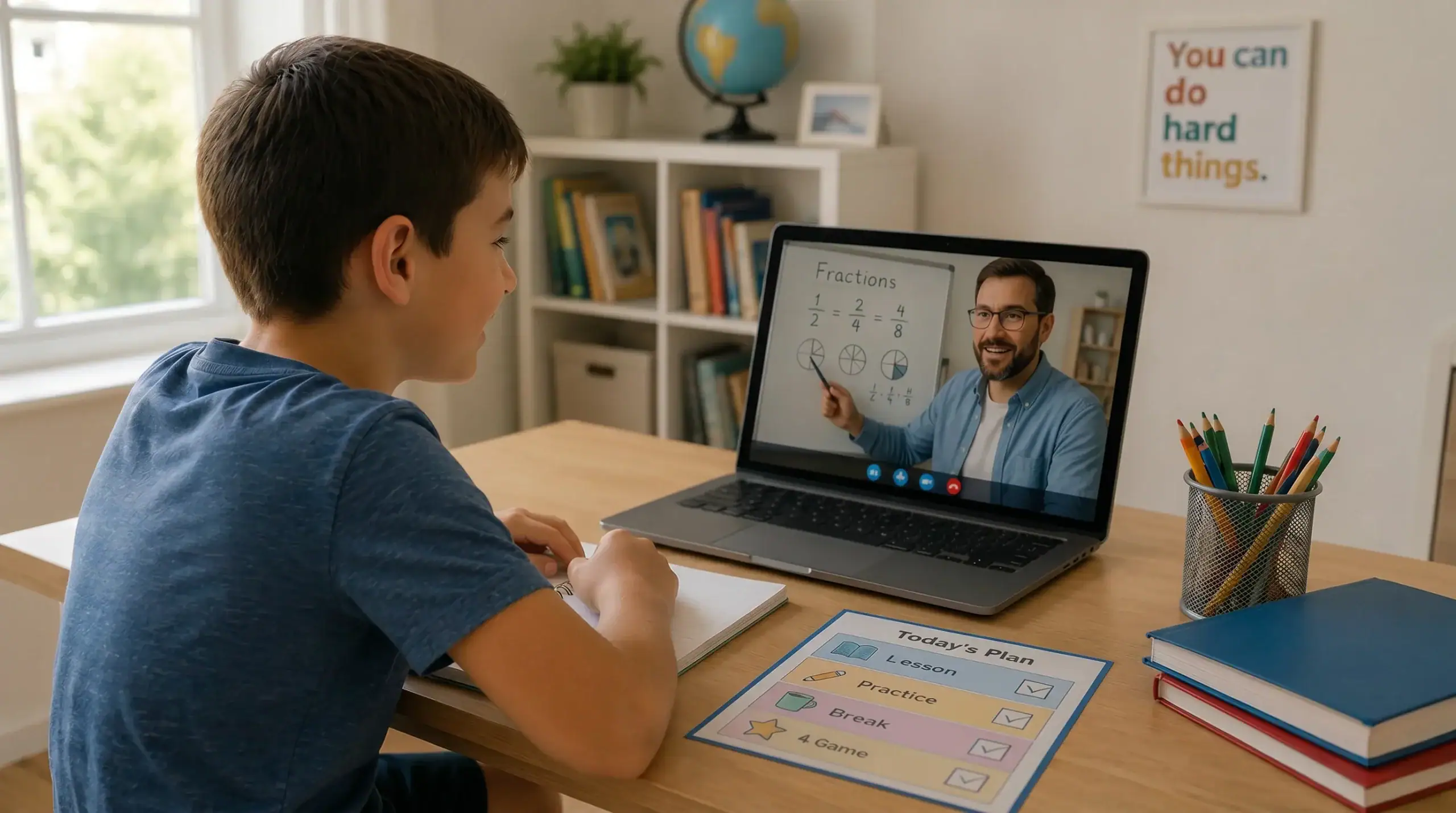
When a student knows that Tuesday and Thursday mornings involve a session with their tutor, everything else around that anchor point becomes more predictable. There is less anxiety about what comes next. There is less of the restless, unmoored feeling that unstructured time can create for students who thrive on routine. Parents often report that on tutoring days, their child is calmer, more focused, and easier to be around for the rest of the day. That is not a coincidence.

The power of structure for summer learning for students with disabilities goes beyond the academic content covered in each session. It is about maintaining the neural pathways that help students regulate, engage, and perform. Think of it like physical therapy — skipping the exercises does not just pause progress, it can undo it. Keeping those pathways active, even at a reduced frequency, preserves what was built and creates a foundation for a stronger start in the fall.
The Case for Online: Why Virtual Tutoring Works Especially Well in Summer
One of the most practical benefits of online tutoring during the summer is exactly what it sounds like: it works from anywhere. Families travel. Grandparents live across the country. Camps run for two weeks at a time. Summer is inherently mobile, and traditional in-person tutoring often cannot keep up with that reality.
Online tutoring removes that friction entirely. A student can log in from a beach house, a grandparent’s dining room table, or the comfort of their own home — and receive the same consistent, specialized instruction they would get anywhere else. For students with special needs who benefit enormously from consistency with a trusted tutor, that continuity matters. Rebuilding rapport with a new person or adapting to a new environment mid-summer can set progress back before it even starts. Online tutoring keeps the relationship intact regardless of geography.

Beyond the logistics, virtual tutoring platforms have evolved significantly. Shared digital whiteboards, interactive reading tools, video and audio options that can be adjusted for sensory needs, screen-sharing for real-time work — these are not just adequate replacements for in-person instruction. For many SPED students, the digital environment is genuinely more comfortable. It removes the social pressure of sitting across a table from someone, which for students with anxiety, autism spectrum disorder, or social communication challenges, can make a real difference in how open and engaged they are.
Sped summer tutoring that happens online also tends to be more accessible from a cost standpoint, which matters for families who are already navigating the financial weight of supporting a child with special needs year-round.
What Makes Special Education Resource’s Approach Different
Not all tutoring is created equal. Generic tutoring programs are built for the average student — and students with special needs are not average students. They are students with specific, identifiable learning profiles that require targeted, knowledgeable instruction.
Special Education Resource does not start with a curriculum. It starts with the student. Every student who works with Special Education Resource is assessed to identify the specific roadblocks holding them back — not the symptoms, but the root causes. From there, instruction is built around dissolving those specific barriers as efficiently as possible.
This is what separates sped summer tutoring that actually works from tutoring that simply fills time. When a student struggles with reading comprehension, the answer is not always more reading practice. Sometimes it is a working memory issue. Sometimes it is a language processing gap. Sometimes it is a combination of factors that have never been clearly identified. Targeting the root cause — and fixing it — is what creates the kind of progress families describe as transformative.
Special Education Resource serves students across a wide range of needs:
- Students with dyslexia, dysgraphia, and dyscalculia
- Students on the autism spectrum
- Students with ADHD and executive functioning challenges
- Students with intellectual disabilities
- Students in homeschool settings who need specialized academic support
- Students in districts seeking scalable, affordable support for large populations
Whether a family needs one-on-one support for a single student, a small group program for a homeschool co-op, or a districtwide solution that can reach hundreds of students with IEPs, Special Education Resource has the flexibility and expertise to deliver.
Building Confidence Is the Real Work of Summer
Academic skills matter. But for students with special needs, confidence is often the deeper issue — and the summer is one of the best times to address it, precisely because the pressure of grades and classroom performance is off.
During the school year, many SPED students are constantly aware of how they compare to their peers. They know who finishes the test first. They know when they are pulled from class for a resource room session. They feel the weight of their own struggle every single day, even when their teachers and parents do their best to create a supportive environment. That weight does not disappear — it accumulates.
Summer tutoring offers a reset. With no grades on the line and no peers watching, students often show up differently. They take more risks. They ask more questions. They are willing to admit when they do not understand something, because the social stakes feel lower. This is exactly the environment where confidence gets built — not by making things easier, but by finally having enough support to do hard things successfully.
When a student succeeds at something they genuinely thought they could not do, the shift is visible. It is in the way they hold themselves. It is in the language they start using about school and about learning. These are not small moments. These are the moments that change trajectories.

Preventing summer slide is valuable. But building academic and emotional growth in a student who walks back into the fall with genuine confidence in their ability to learn — that is what summer tutoring at its best can actually accomplish.
How to Get Started with Summer Tutoring
Starting is simpler than many families expect. Special Education Resource works with families and organizations across the United States and Canada, offering flexible scheduling that fits around summer plans — not the other way around.
The process begins with understanding the student: their current performance, their IEP goals if applicable, their learning profile, and what has and has not worked before. From there, a tutoring approach is built that targets their specific gaps with precision and delivered by educators who specialize in working with students with disabilities.
Here is what families can expect from the process:
- An initial assessment to identify the root causes of the student’s learning challenges
- A personalized plan built around the student’s specific needs and goals
- Consistent sessions with a qualified special education specialist
- Progress monitoring so families and educators can see exactly what is moving
- Flexible scheduling and fully online delivery — so summer plans do not have to change
Summer is short. But the right kind of support, delivered with focus and expertise, can make it count in ways that show up all the way through the school year and beyond.
The Bottom Line
Summer does not have to be a season of worry for families of students with special needs. It can be a season of genuine, meaningful growth — the kind that only becomes possible when there is finally time and space to do the real work.
Summer learning for students with disabilities, done right, is not about taking away summer. It is about using a few hours a week to build something that lasts — confidence, skills, and the identity of a student who knows they can learn.
Special Education Resource is ready to help make that happen, wherever summer takes a family.