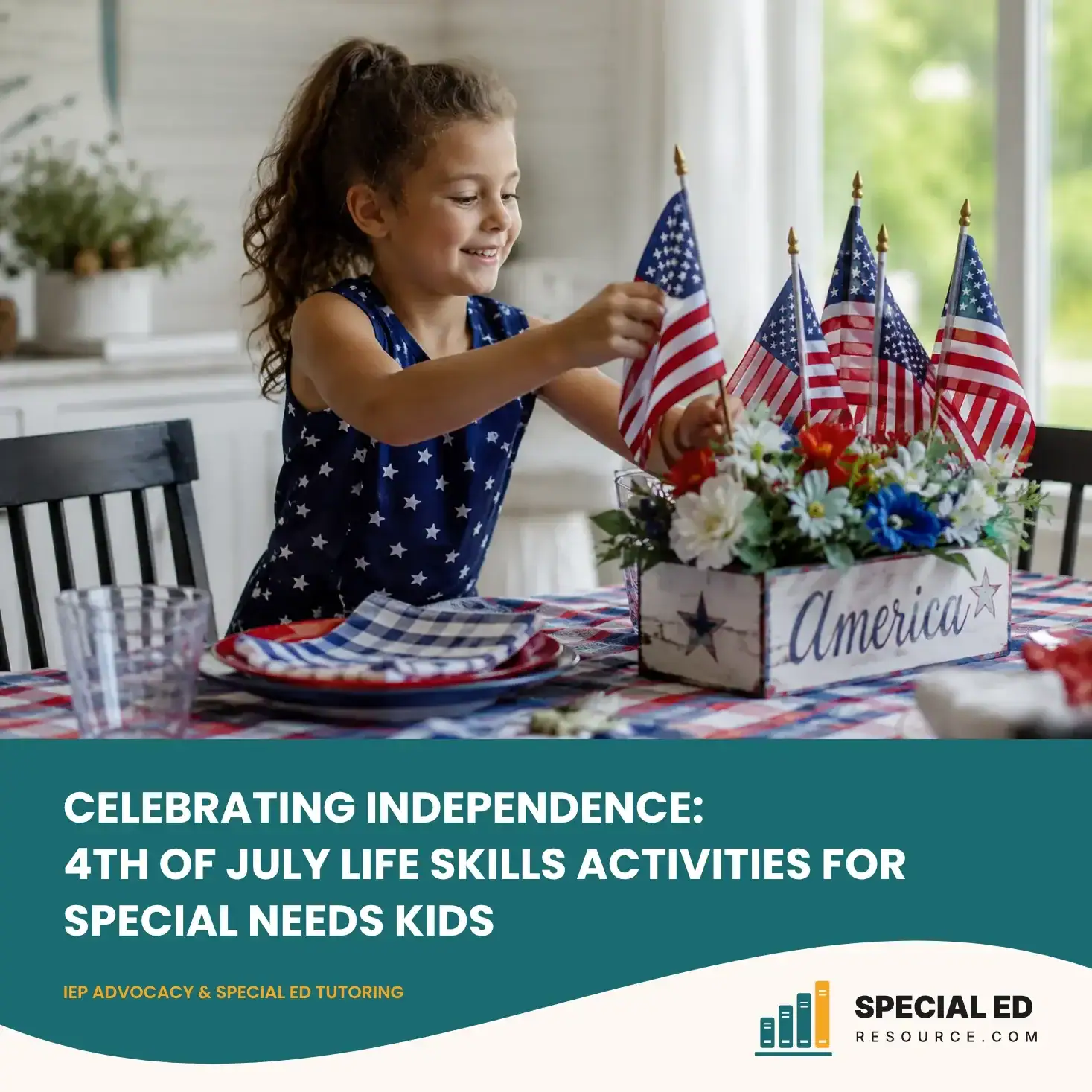
The Fourth of July is one of the most exciting holidays of the year — full of color, community, food, and pride. But for families of children with special needs, the holiday can also feel like a lot to manage. Sensory overload from fireworks, disrupted routines, and the social complexity of gatherings can make what should be a celebration feel more like a challenge. Here’s the good news: with a little intentional planning, the lead-up to Independence Day becomes one of the most powerful windows of the entire year for building real, lasting life skills. Every flag-themed craft, every grocery run for the cookout, every practiced “hello” to a neighbor at the block party — these moments can be transformed into meaningful learning. Families and educators who work with a special needs tutor know that functional skill-building works best when it’s woven into everyday life, and holidays offer some of the richest raw material available.
This article is for the parents who want this holiday to mean something beyond just showing up. It’s for the educators and support staff looking for purposeful, inclusive activities that extend learning beyond the classroom. And it’s for anyone who believes that independence — real independence — is worth celebrating in every child, every single day.
Why Holiday Routines Are a Secret Life Skills Goldmine
Most life skills curricula focus on grocery shopping, money handling, personal hygiene, and following directions. What often gets overlooked is how naturally holidays reinforce all of these skills at once, with built-in motivation that worksheets simply cannot replicate. A child who refuses to practice sequencing tasks on a typical Tuesday might eagerly help arrange the steps for making patriotic rice crispy treats. A student who struggles with verbal communication might surprise everyone when they proudly announce to a grandparent what color firework they saw last.
Holiday routines carry emotional weight. They feel important. And for children with learning differences, that emotional charge matters more than most people realize. When a task feels meaningful, engagement goes up — and when engagement goes up, learning sticks. Working with an autism tutor or special education specialist in the weeks before a holiday can help families identify exactly which skills to target and how to embed them naturally into celebration prep.
The 4th of July is particularly well-suited to this approach because it spans multiple days of preparation, involves a wide variety of tasks across different skill domains, and offers natural opportunities for community connection. From planning the menu to setting the table to managing sensory experiences during the fireworks show, there is no shortage of teachable moments.
Building Independence Through Pre-Holiday Planning
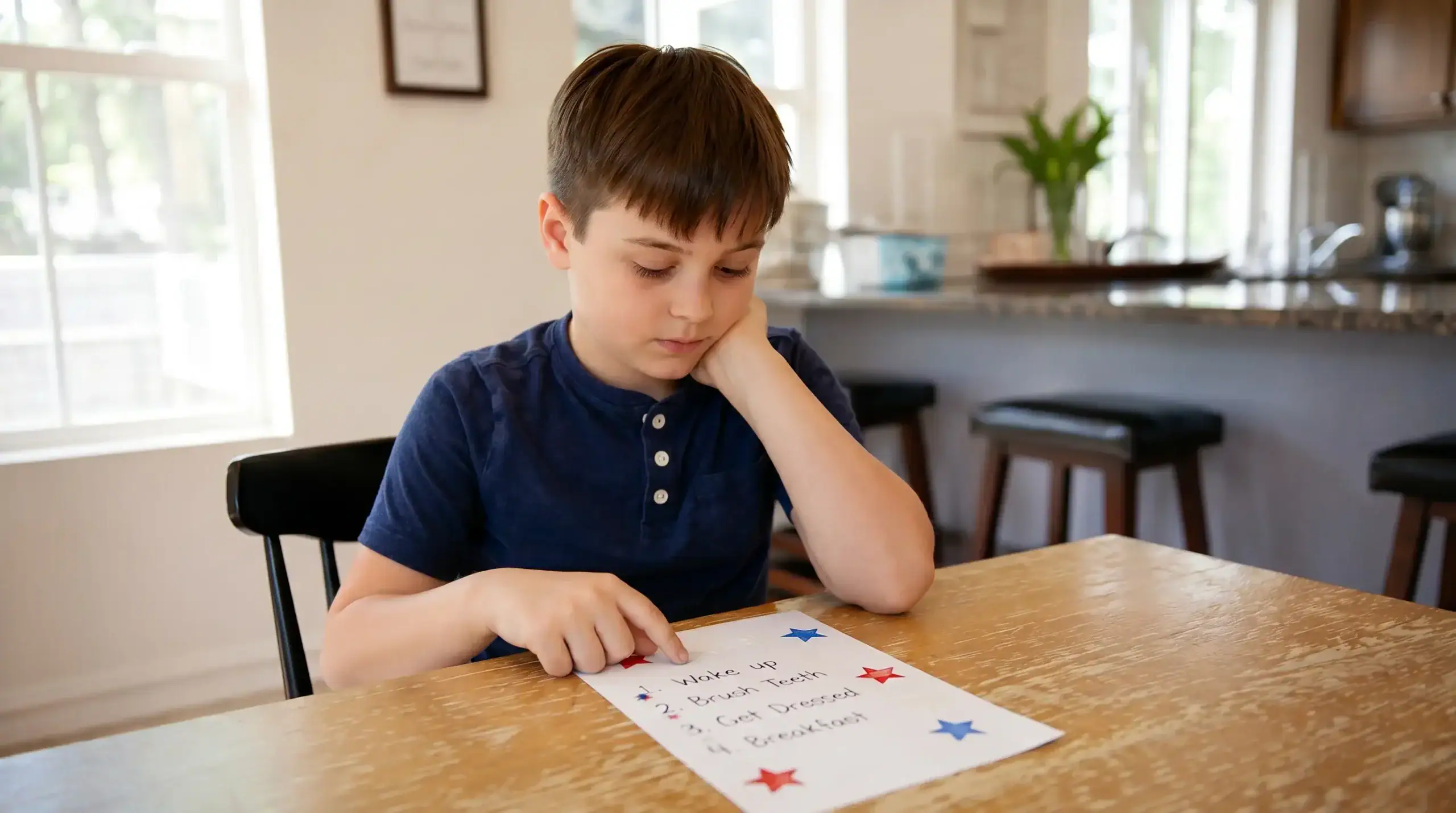
One of the most overlooked life skills for children with special needs is planning — specifically, breaking a larger goal into smaller, manageable steps. The weeks before July 4th offer a concrete, real-world context for practicing exactly that.
Start by sitting down with the child and talking through what the holiday will look like. What are they most excited about? What feels uncertain or overwhelming? From that conversation, create a simple visual plan together. This might include:
- Choosing a recipe to contribute to the cookout
- Making a shopping list for supplies
- Selecting an outfit appropriate for outdoor celebrations in summer heat
- Practicing what to say when greeting family or neighbors they haven’t seen in a while
- Preparing a sensory kit for the fireworks event (noise-canceling headphones, a comfort item, a fidget tool)
Even the act of creating this plan is itself a life skill. Goal-setting, sequencing, and anticipating challenges are executive function skills that children with learning differences often need explicit instruction in — and the 4th of July gives those skills a fun, low-pressure container to practice in.
For students who use visual schedules or AAC devices, this is a great opportunity to incorporate holiday vocabulary and build out a July 4th sequence they can navigate independently. The more ownership a child has in preparing for the holiday, the more confident they’ll feel when it arrives.
Cooking and Kitchen Skills: Patriotic Recipes That Teach
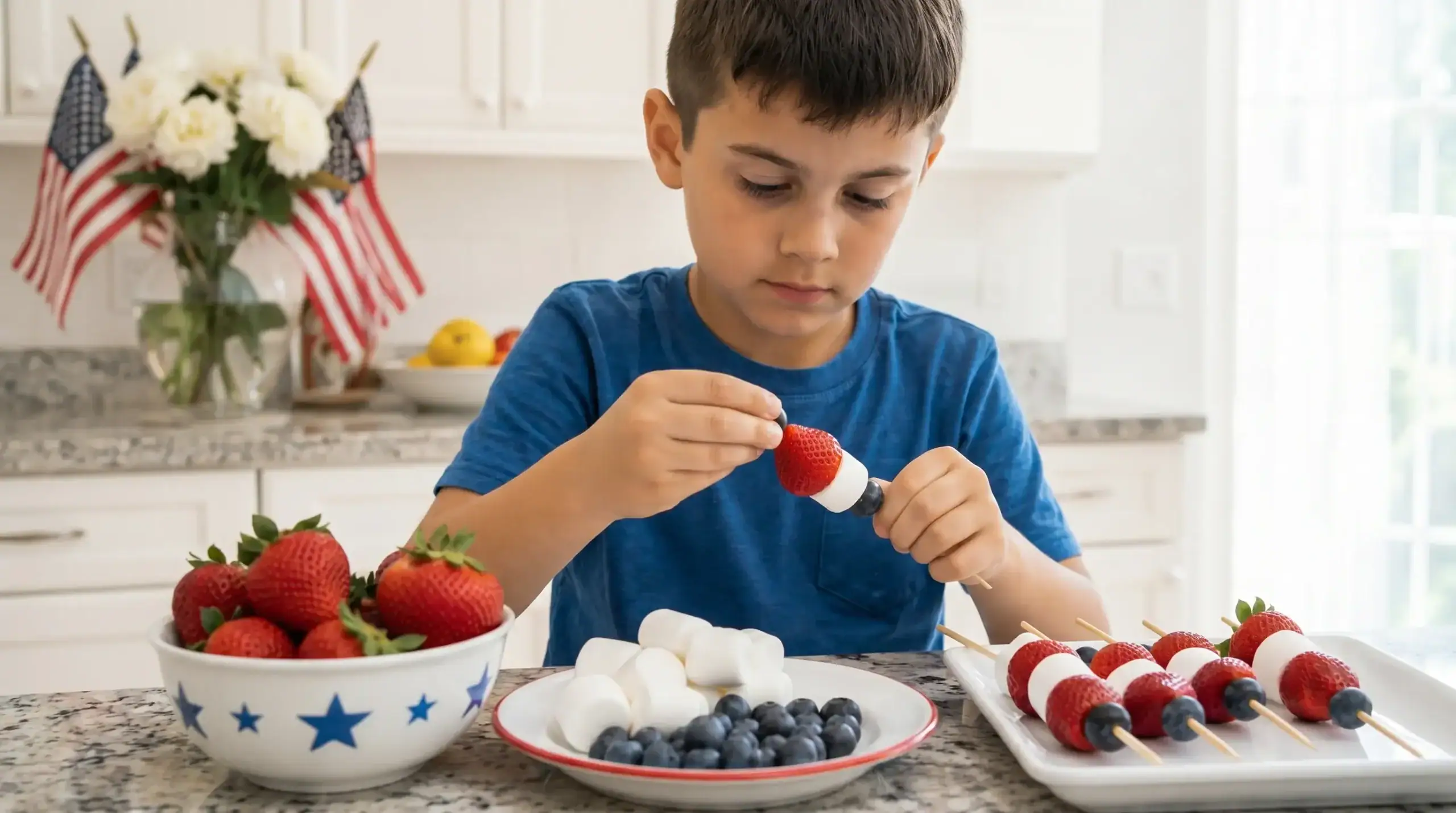
The kitchen is one of the most powerful environments for building functional skills, and patriotic-themed recipes give children a reason to participate that goes far beyond academic instruction. Cooking builds sequencing, measurement, fine motor control, reading comprehension, safety awareness, and the ability to follow multi-step directions — all in a single session.
Here are some holiday-themed kitchen activities that can be adapted to a wide range of ability levels:
- Patriotic fruit skewers (strawberries, blueberries, and bananas or marshmallows arranged in red, white, and blue patterns) — great for color recognition, pattern-making, and fine motor skills
- Layered red, white, and blue parfaits using yogurt, granola, and fresh berries — excellent for measuring, layering, and turn-taking
- Star-shaped sandwiches using cookie cutters — builds cutting skills, food prep independence, and creativity
- Lemonade from scratch — combines measuring liquids, following a recipe in sequence, and understanding cause and effect (more sugar = sweeter)
- No-bake rice crispy treat flags — ideal for students who need tactile engagement and benefit from hands-on shaping tasks
The key is to match the complexity of the recipe to the child’s current skill level, then add one or two steps that gently push growth. A child who has mastered measuring dry ingredients might be ready to practice measuring liquids. A student who can follow a two-step recipe might be challenged with a three-step one. This scaffolded approach — meeting children where they are and extending just slightly — is at the heart of effective special education support.
Involve siblings, classmates, or neighbors where possible. The social layer of cooking together builds communication, sharing, patience, and the ability to work as part of a team — skills that matter just as much as the academic ones.
Community and Social Skills: Practicing Connection in Real-World Settings
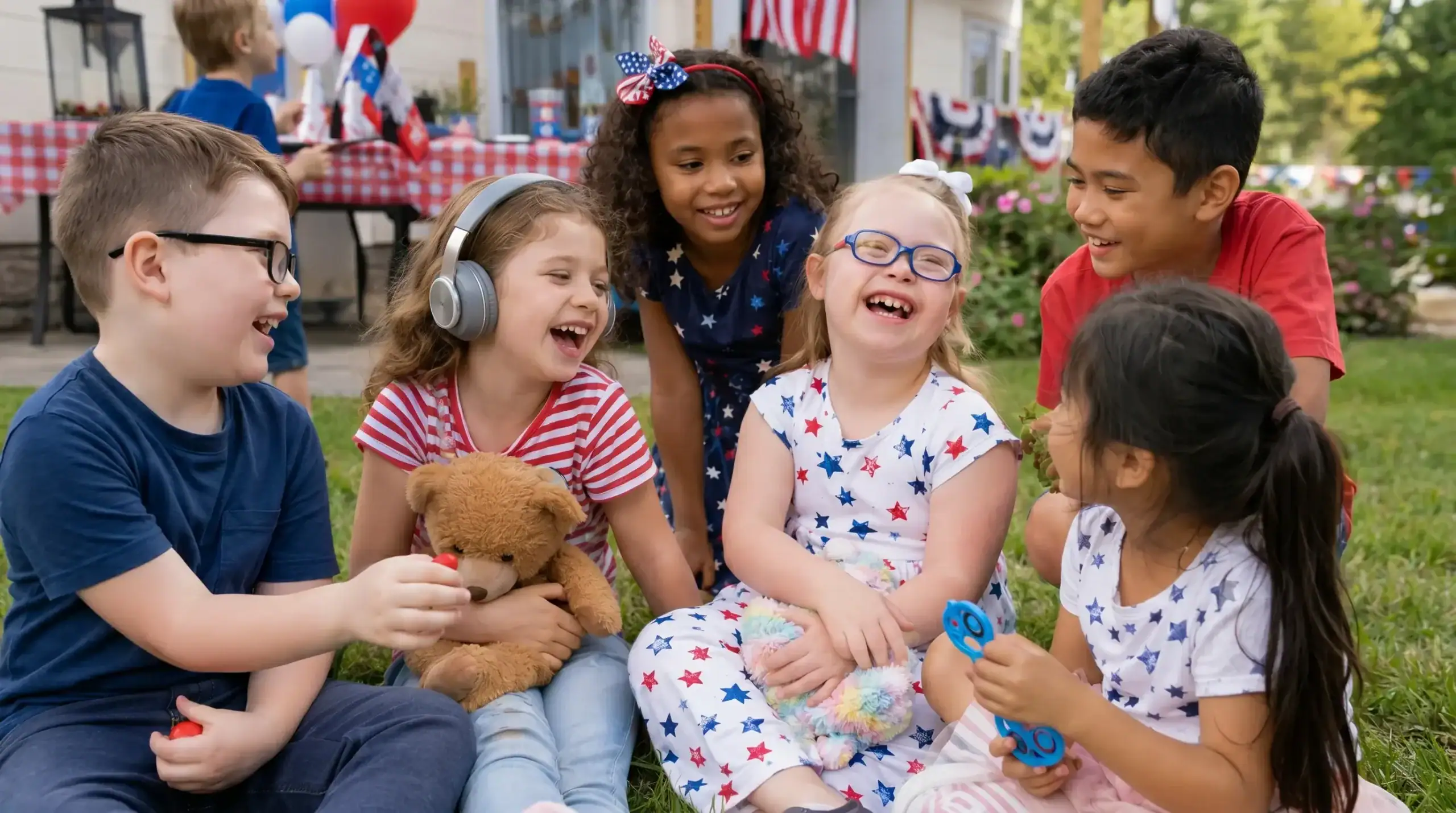
For many children with special needs, social situations are one of the greatest sources of anxiety. Crowded cookouts, loud celebrations, and interactions with extended family members who may not see the child regularly can feel overwhelming before they even begin. The weeks before the 4th of July offer a built-in opportunity to practice and prepare.
Role-playing social scenarios is one of the most effective tools available. Practice the specific situations the child is likely to encounter:
- Greeting someone they haven’t seen in a while (“Hi, it’s good to see you!”)
- Declining food they don’t want without distress (“No thank you, I’m okay”)
- Asking for a break when things feel overwhelming (“Can I go sit somewhere quieter for a minute?”)
- Introducing themselves to a new person at the gathering
- Accepting a compliment gracefully
These role-play sessions work best when they’re kept short, positive, and followed by genuine encouragement. The goal isn’t perfection — it’s building a repertoire of social tools the child can draw from when the real moment arrives. Even having one or two scripts ready can dramatically reduce social anxiety and increase confidence.
Community-based instruction is another powerful approach. If the family will be attending a local parade or public event, consider doing a preview visit beforehand so the child can see the route, experience the sounds at a lower level, and build familiarity with the environment. For students who respond well to visual supports, creating a social narrative about what the 4th of July celebration will look like — who will be there, what will happen in order, what to do if something feels hard — can make a significant difference.
Sensory Planning: Making Fireworks Work for Every Child
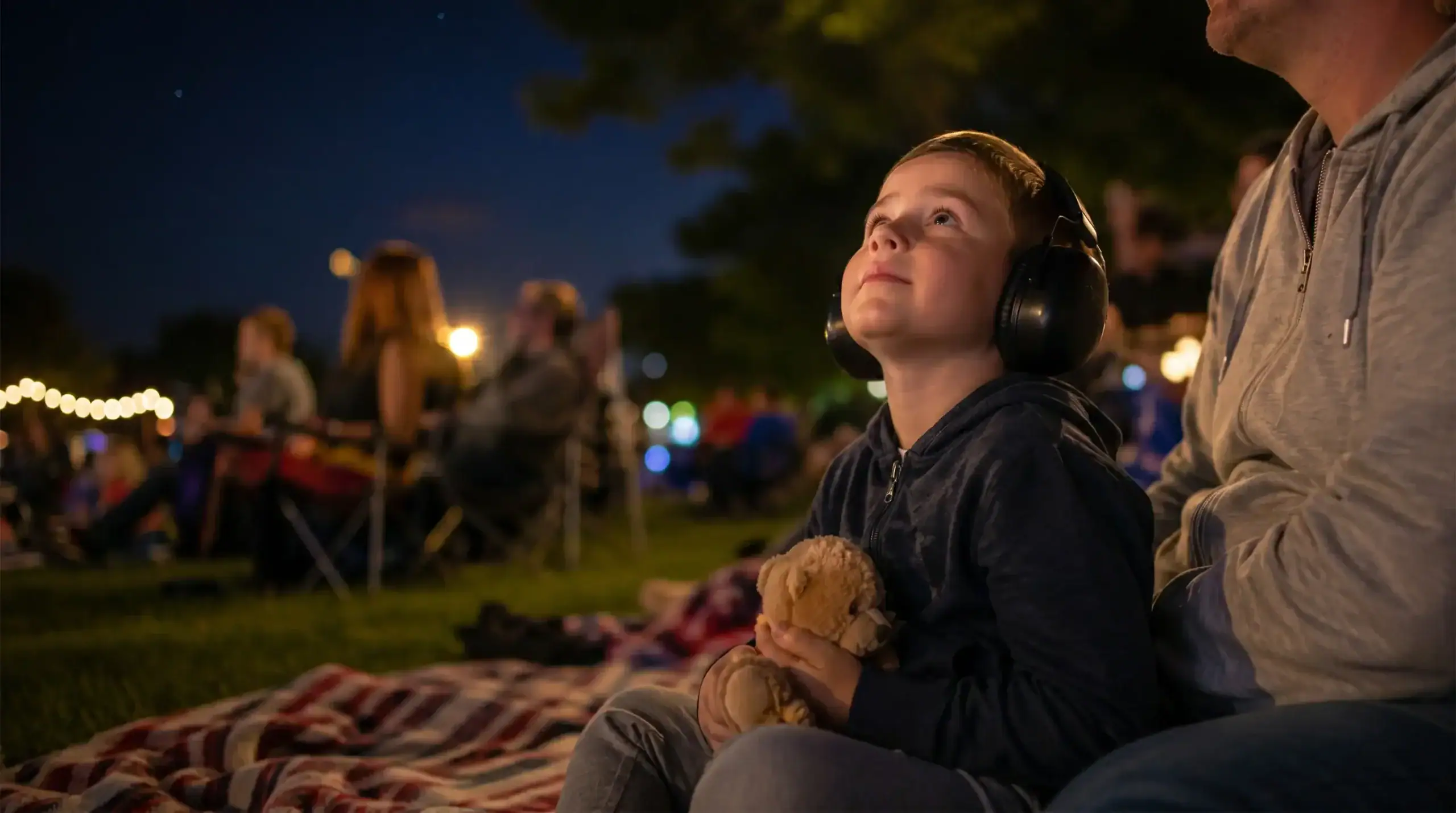
Fireworks are one of the most iconic parts of the 4th of July — and one of the most challenging for children with sensory processing differences. The combination of sudden loud sounds, bright flashing lights, crowds, and late hours is a lot to navigate. But with the right preparation, many children who have historically struggled with fireworks have found ways to experience and even enjoy them.
Sensory planning should begin well before the event itself:
- Introduce the sounds of fireworks gradually using videos or audio clips at a manageable volume, increasing exposure over several days
- Identify the sensory tools that work best for the individual child — noise-canceling headphones, earplugs, sunglasses, a weighted lap pad, or a familiar comfort object
- Choose a viewing location with intention — farther from the launch site often means a better sensory experience, and having a clear exit route reduces anxiety significantly
- Establish a signal or code word the child can use to communicate that they’ve reached their limit and need to leave or step back
- Plan for the late hour — children who are overtired are far more vulnerable to sensory overwhelm, so a rest earlier in the day can make the evening more manageable
It’s also worth reframing what “success” looks like. For one child, success might mean watching the entire fireworks show from start to finish. For another, it might mean staying for five minutes and using their communication tool to request a break. Both of those are wins. The goal is not to push through — it’s to participate in a way that feels safe and empowering.
Functional Academics: Weaving Learning Into Every Celebration Moment
Academic skills don’t have to take a holiday just because the calendar does. In fact, the 4th of July offers a rich context for practicing reading, math, writing, and social studies in ways that feel completely natural.
Consider these functional academic connections:
- Reading: Look for age-appropriate books about American history, Independence Day, or community celebrations. Read together and pause to discuss what’s happening in the story.
- Writing: Have the child write or dictate a simple list of things they’re grateful for about their community or country. Older students might write a short journal entry about their holiday experience afterward.
- Math: Practice money skills by budgeting for supplies at the grocery store. Set a simple limit (“We have $10 for decorations — what can we choose?”) and work through the decision-making process together.
- Social studies: Talk about what Independence Day means in an age-appropriate way. Why do communities celebrate together? What does it mean to be part of a country?
- Calendar and time: Practice reading a calendar to count down the days to the holiday. Talk about what “a week from now” means. Practice telling time in the context of the celebration schedule (“The parade starts at 10 — how many hours away is that?”).
These moments of embedded learning are not supplemental — they are often where the deepest skill-building happens. When a child uses math to make a real purchasing decision, that skill transfers in a way that a worksheet answer never will.
Helping Children Feel Proud of Their Own Independence
At the center of every life skills activity, every social script, every sensory kit, and every patriotic recipe is a bigger goal: helping children with special needs feel genuinely capable. Not just supervised, not just accommodated — capable.
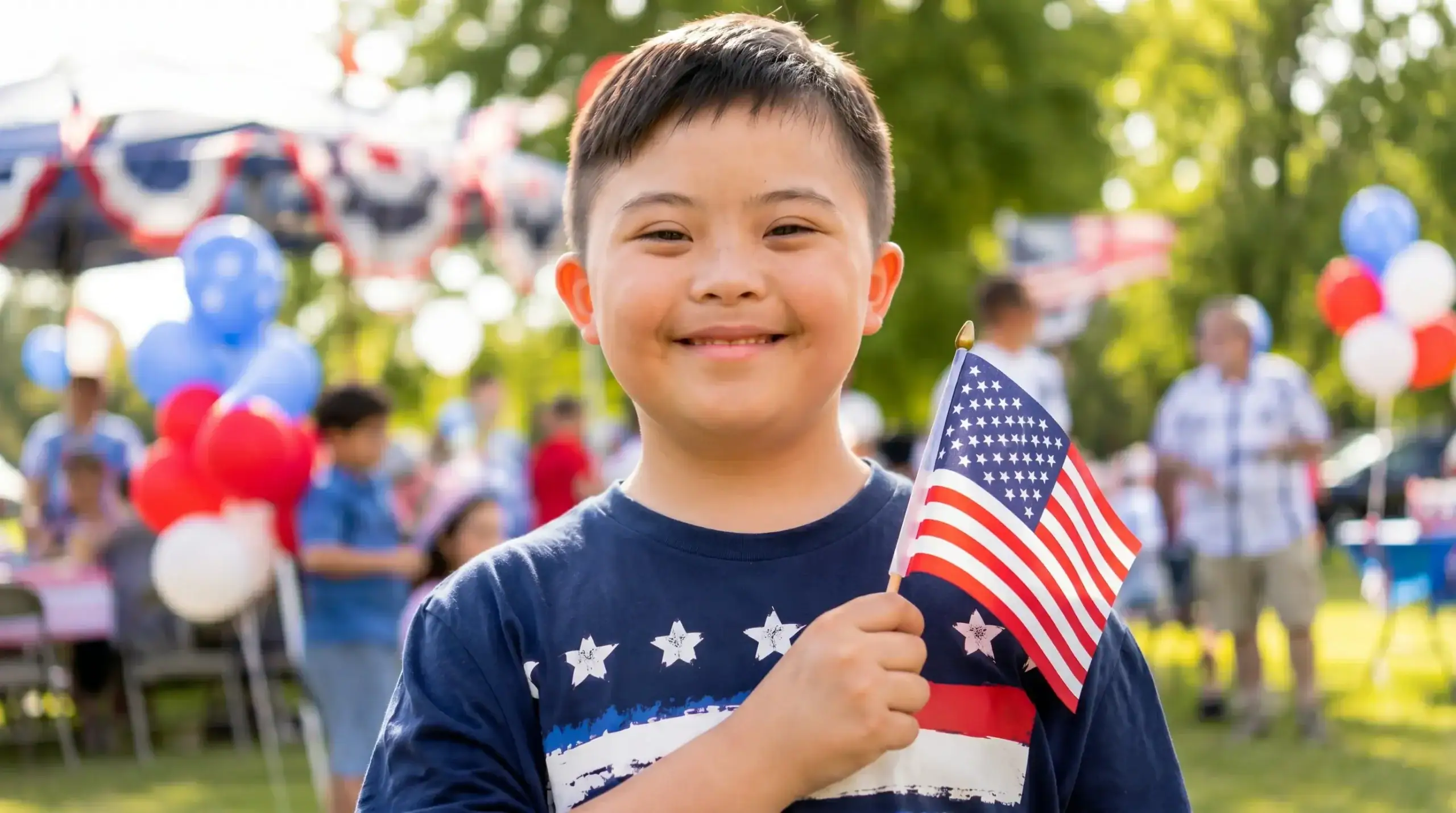
The 4th of July, a holiday literally named for independence, is a meaningful moment to pause and celebrate the ways each child is growing. That growth might look different from what peers are doing. It might come in smaller steps, with more support, over a longer timeline. But it is growth, and it deserves to be named and celebrated with the same enthusiasm as any other milestone.
Families and educators can make this intentional by:
- Letting the child take the lead on one aspect of the celebration, whatever feels achievable — choosing the tablecloth color, picking the playlist, deciding where to sit at the cookout
- Reflecting afterward on what went well (“You introduced yourself to Uncle David — that was brave!”)
- Documenting progress with photos or a simple journal entry the child can look back on
- Framing the holiday itself as a celebration of their independence, not just the nation’s
Every child with a learning difference has an independence story worth telling. The 4th of July is simply a beautiful backdrop for the next chapter of that story.
Moving Forward: Support That Grows With Your Child
Holiday activities are powerful, but they work best as part of a larger, consistent approach to building functional skills. Special Education Resource offers flexible, individualized support for students with learning differences — whether that means weekly tutoring sessions, homeschool program support, or district-wide resources for educators. The team specializes in identifying the specific roadblocks holding each student back and building a clear, actionable path forward.
Independence is not a single moment. It’s a skill set, built one confident step at a time — and every celebration, every kitchen session, every practiced greeting, and every sensory victory is part of that foundation. This 4th of July, give children with special needs the greatest gift possible: the belief that they are capable of more than anyone has yet imagined.