
The School Year Is Ending — and Your Child’s IEP Deserves a Real Look
The backpacks are lighter, the homework has slowed down, and summer is right around the corner. But before the school year fully fades into the rearview mirror, there is one powerful thing parents and educators can do that most people skip entirely: pause, reflect, and honestly evaluate how this year’s Individualized Education Program actually played out.
Not just whether goals were “met” on paper — but whether your child truly grew. Whether the support felt real. Whether the plan served the whole child, not just the checkboxes. This kind of end-of-year IEP reflection is one of the most underused tools in a family’s arsenal, and it can completely change the trajectory of next year. Partnering with skilled IEP advocacy support makes this process even more powerful — because sometimes an outside perspective sees what exhaustion and emotion can cause you to miss.
This article walks through a thoughtful, honest framework for looking back at this year’s IEP, identifying what worked, naming what didn’t, and building a smarter, stronger plan for what comes next.
What an End-of-Year IEP Review Actually Means
Many families hear “IEP review” and immediately picture a formal meeting with a table full of educators, a stack of documents, and a countdown clock. That formal meeting has its place — but an end-of-year IEP review does not have to be a scheduled school event. It can be something a parent does quietly at the kitchen table, or something an educator does between the last bell and summer break.
The purpose is simple: look at the full picture of the year and ask honest questions. Did the goals match where the child actually needed to grow? Did the services get delivered consistently, or were there gaps? Did the child feel supported — not just academically, but emotionally and socially? Did progress feel real, or did it feel like movement on a spreadsheet that did not connect to real life?
These are not easy questions. They require parents and educators to move past the defensiveness and frustration that often builds up over the course of a school year and look clearly at what the data — and the child — are actually showing.
A thorough IEP progress evaluation looks at three things: the plan itself, the execution of that plan, and the child’s lived experience. All three matter.
Evaluating the Goals: Were They the Right Ones?
The goals in an IEP are supposed to be the compass. They are meant to point directly toward what a child needs most. But goals that are written to be easy to measure are not always the goals that matter most.
Here are some questions worth sitting with as you review this year’s IEP goals:
- Were the goals specific enough to actually track? Vague goals like “improve reading skills” tell you nothing about whether a child is moving forward or standing still.
- Were the goals ambitious enough? Goals that get “met” by October may reflect low expectations more than real growth.
- Did the goals address the core issue holding the child back, or did they address surface-level symptoms?
- Were goals connected to what the child needs in real-life settings — not just in a resource room or testing environment?
- Did your child understand what they were working toward? Self-awareness and buy-in matter enormously for students of all ages.
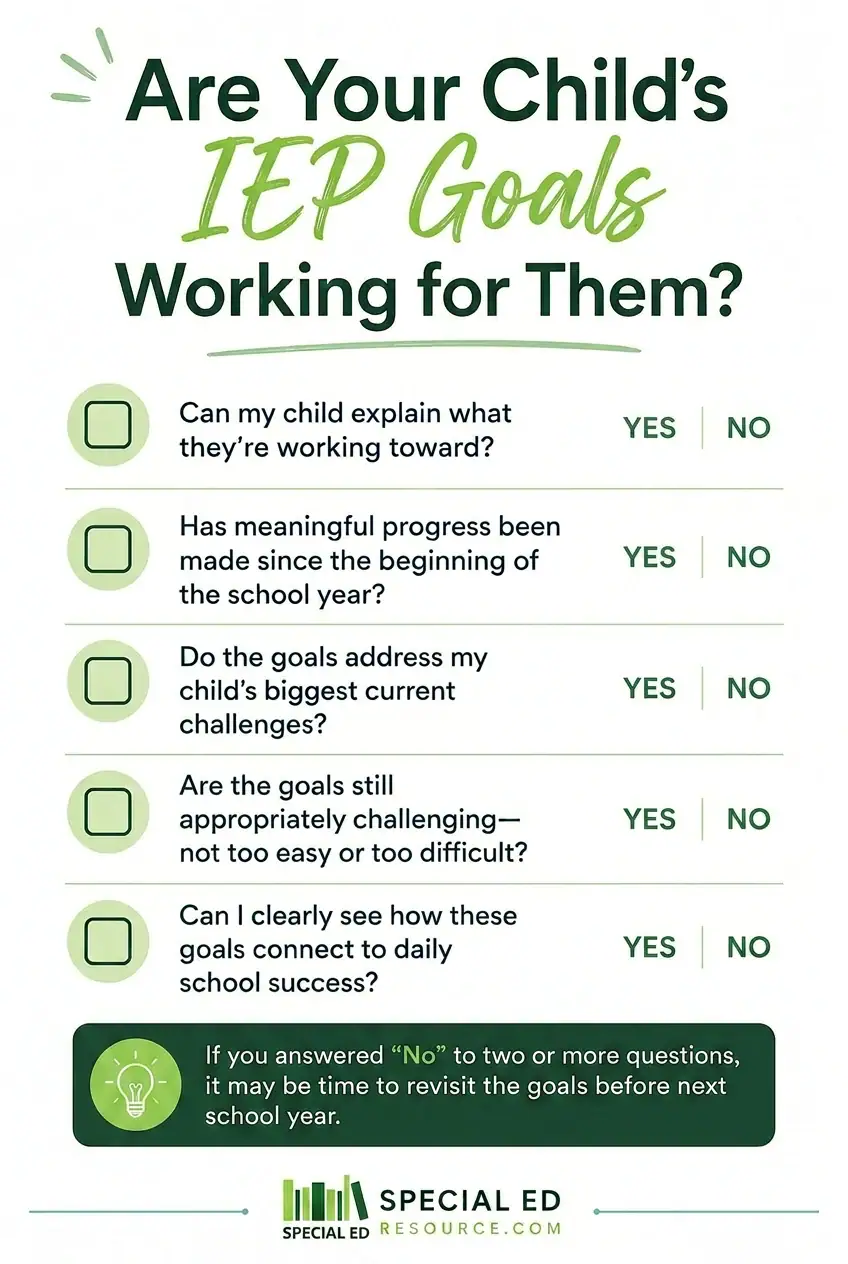
If the answer to several of these questions is “no” or “not really,” that is not a failure. It is information. It means next year’s IEP goals need to be built differently — more precisely, more meaningfully, and with a clearer understanding of what is truly blocking this child’s progress.
Working with a skilled special education tutor throughout the year can give families a much more granular picture of where the real learning blocks exist — and that information is gold when it comes time to write or revise goals.
What Actually Worked This Year
Before diving into what needs to change, it is worth spending real time on what worked. This is not about being polite or avoiding hard conversations. It is about identifying the strategies, supports, and relationships that genuinely helped — because those deserve to be preserved, repeated, and even expanded next year.
Some things to reflect on:
- Were there specific teachers, paraprofessionals, or specialists who seemed to truly connect with your child? What did they do differently?
- Were there accommodations that made a noticeable difference in your child’s ability to focus, participate, or produce work?
- Were there services — speech, OT, social skills groups, tutoring — where your child seemed to genuinely engage and grow?
- Did your child express anything positive about school this year, even occasionally? What was happening during those moments?
- Were there testing modifications or environmental supports that reduced anxiety and allowed your child to show what they actually know?
These wins — even small ones — are the building blocks of a better plan. A child who thrived with extended time and a quiet testing environment is telling you something. A student who made a breakthrough with a particular teaching style is giving you a roadmap.

Pay attention to the patterns in what worked, because those patterns are pointing directly toward what to replicate and amplify.
Document these observations. Write them down. Bring them to the next IEP meeting with the same seriousness as any concern.
What Didn’t Work — and Why It Matters to Say So
This is where most end-of-year IEP reflections fall short. Parents are tired. Educators are stretched thin. Everyone wants to move into summer without relitigating every frustration from the past ten months. And so the things that did not work get quietly set aside.
That choice is understandable. It is also costly.
When the barriers to a child’s progress do not get named clearly, they simply reappear in next year’s IEP — slightly reworded, but fundamentally unchanged. The cycle continues. The child keeps struggling. The frustration compounds.
So here is an invitation to be honest, constructively and clearly, about what did not work this year:
- Were services inconsistent or frequently cancelled? Did your child receive every service minute listed in their IEP, or were there unexplained gaps?
- Were accommodations actually implemented in the classroom, or did they exist only on paper?
- Did the school’s communication feel transparent and collaborative, or did it feel reactive and defensive?
- Did progress reports reflect genuine data collection, or did they feel like they were completed to satisfy paperwork requirements?
- Were there evaluation results or outside assessments that pointed to needs the IEP did not address?
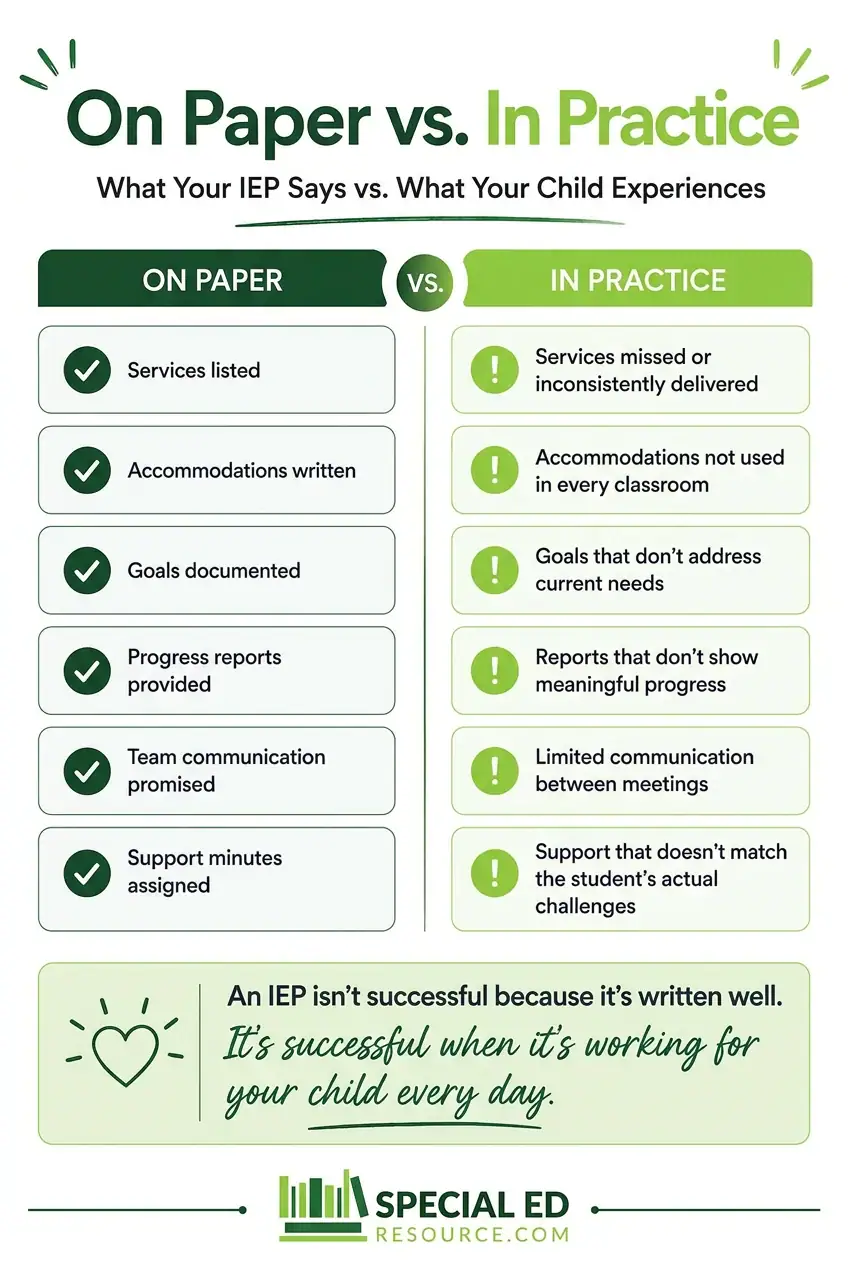
- Did your child regress in any area this year, even while other areas showed growth?
Naming these things is not about placing blame. It is about ensuring that the plan for next year is built on reality, not on optimism about systems or supports that have already proven unreliable.
When something is not working for a special needs student, the cost of staying silent is measured in lost months and lost confidence. Neither of those is recoverable.
Preparing for Next Year’s IEP: Where to Start
With a clear picture of what worked and what didn’t, preparing for next year’s IEP becomes much less overwhelming. Instead of walking into a meeting unsure of what to ask for or feeling outpaced by the process, families and educators can show up with direction and purpose.
Here is a practical starting framework:
Start with the child’s present level of performance. Before any goals are written or services are discussed, make sure the team has an accurate, current picture of where the child is academically, socially, and emotionally. If the current data feels stale or incomplete, request updated assessments before the IEP is written.
Identify the two or three areas of highest priority. Trying to address every challenge at once often means nothing gets the attention it needs. What are the skills or gaps that, if addressed, would have the greatest ripple effect on your child’s overall functioning and confidence?
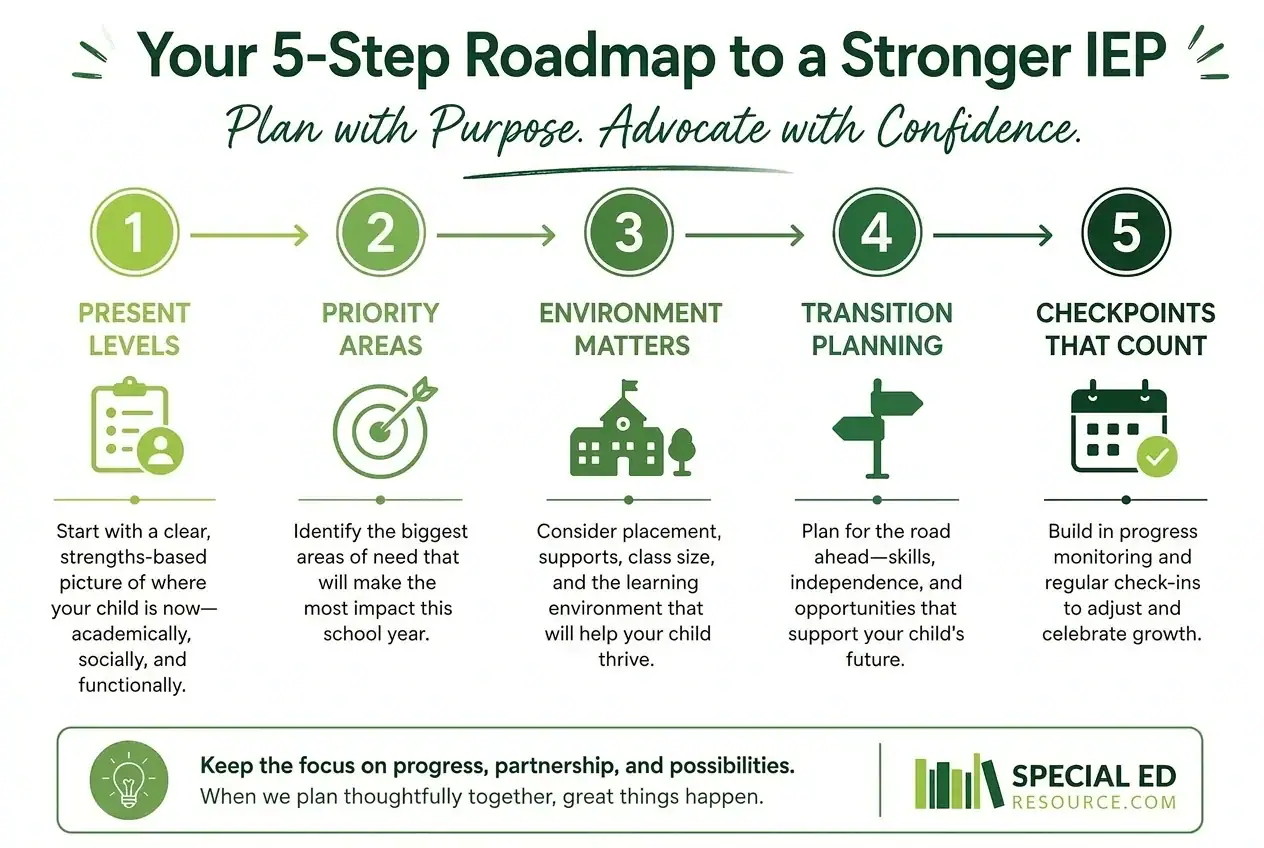
Think about the environment, not just the plan. Where does your child learn best? What conditions set them up to succeed? Service delivery matters as much as the services themselves.
Consider the transition from year to year carefully. What is your child walking into next year — a new school, a new grade, a new set of teachers? Anticipating those changes and building supports for them into the IEP proactively is far more effective than scrambling once the year begins.
Build in checkpoints. An annual IEP review is not enough for many students. Requesting quarterly data reviews or check-in meetings keeps the team accountable and allows for adjustments before small issues become significant setbacks.
The Emotional Side of IEP Reflection That Often Goes Unspoken
There is something that parents rarely get to say out loud, and that educators rarely feel permitted to acknowledge: this work is hard. And sometimes, it is heartbreaking.
Reviewing an IEP at the end of the year is not just a clinical exercise. For parents, it can bring up grief — grief over where a child “should” be, frustration over systems that feel unresponsive, exhaustion from advocating year after year without feeling heard. For educators, it can surface genuine care for students alongside real limits on time, resources, and support.
Both of those experiences are valid. And both of them deserve space before the problem-solving begins.
A child’s IEP represents an entire year of their life. It reflects their struggles, their growth, their setbacks, and their resilience. Looking back at it honestly is an act of respect — for the child, for the process, and for everyone who is trying, even imperfectly, to help.
The goal of IEP reflection is never to assign blame or to measure failure. The goal is to see clearly — and then use that clarity to build something better.
Building a Support System That Goes Beyond the School Year
One of the most common and most preventable mistakes families make is treating the IEP as the only structure supporting a child’s learning. It is a critical document, but it is not the ceiling of what is possible.
The summer months offer a genuine window of opportunity. Without the pressure of daily school demands, many students can make significant progress when given the right kind of focused, individualized support. The key is identifying the specific skill gaps or learning blocks revealed in this year’s IEP review and addressing them directly during that window.

Specialized tutoring that is built around the individual child — not a generic curriculum, not a one-size-fits-all program — can accomplish in a few months what a classroom setting might struggle to achieve in a full year. This is especially true when the tutoring is designed to identify and remove the actual root cause of a child’s learning difficulty, not just work around it.
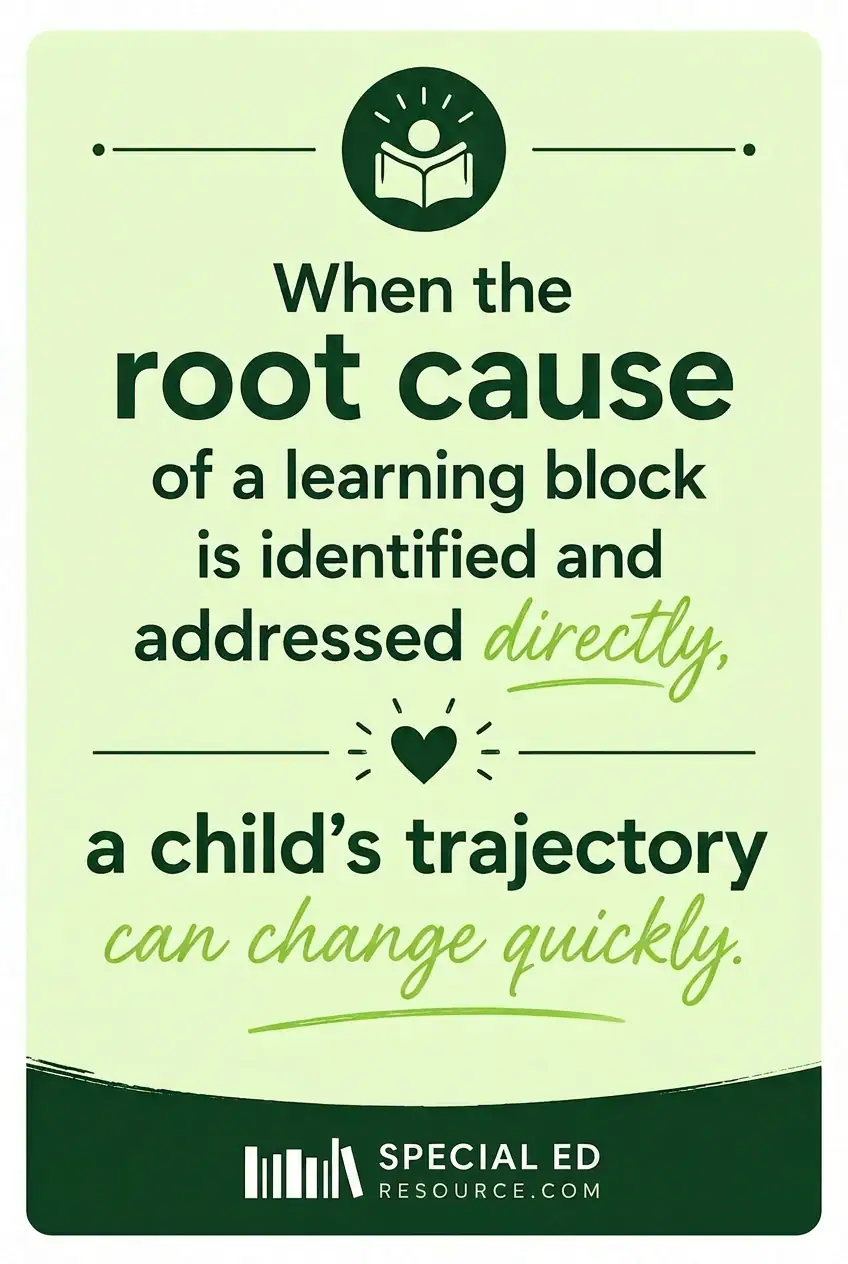
Special Education Resource works with families, homeschool groups, individual educators, and entire school districts across the US and Canada. The approach is built around a core belief: every child who is struggling has a specific, identifiable reason for that struggle — and when that reason is found and addressed directly, the child’s trajectory can change significantly and quickly.
The model is scalable and flexible precisely because the needs of special education families are not uniform. A family in a rural area without access to local specialists has the same right to effective support as a family in a well-resourced suburb. A district serving hundreds of special needs students deserves the same quality of support as an individual family with one child who is falling behind.
No child should have to wait another full school year for the right support to arrive.
Moving Forward With Clarity and Confidence
The end of a school year is not just a finish line. For families navigating the IEP process, it is also a starting line — the beginning of the planning, reflection, and preparation that will shape the next chapter for their child.
Taking the time to do this reflection well, to sit honestly with what worked and what did not, to document the patterns and bring them forward — that is advocacy in its most practical and powerful form.
The children who thrive within the IEP system are most often the ones who have at least one adult in their corner who refuses to accept a plan that merely exists on paper. They have someone asking the harder questions, seeking the right support, and staying focused on the child in front of them — not the average, not the expectation, but this child, with these strengths, these challenges, and this extraordinary capacity to grow.
That child is worth every hard conversation, every meeting, every moment of reflection.
And next year can be different. Not by accident — but because this summer, the right work begins.

Special Education Resource serves families, homeschool groups, and school districts across the US and Canada with scalable, flexible, and affordable special needs tutoring. The focus is always the same: identify what is truly holding a child back, dissolve that barrier quickly, and help every student move forward with genuine confidence.