

The envelope sits on the counter, or the email notification pops up on a phone in the middle of the workday. A parent opens it, scans the page, and feels their stomach drop. The grades are lower than expected. The IEP progress report says "progressing" next to goals that do not seem to be moving at all. After weeks of early mornings, homework battles, and hopeful check-ins, the first report card of the year can feel like a punch. That disappointment is real, and it is shared by countless families of students with learning differences. But this moment is also an opportunity. This guide explains how to read a first report card and IEP progress report with clear eyes, what data to request, which parent teacher conference questions to ask at fall conferences, how to push for mid-year adjustments, and why bringing a support person to the table can change the outcome.
Start by comparing the report card with the IEP goal data. Request the information behind unclear ratings, bring a short list of questions to fall conferences, and ask the school about an IEP review when progress or services raise concerns.
When the First Report Card Stings
It is normal to feel a mix of emotions when a first report card falls short. Frustration, worry, guilt, and even anger can all show up at once. Some parents wonder whether they missed warning signs. Others feel let down by a school that promised support in the IEP meeting last spring. Many feel a quiet fear that their child is falling further behind and that the gap will only grow.
Those feelings deserve space. At the same time, the first report card is not a final verdict on a child's ability or future. It is a snapshot from the first part of the school year, when students are still adjusting to new teachers, routines, and expectations. For students with disabilities, that adjustment period can be especially bumpy.
The real value of this early report is timing. Problems spotted in October or November can be addressed with most of the school year still ahead. Waiting until spring often means a child has lost months of potential progress. A disappointing first report card is a signal, and signals are useful. They point to where attention is needed now.

The most helpful first step is to pause before reacting. Read the report card and progress report more than once. Write down questions as they come up. Then move from emotion to a plan, one step at a time.
Report Card vs. IEP Progress Report: What Each One Tells You
Many families receive two documents at this time of year, and it helps to understand how they differ. The report card shows how a student is performing in each class compared to grade-level standards or classroom expectations. It may use letter grades, number scores, or standards-based ratings such as "beginning," "developing," or "meeting."
The IEP progress report is different. It tracks how a student is moving toward the specific annual goals written in their IEP, such as reading a certain number of words per minute, solving multi-step math problems with a set level of accuracy, or using a coping strategy independently. In the US, the IEP must describe how goal progress will be measured and when periodic progress reports will be provided; these may arrive alongside report cards. Canadian requirements vary by province and school board. For example, Ontario says IEPs should be reviewed at least once every reporting period and updated based on the student’s progress.
These two documents can tell very different stories. A student might earn passing grades because of accommodations, extra credit, or effort-based grading while making little progress on their IEP goals. The opposite can also happen: a child may be making steady gains on targeted goals but still earning low grades because grade-level work remains out of reach. Neither document alone shows the full picture. Reading them side by side helps parents see where the real gaps are.
How to Read an IEP Progress Report Without Getting Lost
IEP progress reports can be confusing. They are often filled with codes, short phrases, and vague ratings that leave parents with more questions than answers. Knowing what to look for makes them far more useful.
When reviewing an IEP progress report, parents can check for:
- Each goal listed with a clear progress rating, not just a general comment
- Actual numbers or data, such as percentages, scores, or counts, rather than only words like "progressing"
- A comparison to the starting point, or baseline, written in the IEP
- How progress was measured, such as work samples, assessments, observations, or charts
- Whether the student is on track to meet the goal by the end of the IEP year
- Comments about which strategies are working and which are not
- Any goals marked "not introduced" or "not addressed," and whether that reflects planned sequencing or a concern that needs follow-up
A rating like "making progress" can mean very different things. A student who moved from 40 percent accuracy to 45 percent is technically making progress, but at that pace they may never reach a goal of 80 percent by spring. That is why the numbers matter more than the label.
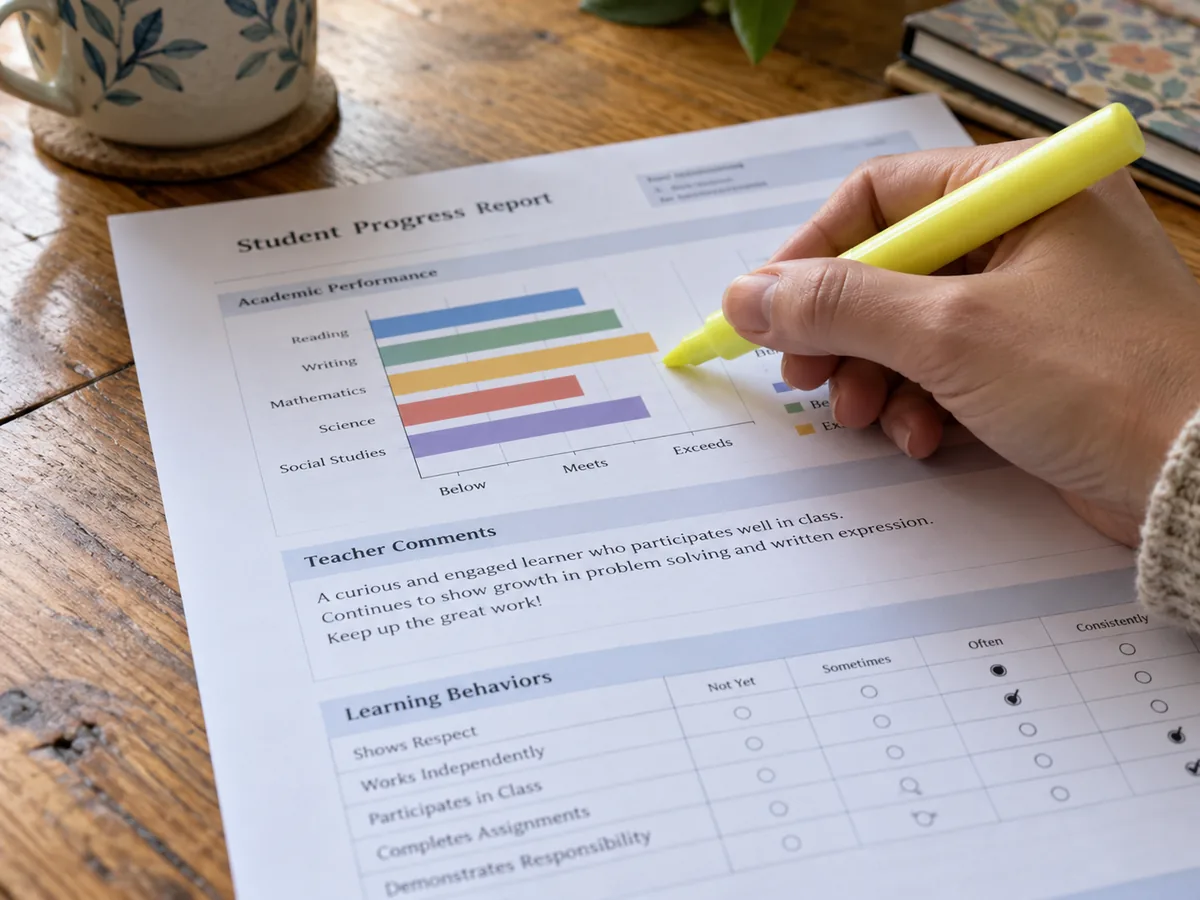
If the progress report lacks data, it is reasonable to ask for it. Parents have a right to understand how their child is doing, and vague updates make it hard to know whether the IEP is working. A short, polite email is a practical way to ask for the data behind each rating and identify follow-up questions.
What Data to Request Before Fall Conferences
Fall conferences can be brief. Requesting information ahead of time helps parents walk in prepared instead of trying to absorb everything on the spot. A brief email to the teacher or case manager a week or so before the meeting can make the conversation far more productive.
Helpful data to request includes:
- Current scores on any reading, math, or writing assessments given this fall, along with how they compare to last spring
- Progress monitoring data for each IEP goal, including charts or graphs if available
- Recent work samples that show both strengths and areas of difficulty
- A summary of special education services delivered so far, including minutes per week
- Notes on which accommodations are being used and how often
- Attendance and missing assignment records
- Any behavior data, if behavior goals or a behavior plan are in place
Service delivery records deserve special attention. If an IEP calls for 150 minutes of reading support per week, families can ask whether that time has actually been provided. Staffing shortages and scheduling conflicts sometimes mean services are missed, and parents may not know unless they ask.
Once the information arrives, it helps to read it before the conference and note anything that seems unclear or worrying. Comparing current data to the baseline in the IEP can show quickly whether a child is gaining ground, holding steady, or slipping.

Parent Teacher Conference Questions That Get Real Answers
The right questions turn a quick conference into a meaningful planning session. Instead of general questions like "How is my child doing?", specific questions draw out the details parents need. These parent teacher conference questions work well for fall conferences in special education and general education settings alike:
- What are my child's biggest strengths in your class right now?
- Where is my child struggling the most, and what do you think is causing it?
- How does my child's current performance compare to grade-level expectations?
- Which IEP goals are on track, and which ones are not?
- What data are you using to measure progress on each goal?
- Which accommodations seem to be helping, and are any not being used?
- Have all the special education services in the IEP been delivered so far?
- What does my child do when they get stuck or frustrated in class?
- How is my child doing socially and emotionally?
- What changes would you recommend before the next progress report?
- What can we do at home to support what is happening in class?
- What is the best way to stay in touch between now and the next report?
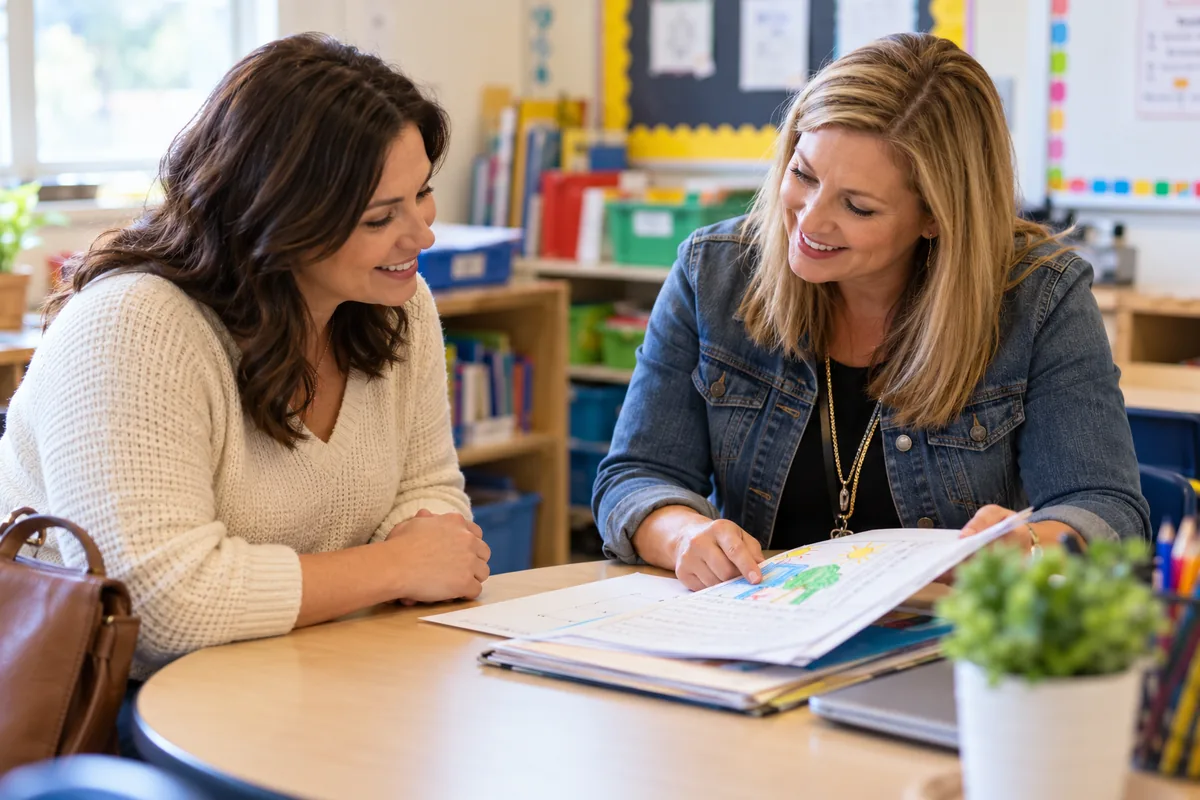
Parents do not need to ask every question on this list. Choosing three to five of the most important ones and writing them down keeps the conversation focused. It also helps to take notes during the meeting and send a short follow-up email afterward that summarizes what was discussed and any agreed next steps. That email creates a simple record and helps everyone stay accountable.
Teachers are often juggling large caseloads and heavy demands, and most want to help. Approaching the conference as a partnership, while still asking clear questions, tends to bring out the best in everyone at the table.
Is Your Child Falling Behind in School? Signs It's Time for Mid-Year Adjustments
Not every disappointing report card means the IEP needs to change. Sometimes a student simply needs more time to settle into a new grade. But certain patterns suggest that waiting until the annual IEP meeting is not the best choice.
Parents may want to push for mid-year changes when they notice:
- Little or no measurable progress on several IEP goals
- Grades dropping in multiple subjects, not just one
- A widening gap between the child's skills and grade-level work
- Services or accommodations that are not being delivered consistently
- New challenges that the current IEP does not address, such as anxiety, school refusal, or behavior changes
- A child who is increasingly frustrated, exhausted, or saying things like "I'm just bad at school"
When a child is falling behind in school, it helps to review the available information promptly and ask whether support needs to change. The IEP is meant to be a living document, and families do not have to wait a full year to raise concerns.
How to Push for Mid-Year Changes to the IEP
In the US, parents can request an IEP meeting at any time. Response timelines and procedures vary by state, so check your state’s rules rather than assume one national deadline. In Canada, processes vary by province and school board, but families can ask about reviewing and updating a student’s plan when concerns arise. Putting the request in writing creates a record of the concerns and the requested next step.
A clear, effective request usually includes a few key elements. It names the specific concerns, such as lack of progress on reading goals or missed services. It references the data that supports those concerns, like progress report scores or assessment results. It states what the family hopes to discuss, such as new goals, more service time, different instructional approaches, or additional evaluations. And it asks for a meeting date within a set time frame.
At the meeting, parents can ask the team to look closely at whether the current goals are realistic and measurable, whether the type and amount of instruction match the child's needs, and whether additional assessments could reveal what is really getting in the way. Sometimes a student is not making progress because the core issue has never been identified. A reading goal may stall because of an underlying decoding or processing gap, or math progress may slow because foundational skills were never fully mastered.
This is where expert guidance can make a real difference. Many parents feel outnumbered or unsure in IEP meetings, especially when they are pushing back on the school’s view. Working with an experienced IEP Advocate can help families review data, understand their rights, prepare targeted requests, and keep the meeting focused on the child’s needs. An advocate can also help families check that agreed changes are documented clearly and identify follow-up questions; no advocate can guarantee a school’s decision or implementation.
Why Bringing a Support Person Changes the Conversation
Fall conferences and IEP meetings can be emotional, especially after a disappointing report card. Even the most prepared parent can feel overwhelmed when sitting across from several school staff members, hearing unfamiliar terms, and trying to take notes at the same time. Bringing a support person can ease that pressure.
A support person might be a spouse or partner, a trusted friend, a relative, a private tutor who knows the child well, or a professional advocate. Their role can include taking notes, asking follow-up questions, keeping track of time, and helping the parent stay calm and focused. After the meeting, they can help recall what was said and what was promised.
Having another person present also changes the dynamic. It signals that the family is organized and engaged, and it can help keep conversations balanced and productive. For parents who have felt brushed aside in past meetings, that added support can make it easier to speak up and ask for what their child needs.
It is courteous and practical to let the school know ahead of time who will attend. That way, everyone arrives ready to work together.
For US IEP meetings, IDEA allows parents to invite individuals with knowledge or special expertise regarding the child. For other school conferences, ask the school about its attendance arrangements.

Building Momentum at Home and Beyond
While families work with the school on next steps, support outside the classroom can help a child regain ground and confidence. Students who are struggling often need more targeted instruction than a busy classroom can provide, especially when the root cause of their difficulty has not been fully addressed.
A specialized special needs tutor can help identify skills that need more practice and provide targeted instruction rather than simply reviewing classwork. Families can discuss specific learning priorities with the tutor and share relevant school data. Progress varies by student, and tutoring does not guarantee catch-up or a particular result on the next IEP progress report.
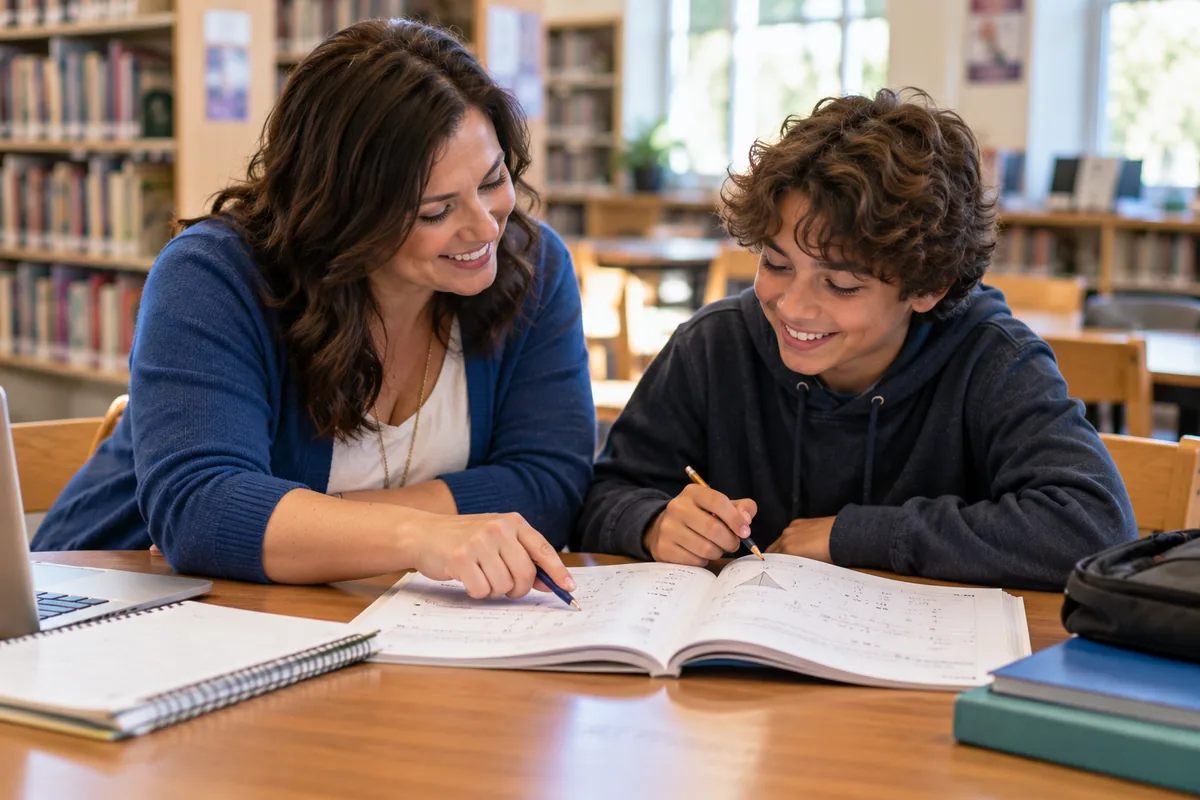
Special Education Resource offers flexible, affordable tutoring and support for students with learning differences across the US and Canada. Services are available for individual families, small groups, homeschool programs, and entire districts, making it possible to add expert help in a way that fits each family's schedule and budget. For educators and districts, this kind of scalable support can extend what overworked teams are able to offer.
At home, small steps make a difference too. Celebrating effort, keeping routines steady, and talking openly about what feels hard all help a child feel supported. It also helps to remind a child that one report card does not define them. Progress takes time, and the adults around them are working together to help.
The First Report Card Is a Starting Point
A disappointing first report card can feel like a setback, but it is also an early warning that gives families time to act. By reading progress reports carefully, requesting real data, asking focused questions at fall conferences, pushing for mid-year adjustments when needed, and bringing a support person to important meetings, parents can turn a hard moment into a clear plan.
The goal is not perfection by the next grading period. It is steady, measurable progress and a child who feels capable and supported. With the right information, the right questions, and the right team, the rest of the school year can look very different from its first few months.