

Quick answer: Tell your child what to expect, arrange a quiet place they can use whenever they need it, and let them opt out of hugs, unfamiliar foods, or activities. Agree on a break or early departure plan before the gathering.
The holiday season is supposed to be filled with joy, connection, and special memories. But for families raising sensory-sensitive or neurodivergent children, the most wonderful time of the year can also be one of the most overwhelming.
Between Thanksgiving dinners, Christmas celebrations, Hanukkah gatherings, Kwanzaa traditions, New Year's festivities, and busy family schedules, there is often a lot happening at once. Crowded rooms, unfamiliar foods, bright decorations, loud conversations, and changes in routine can quickly turn an exciting celebration into a stressful experience.
Even traditions that seem harmless, like hugging relatives, opening gifts in front of everyone, or sitting through a long family dinner, may create significant discomfort for a child with sensory processing differences.
For parents, there is often another challenge: helping extended family members understand why their child needs accommodations.
The good news? A successful holiday season does not require a perfectly behaved child, an elaborate schedule, or participation in every family tradition. It requires thoughtful preparation, realistic expectations, and a willingness to celebrate differently.
These practical sensory-friendly holiday tips can help families create calmer, more inclusive celebrations. From preparing relatives and setting up quiet spaces to navigating food sensitivities, holiday traditions, and changes in routine, small adjustments can make the season more comfortable for everyone.
Why the Holidays Can Be Overwhelming for Sensory-Sensitive Kids
The winter holiday season brings together several experiences that can be challenging for children with sensory sensitivities.
For a child who processes sensory information differently, the combination of sounds, smells, textures, movement, and social expectations can quickly become exhausting.
A busy holiday gathering might include multiple conversations happening at once, festive music playing in the background, kitchen appliances running, and children playing nearby.
Holiday decorations can introduce additional challenges. Flashing Christmas lights, crowded displays, scented candles, and unfamiliar decorations may create sensory discomfort.
There may also be uncomfortable clothing, unfamiliar meals, unexpected physical contact from relatives, or changes to normal sleeping and eating schedules.
Individually, these experiences might seem manageable. Together, they can become overwhelming.
Children with autism, ADHD, sensory processing differences, and other neurodevelopmental conditions may experience these challenges differently. Some children are especially sensitive to sound or touch, while others seek movement, pressure, or additional sensory input.
Not every neurodivergent child experiences sensory overload, and children with similar diagnoses may have very different needs.
The key is understanding the individual child rather than assuming that one strategy will work for everyone. The National Autistic Society explains how autistic people’s sensory experiences can vary.
Recognizing Signs of Holiday Sensory Overload
Sensory overload does not always look like a dramatic emotional reaction.
Some children become unusually quiet or withdrawn. Others may appear restless, irritable, distracted, or increasingly resistant to participating.
Early warning signs can include:
- Covering ears or shielding eyes
- Becoming unusually quiet or avoiding conversation
- Pacing, rocking, fidgeting, or seeking movement
- Refusing foods they normally enjoy
- Becoming upset by minor changes or requests
- Repeatedly asking to leave or go home
- Having difficulty following familiar directions
- Crying, shutting down, or becoming more easily frustrated
These changes can be signs of distress, but no single behavior tells you what a child is experiencing. For example, rocking or fidgeting can also be comfortable or enjoyable.
Rather than viewing the behavior as defiance, parents can consider what sensory or emotional demands may be contributing to the response.
Recognizing these signs early creates an opportunity to offer support before the situation becomes more difficult.
A child who needs a break is not ruining the holiday celebration. The child is communicating a need, even when finding the right words is difficult.
1. Prepare Your Child for Holiday Gatherings and Changes in Routine
One way to prepare for a holiday gathering is to make the unfamiliar feel more predictable.
The holiday season often involves changes in schedules, locations, meals, and social interactions. For children who rely on routines, uncertainty can be just as challenging as sensory stimulation.
School breaks may also disrupt familiar daily patterns. Children who depend on predictable classroom schedules, therapy appointments, or tutoring sessions may struggle when those activities suddenly pause.
Preparing ahead of time helps children understand what to expect and gives them opportunities to participate in planning.
Create a Simple Holiday Schedule
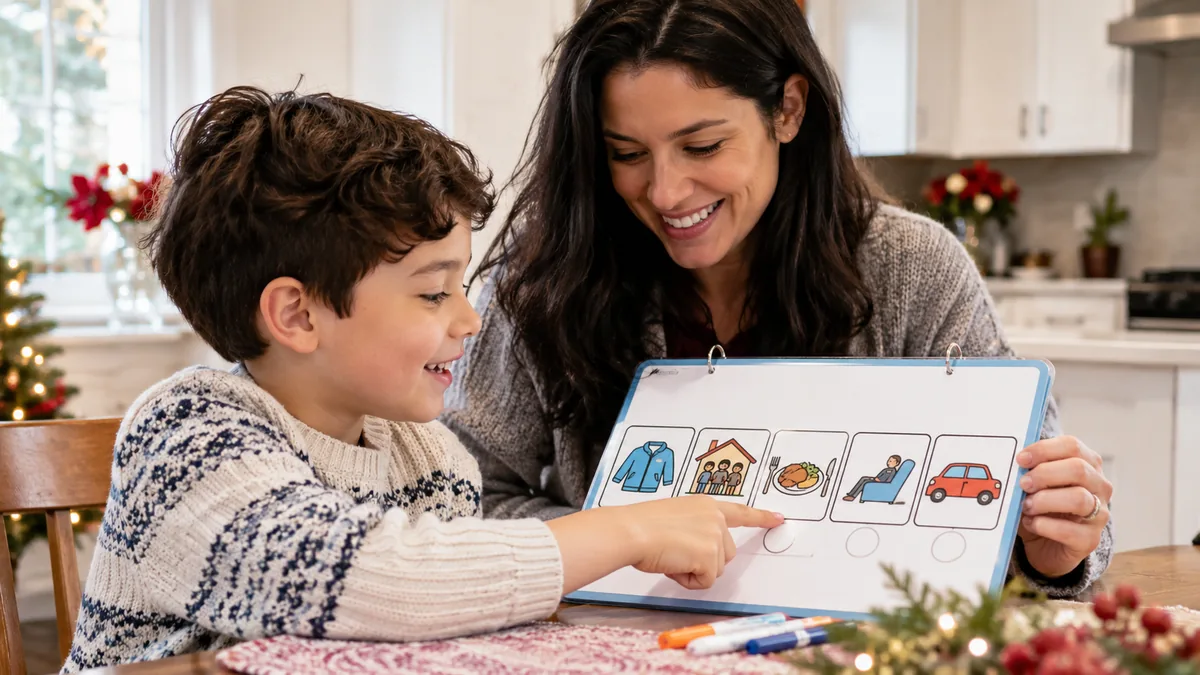
A few days before a gathering, explain what the celebration will look like.
Parents can discuss where the family is going, who will attend, what activities are planned, and approximately how long the visit will last.
For younger children or those who benefit from visual supports, a simple picture schedule can make the day easier to understand.
For example, a holiday gathering schedule might include:
- Get dressed and pack favorite comfort items.
- Drive to a relative's house.
- Say hello to family members.
- Play or relax before the celebration.
- Enjoy a holiday meal or activity.
- Take a quiet break.
- Participate in a favorite tradition.
- Return home.
The schedule does not need to be rigid. Its purpose is to provide a clear picture of the day.
If plans change, parents can explain the adjustment and update the schedule when possible. The National Autistic Society’s Christmas planning guide offers examples of schedules, breaks, and alternatives to social expectations.
Prepare for Multiple Celebrations
Unlike a single holiday event, the winter season may involve several celebrations over multiple weeks.
Families might attend a Thanksgiving dinner, visit relatives for Christmas, participate in Hanukkah or Kwanzaa traditions, and celebrate New Year's Eve.
For some children, the cumulative demands of these events can become exhausting.
Parents can consider spacing out activities, scheduling quiet days between gatherings, or limiting the number of events their child attends.
A family does not need to participate in every invitation to create meaningful holiday memories.
Practice Unfamiliar Situations
Some children benefit from practicing holiday experiences before the actual gathering.
Families might rehearse greeting relatives, asking for a break, responding to questions about food, or declining a hug.
For Christmas or other gift-giving celebrations, parents can also explain what will happen when presents are exchanged.
Simple role-playing can help children feel more prepared without turning the holiday into a test of social skills.
Parents can also show photographs of the gathering location or discuss which family members will attend.
For children who use augmentative and alternative communication (AAC), communication devices, picture cards, or other supports should remain accessible throughout the celebration.
The goal is not to make children perform expected behaviors perfectly. It is to give them reliable ways to communicate their preferences and needs.
Give Children Meaningful Choices
Children often feel more comfortable when they have some control over their environment.
Before a holiday gathering, parents can offer choices such as:
- Which comfortable outfit to wear
- Which familiar snack to bring
- Whether to greet relatives with words, a wave, or another preferred gesture
- Which toy, book, or sensory item to pack
- Whether to participate in a group activity or watch from nearby
These small decisions give a child a say in how they participate.
Importantly, choices should be genuine. A child should not be offered the option to skip a hug only to be pressured into giving one later.
2. Prepare Extended Family for Sensory-Friendly Holiday Celebrations
For many parents, navigating relatives can be one of the most stressful parts of the holiday season.
Grandparents, aunts, uncles, and other family members may have strong opinions about holiday traditions, manners, food, or children's behavior.
Some relatives may not understand why a child avoids hugs, wears headphones, eats different foods, or leaves the table early.
Others may interpret accommodations as unnecessary special treatment.
These misunderstandings can create tension, especially when parents already feel responsible for managing their child's comfort.
Preparing relatives before the gathering gives them a chance to understand what helps.
Explain Accommodations Before Guests Arrive
A short conversation or message before a holiday gathering can help establish expectations.
Parents do not need to share private medical information or provide a detailed explanation of their child's diagnosis.
Instead, they can focus on what helps their child participate comfortably.
For example:
"Holiday gatherings can be a little overwhelming with all the noise and activity. There may be times when a quiet break or headphones are needed. Having that flexibility helps make the day more enjoyable."
This approach explains the accommodation without making the child the center of attention.
It also gives relatives an opportunity to ask respectful questions before the gathering.
Helpful Scripts for Setting Boundaries With Family
Clear, friendly language can help parents address uncomfortable situations without creating unnecessary conflict.
When relatives expect hugs or kisses:
"Physical affection is optional. A wave or verbal hello is perfectly fine."
When someone comments on selective eating:
"Different food textures can be difficult, so familiar foods are available. There is no need to pressure anyone to try something new today."
When a child leaves the dinner table:
"Taking a short break helps with all the activity. Joining the group again can happen when they're ready."
When someone questions headphones or sensory tools:
"The headphones make the noise more manageable, which helps with participating in the celebration."
When relatives expect an enthusiastic reaction to a gift:
"Everyone expresses excitement differently. There's no need to put pressure on a particular reaction."
When relatives suggest stricter discipline:
"The accommodations are intentional and help support regulation. The focus today is on enjoying family time."
These statements are respectful but direct.
Parents do not need to convince every relative that an accommodation is necessary. Establishing a reasonable boundary is enough.
Encourage Connection Without Pressure
Family gatherings often come with expectations about how children should interact.
Relatives may expect children to answer questions, participate in conversations, pose for photographs, or sit with the group for extended periods.
However, connection can happen in many different ways.
A child who quietly completes a puzzle beside a grandparent is still spending meaningful time with family.
A child who participates in a five-minute activity before taking a break is still participating.
Encouraging relatives to meet children where they are can create more genuine connections than forcing traditional social interactions.
3. Create a Quiet Space Before the Holiday Gathering Begins
A quiet space is one of the simplest and most useful sensory-friendly holiday tips for families.
When a home fills with guests, children may have difficulty finding somewhere to escape noise, movement, and conversation.
Designating a calm area before the gathering begins gives children a predictable place to regulate.
This space does not need to be large or elaborate.
A spare bedroom, quiet corner, or separate room away from the main gathering can work well.

What to Include in a Holiday Sensory Space
Depending on the child's preferences, a calming space might include:
- Comfortable pillows or a familiar blanket
- Noise-reducing headphones
- Favorite books or quiet activities
- Fidget toys or other preferred sensory tools
- Soft lighting
- A familiar stuffed animal
- Water and familiar snacks
- A tablet or device with calming activities, when helpful
Some children benefit from movement or additional sensory input rather than complete quiet. Their space can reflect those preferences.
The most important feature is that the area feels safe, predictable, and accessible.
Make the Space Available Before It Is Needed
A quiet room should not be treated as a punishment or something children can access only after becoming upset.
Parents can show children the space when they arrive and explain that it is available whenever they need it.
Children may benefit from taking planned breaks throughout the gathering, even before showing signs of overload.
For example, a child might spend 20 minutes visiting with family, followed by 10 minutes relaxing in the quiet space.
These intervals should remain flexible rather than becoming another rigid expectation.
Respect the Child's Need for Privacy
Relatives should understand that the quiet space is not another gathering area.
Family members should avoid repeatedly entering the room, asking questions, or encouraging the child to return before they are ready.
For children who require supervision, an appropriate adult should remain available while still respecting the child's need for reduced interaction.
A quiet space works best when it provides a genuine break from demands.
4. Make Holiday Meals Easier for Kids With Food Sensitivities
Holiday meals are often the centerpiece of family celebrations.
Unfortunately, they can also be one of the most challenging experiences for children with sensory-related feeding differences.
Traditional holiday foods contain a wide variety of textures, smells, temperatures, and flavors.
Thanksgiving stuffing may contain unexpected textures. Mashed potatoes may feel too soft. Holiday casseroles may combine several ingredients into one dish, while unfamiliar sauces can change the appearance and consistency of foods.
Even a food that looks appealing to an adult may be uncomfortable for a sensory-sensitive child.
For children with strong food preferences or restricted diets, pressure to eat unfamiliar foods can quickly create distress.
Keep Familiar Foods on the Menu
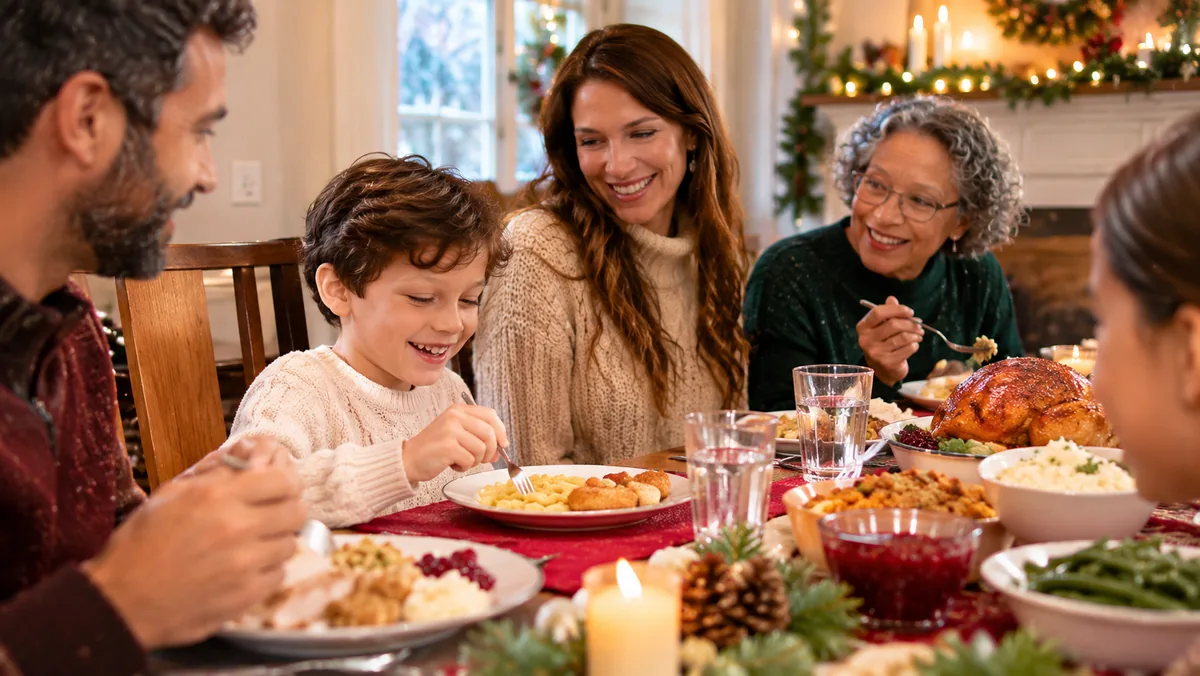
Holiday meals do not need to become food challenges.
If a child feels comfortable eating chicken nuggets, plain pasta, crackers, or another familiar food, families can include that option.
A child does not need to eat turkey at Thanksgiving, a traditional Christmas dinner, or unfamiliar foods during other celebrations to participate.
Parents can also bring preferred foods from home, especially when attending a gathering hosted by someone else.
The purpose is to ensure that the child has access to food they can comfortably eat.
Reduce Pressure Around Trying New Foods
Holiday meals are not the ideal time to force children to expand their diets.
Comments such as "just take one bite" or "everyone else is eating it" may increase anxiety and make the meal more difficult.
Instead, families can allow children to explore unfamiliar foods at their own pace.
Some children may feel comfortable looking at or smelling a new food. Others may prefer to keep it off their plates entirely.
Both responses can be respected.
Children who receive feeding therapy or follow a specialized nutrition plan should continue using strategies recommended by their qualified care professionals.
Offer Flexible Seating and Mealtime Expectations
A long holiday dinner can be difficult for children who struggle with noise, crowded seating, or remaining seated for extended periods.
Parents can consider allowing a child to:
- Sit at the end of the table or in a less crowded area
- Use a preferred chair or appropriate seating support
- Eat before or after the main family meal
- Take breaks between portions of the meal
- Keep different foods separated
- Use familiar plates, cups, or utensils
- Leave the table when finished rather than waiting through a lengthy conversation
These adjustments help make mealtime more accessible.
A child eating a familiar meal at a smaller table is not missing the meaning of the holiday.
They are participating in a way that respects their needs.
5. Plan for Holiday Lights, Noise, Crowds, and Sensory Triggers
Sensory-friendly holiday planning should extend beyond family meals.
The winter season introduces additional sensory experiences, including bright decorations, crowded shopping centers, festive music, and busy community events.
Preparing for these experiences can help children remain comfortable while still enjoying seasonal activities.
Manage Holiday Noise Without Isolating the Child
Holiday gatherings can become surprisingly loud.
Televisions, music, kitchen appliances, excited conversations, and children playing may create constant background noise.
Christmas celebrations may also involve musical decorations, noisy toys, or large groups opening presents together.
New Year's Eve can introduce especially intense sounds, including fireworks, countdown celebrations, and cheering.
Noise-reducing headphones or ear defenders can help some children participate without becoming overwhelmed.
Families can also reduce competing sounds by turning down background music, lowering television volume, or creating separate areas for louder activities.
Children should not be required to remove headphones simply because someone believes they appear rude.
Comfort and participation matter more than appearances.
Make Holiday Lights and Decorations More Comfortable

Twinkling lights, animated decorations, and brightly illuminated displays can be exciting for some children and overwhelming for others.
Parents can consider using steady lights instead of flashing decorations, limiting animated displays, or allowing children to choose which decorations are placed in shared spaces.
When visiting holiday light displays, families may benefit from choosing less crowded times or planning shorter visits.
Children who enjoy visual stimulation may appreciate opportunities to explore decorations at their own pace.
The goal is not to eliminate holiday decorations. It is to create an environment that reflects the child's preferences.
Consider Clothing and Physical Comfort
Holiday clothing can introduce additional sensory challenges.
Scratchy sweaters, stiff collars, tight waistbands, unfamiliar shoes, and clothing tags may create discomfort before the celebration even begins.
Parents can prioritize familiar, comfortable clothing over formal holiday outfits.
If photographs are important, families can consider taking them earlier in the day or allowing the child to choose clothing that feels comfortable.
The best holiday outfit is one that allows the child to enjoy the celebration.
Prepare for Strong Holiday Smells
Holiday cooking, scented candles, perfumes, and seasonal decorations can introduce unfamiliar or intense smells.
For some children, these scents may become overwhelming.
Hosts can help by limiting unnecessary fragrances, providing ventilation, and keeping a quiet area away from the kitchen.
If a particular smell is especially difficult, parents can plan an alternative activity or location during meal preparation.
Have a Flexible Exit Plan
Even with careful preparation, some holiday gatherings may become too overwhelming.
Families can decide in advance how long they hope to stay while remaining open to leaving earlier.
Parents may also identify a quiet outdoor area, a parked car with appropriate supervision, or another location where the child can take a break.
Having an exit plan does not mean expecting the celebration to go poorly.
It simply removes the pressure to remain in an uncomfortable environment when a change is needed.
6. Navigate Gift-Giving and Holiday Traditions Without Pressure
Gift exchanges and holiday traditions can create wonderful memories, but they can also introduce unexpected sensory and social demands.
For some children, opening presents in front of a large group may feel overwhelming.
Others may struggle with surprises, unfamiliar toys, loud wrapping paper, or expectations about how they should react.
These experiences are especially relevant during Christmas, Hanukkah, and other family celebrations that include gift-giving.
Rethink Gift-Opening Expectations
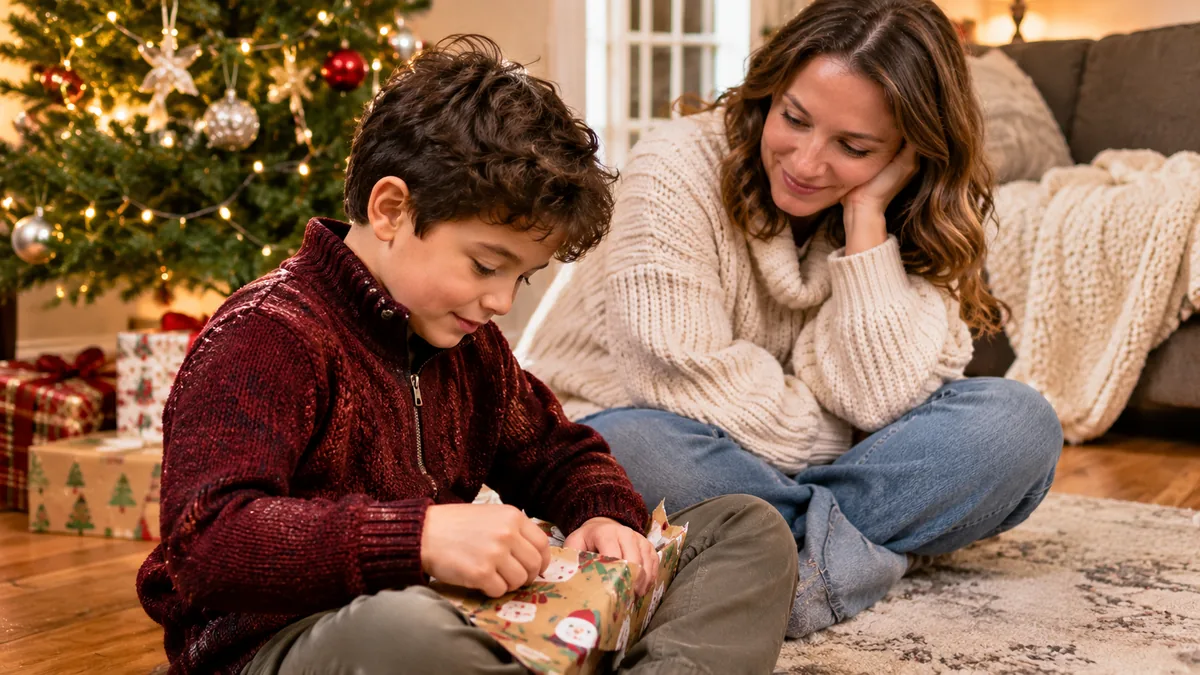
Children may benefit from opening gifts in a quieter setting or receiving presents gradually rather than all at once.
Families can also prepare children by explaining when gifts will be exchanged and what the process will look like.
Some children may prefer to open presents privately or with one trusted adult.
Others may enjoy watching family members open gifts before participating themselves.
There is no requirement that every child open gifts at the same time or in the same way.
Avoid Pressuring Children to React a Certain Way
Adults often expect children to smile, express excitement, or immediately thank someone after receiving a gift.
However, children with communication differences may express appreciation differently.
A child who does not smile or verbally respond may still appreciate the gift.
Parents can model gratitude without forcing a particular reaction.
For example, a child might send a thank-you note later, draw a picture, or communicate appreciation through another preferred method.
The purpose of gift-giving is connection, not performance.
Adapt Holiday Traditions to Fit the Child
Families can modify traditions while preserving what makes them meaningful.
A child who dislikes crowded holiday events might enjoy a smaller celebration at home.
A child who struggles with lengthy ceremonies or gatherings may benefit from participating in a shorter portion.
Families celebrating Hanukkah might provide a quieter setting for lighting the menorah or adjust the timing of family activities.
During Kwanzaa, children might participate in storytelling, crafts, or other traditions in ways that match their communication and sensory preferences.
For Christmas, families might simplify decorating activities, adjust gift-opening routines, or choose a quieter time to visit holiday attractions.
These adaptations allow children to participate in family traditions without unnecessary pressure.
7. Support Emotional Regulation During Holiday Gatherings
Holiday gatherings can involve more than sensory challenges.
Children may also experience difficulty with transitions, unfamiliar social expectations, communication demands, and changes to their normal routines.
When these demands accumulate, emotional regulation can become harder.
A child who appears comfortable at the beginning of a gathering may become overwhelmed later in the day.
This does not mean the child was intentionally misbehaving or that the family's preparation failed.
It may mean that the demands of the environment have exceeded the child's current capacity to cope.
Respond to Distress With Support, Not Shame
When a child begins to struggle, the immediate priority should be safety and regulation.
Parents can reduce verbal demands, move to a quieter location, and offer familiar calming supports.
During moments of significant distress, lengthy explanations or attempts to reason through the situation may be difficult for the child to process.
Short, reassuring statements are often more helpful.
For example:
"That room was really loud. A quiet break is available."
Or:
"It's okay to take some time away from everyone."
Children who do not communicate verbally may need access to gestures, visual supports, AAC, or other established communication methods.
The goal is to help the child feel supported rather than embarrassed.
Understand the Difference Between Meltdowns and Tantrums
A sensory meltdown is an involuntary response to overwhelming demands or stimulation.
It is not simply an attempt to get attention or control a situation.
A tantrum may involve frustration about a particular outcome, while a meltdown reflects difficulty regulating under excessive stress. However, these experiences can sometimes look similar, and adults should avoid making assumptions based on appearance alone.
During a meltdown, reducing demands and supporting safety is generally more helpful than punishment or confrontation.
Parents can reflect on possible triggers after the child has recovered, rather than expecting an explanation during the moment. See the National Autistic Society’s guidance on meltdowns for more on giving space and time to recover.
Celebrate Small Moments of Participation
A successful holiday gathering may look different for every family.
For one child, success might mean staying for the entire meal.
For another, it might mean greeting two relatives, eating a familiar dinner, and spending the remainder of the visit in a quiet space.
Some children may prefer a short visit instead of a full-day celebration.
These experiences can all represent meaningful participation.
When families focus on comfort, connection, and individual progress, holiday success becomes easier to recognize.
8. Include Neurodivergent Children in Holiday Traditions
Holiday traditions can create a sense of belonging, but they should not require every child to participate in the same way.
Children with sensory sensitivities may enjoy certain activities while finding others uncomfortable.
Rather than eliminating traditions entirely, families can adapt them to make participation more accessible.
Choose Sensory-Friendly Holiday Activities

Simple activities can provide opportunities for connection without overwhelming sensory demands.
Options might include:
- Decorating paper ornaments or seasonal crafts
- Completing a winter-themed puzzle
- Creating holiday cards using preferred materials
- Looking through family photographs
- Helping set the table using a visual checklist
- Playing a familiar board game with one or two relatives
- Reading a favorite seasonal story
- Taking a quiet walk with a trusted family member
- Decorating cookies with familiar ingredients and textures
Not every activity will work for every child.
For example, a child who dislikes sticky textures may prefer drawing over finger painting. A child who struggles with group games may enjoy completing a puzzle independently beside family members.
The activity matters less than the opportunity to participate comfortably.
Give Children a Purposeful Role
Some children feel more comfortable at gatherings when they have a predictable responsibility.
A child might help arrange napkins, place name cards, organize games, or distribute utensils.
These tasks can provide structure during an otherwise unpredictable day.
They may also support confidence and independence.
However, responsibilities should remain optional and appropriate for the child's abilities.
A task intended to create comfort should not become another source of pressure.
Create New Traditions That Work for the Family
Sometimes the most meaningful holiday traditions are the ones families create themselves.
A quiet movie night, a favorite meal, a simple craft, or a short visit with loved ones may be more enjoyable than a large gathering.
Children can help choose activities that reflect their interests and comfort levels.
Families may discover that these personalized traditions become the most anticipated parts of the holiday season.
9. Help Siblings and Relatives Understand Different Needs
When one child requires sensory accommodations, siblings and other children may notice differences in expectations.
One child may be allowed to leave the dinner table early, wear headphones, or open gifts separately.
Another child may wonder why the same rules do not apply to everyone.
These situations create opportunities to teach children about fairness, empathy, and individual needs.
Explain That Fairness Does Not Always Mean Sameness
Children can understand that different people need different types of support.
A simple explanation might be:
"Everyone needs different things to feel comfortable. Some people need quiet breaks, while others enjoy being around lots of people."
Parents can reinforce that accommodations are tools that help people participate.
They are not rewards or privileges that someone must earn.
This approach can reduce resentment and help siblings develop a more inclusive understanding of differences.
Avoid Making Siblings Responsible for Regulation
Siblings may naturally want to help, but they should not be expected to manage another child's sensory needs.
They deserve opportunities to enjoy the holiday independently.
Adults should remain responsible for supervision, accommodations, and responding to distress.
Siblings can participate by respecting boundaries, including their brother or sister in preferred activities, and understanding when someone needs space.
Encourage Relatives to Build Individual Relationships
Extended family members sometimes focus so heavily on a child's diagnosis or accommodations that they overlook the child's interests.
A grandparent might connect through a favorite book, game, television character, or hobby.
An aunt or uncle might spend a few minutes discussing a topic the child enjoys.
These simple interactions can strengthen family relationships without placing unnecessary social demands on the child.
The most meaningful connection often begins with genuine curiosity rather than expectations about how a child should behave.
10. Use Holiday Activities to Build Confidence and Everyday Skills
The holidays are primarily a time for family connection, not academic instruction.
However, everyday seasonal activities can naturally provide opportunities to practice communication, independence, planning, and problem-solving.
For children who receive special education services, these skills may connect to goals addressed at school, through an Individualized Education Program (IEP), or during specialized tutoring.
The key is keeping opportunities natural and enjoyable.
Practice Functional Skills Through Holiday Activities
Depending on a child's age, abilities, and interests, families can incorporate learning into familiar activities.
For example, a child might count utensils while setting the table, read a simple recipe, follow a short sequence of directions, or help estimate how many chairs are needed.
Holiday shopping can provide opportunities to practice budgeting, counting money, or making choices.
Writing holiday cards may support handwriting, spelling, or written communication.
Other children might practice making choices, communicating preferences, or requesting assistance.
These experiences can reinforce skills without requiring formal worksheets or lengthy instruction.
A child who is already overwhelmed should not be expected to complete additional learning tasks.
Comfort and family connection should remain the priority.
Reinforce Self-Advocacy and Communication
One of the most valuable skills children can practice during family gatherings is communicating their needs.
A child who asks for headphones, requests a break, declines an uncomfortable activity, or identifies a preferred food is demonstrating self-advocacy.
For children who need additional support, parents can model simple phrases or provide visual communication tools.
These skills can be useful beyond the holidays.
Recognizing personal needs and communicating them appropriately can support participation in classrooms, community activities, and everyday routines.
Connect Holiday Experiences to Individual Learning Goals
Some children benefit from additional instruction to develop communication, executive functioning, reading, writing, or math skills.
For families already navigating IEP meetings, academic delays, or learning challenges, finding the right support can feel overwhelming.
A qualified special needs tutor can help identify specific academic roadblocks and provide individualized instruction designed around a student's learning needs.
Specialized tutoring can complement school-based services by reinforcing foundational skills, building confidence, and helping children make progress at an appropriate pace.
For autistic students who need individualized academic instruction, an autism tutor can tailor teaching strategies to the child's strengths, communication preferences, and learning profile.
The purpose of specialized support is not to eliminate neurodivergent traits or require children to behave like their peers.
It is to remove unnecessary learning barriers and help students develop the skills they need to succeed.
11. Plan for Holiday Recovery and the Return to Routine
Holiday preparation often focuses on what happens before and during celebrations.
However, what happens afterward can be just as important.
A busy holiday season may leave a child physically tired, emotionally drained, or more sensitive to stimulation than usual.
Even children who appeared comfortable throughout a gathering may need additional time to recover.
Allow Time to Decompress
After returning home, families can provide opportunities for familiar, low-demand activities.
Some children may prefer quiet time alone, while others may benefit from movement, favorite games, or time with a trusted caregiver.
Parents can avoid scheduling unnecessary activities immediately after a demanding gathering when possible.
A predictable bedtime routine may also help children transition back to their normal schedule.
Prepare for the Return to School
Winter break can create a significant disruption in routine.
For children who rely on predictable schedules, returning to school after several days or weeks away may feel challenging.
Parents can help by gradually reintroducing familiar routines, reviewing school schedules, and discussing what to expect when classes resume.
Visual calendars or simple countdowns may help some children prepare for the transition.
Families can also communicate with educators about strategies that support a smoother return.
Reflect on What Worked
After a holiday gathering, families can briefly consider which strategies were helpful.
Did the quiet space provide enough separation from noise?
Were familiar foods available?
Did relatives respect boundaries?
Was the gathering too long?
Did the child enjoy a particular activity or connection with a family member?
For children who are comfortable sharing feedback, parents can ask simple questions about their experience.
These observations can help families prepare for future celebrations, including birthdays, school events, and other family gatherings.
The goal is not to create a perfect holiday plan.
It is to learn what helps each child feel safe, comfortable, and included.
Sensory-Friendly Holiday Checklist for Parents
A little preparation can make a meaningful difference when navigating winter holiday gatherings with sensory-sensitive or neurodivergent children.
Families can use this checklist throughout the season.
Before a Holiday Gathering
- Discuss the holiday schedule and expected activities.
- Prepare visual supports or social narratives if helpful.
- Explain sensory needs and boundaries to relatives.
- Identify a quiet space at the gathering location.
- Pack familiar foods, comfort items, and sensory tools.
- Choose comfortable clothing.
- Prepare for gift exchanges or unfamiliar traditions.
- Establish a flexible arrival and departure plan.
During the Celebration
- Offer breaks before sensory overload becomes overwhelming.
- Respect the child's communication and personal boundaries.
- Avoid pressure around unfamiliar foods.
- Provide flexible seating and participation options.
- Watch for early signs of distress.
- Allow children to open gifts or participate in traditions at their own pace.
- Encourage meaningful connection without forcing interaction.
- Adjust plans when the child's needs change.
After the Celebration
- Allow time for rest and familiar activities.
- Return to predictable routines when possible.
- Notice any delayed signs of stress.
- Celebrate positive moments and meaningful participation.
- Consider adjustments that could help at the next gathering.
This checklist is a starting point rather than a strict set of rules.
Every child has different needs, and the most effective accommodations are those that reflect the individual child.
Frequently Asked Questions About Sensory-Friendly Holidays
How can parents make Christmas easier for a child with autism?
Parents can make Christmas easier by preparing a predictable schedule, explaining gift-opening expectations, providing familiar foods, and creating access to a quiet space. Noise-reducing headphones, flexible participation, and clear boundaries with relatives may also help. The most effective strategies depend on the child's individual sensory and communication needs.
What are some sensory-friendly holiday activities for kids?
Sensory-friendly holiday activities might include decorating paper ornaments, completing puzzles, reading seasonal stories, making cards, or enjoying quiet family games. Children can choose activities that match their interests and sensory preferences.
How can families prevent sensory overload during holiday gatherings?
Families can reduce the likelihood of sensory overload by preparing children for changes, limiting unnecessary sensory stimulation, offering regular breaks, and maintaining access to familiar comfort items. Recognizing early warning signs and adjusting expectations can also help.
What should parents do if their child has a sensory meltdown during a holiday celebration?
Parents should prioritize safety, reduce sensory stimulation, and provide access to a calm environment. Avoid punishment, excessive questions, or demands for an immediate explanation. Once the child has recovered, caregivers can consider possible triggers and adjust future plans.
Is it okay for a child with sensory sensitivities to skip holiday traditions?
Yes. Children can participate in family celebrations without taking part in every tradition. Families can adapt activities, shorten participation, or create alternatives that better reflect the child's needs.
How can parents help children with sensory sensitivities during holiday travel?
Parents can prepare children by explaining travel plans, packing familiar comfort items, scheduling breaks, and allowing extra time for transitions. Visual schedules and preferred sensory tools may also help children manage unfamiliar environments.
What if extended family members refuse to respect sensory accommodations?
Parents can communicate expectations clearly before the gathering and reinforce boundaries when necessary. If an environment remains overwhelming or relatives repeatedly disregard the child's needs, shortening the visit or choosing a different celebration may be appropriate.
How can families help neurodivergent children return to school after winter break?
Families can gradually reintroduce familiar routines, review school schedules, and discuss what to expect when classes resume. Visual calendars, predictable bedtime routines, and communication with educators may support a smoother transition.
A Calmer Holiday Season Starts With Understanding
The holidays do not have to look the same for every family to be meaningful.
For children with sensory sensitivities, autism, ADHD, or other neurodevelopmental differences, a comfortable celebration may include headphones at the dinner table, familiar foods, shorter visits, opening gifts privately, or quiet breaks away from the crowd.
These accommodations do not take away from holiday traditions.
They create opportunities for children to participate without unnecessary stress.
When parents prepare ahead of time, communicate expectations with relatives, and remain flexible throughout the season, holiday celebrations can become more welcoming for everyone.
Most importantly, children benefit from knowing that their comfort, communication, and boundaries matter.
If your child also needs help with schoolwork, explore Special Education Resource’s individualized online tutoring. Tutoring supports academic learning; it is not a substitute for occupational therapy or clinical care.
Whether a family is navigating holiday gatherings, school challenges, or the complexities of special education, one principle remains the same: children thrive when the support around them reflects who they are and what they need.
This holiday season, the most valuable tradition may be creating celebrations where every child feels understood, respected, and included.